Executive Summary
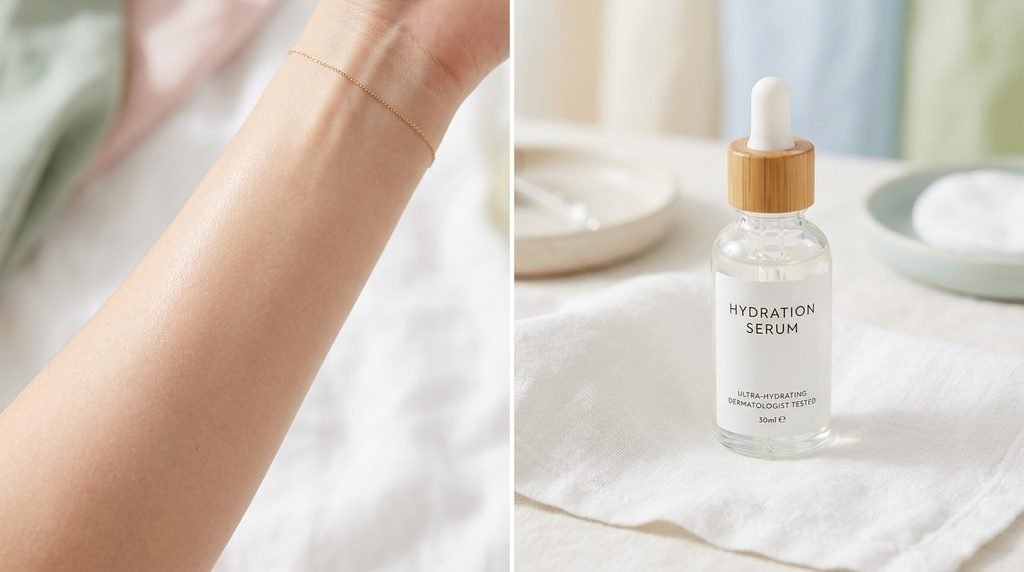
Adding a potent new serum to your skincare routine promises visible results, but rushing the process often leads to redness, breakouts, and barrier damage. This comprehensive guide outlines a proven, dermatologist-tested protocol for introducing new active ingredients safely. You will learn the exact 4-step introduction sequence, how to perform a proper patch test on your skin, and how to distinguish between beneficial skin purging and an adverse allergic reaction. By following a gradual frequency-ramp schedule, isolating single products, and timing new introductions 2 to 4 weeks apart, you can maximize your skincare benefits while maintaining a healthy, radiant skin barrier.
Hook-Up Paragraph

Unboxing a high-performance serum feels like a fresh start for your complexion, whether you are targeting dark spots, fine lines, or stubborn texture. Yet, applying a potent bottle of actives straight to your face without a strategy often ends in stinging, sudden breakouts, or raw, flakey skin. If you have ever wondered how to introduce a new serum without setting your face on fire, you are not alone. Introducing active ingredients requires patience and precision rather than enthusiasm. In this guide, we break down the exact step-by-step introduction process, teach you how to patch test like a pro, and reveal the crucial difference between temporary skin purging and true barrier irritation.
Step 1: The Essential 24-to-48 Hour Patch Test

Before letting any new serum touch your face, you must verify that your skin can tolerate its specific formula. Skipping a patch test is the fastest route to widespread contact dermatitis or an allergic flare-up.
Selecting the Right Test Location
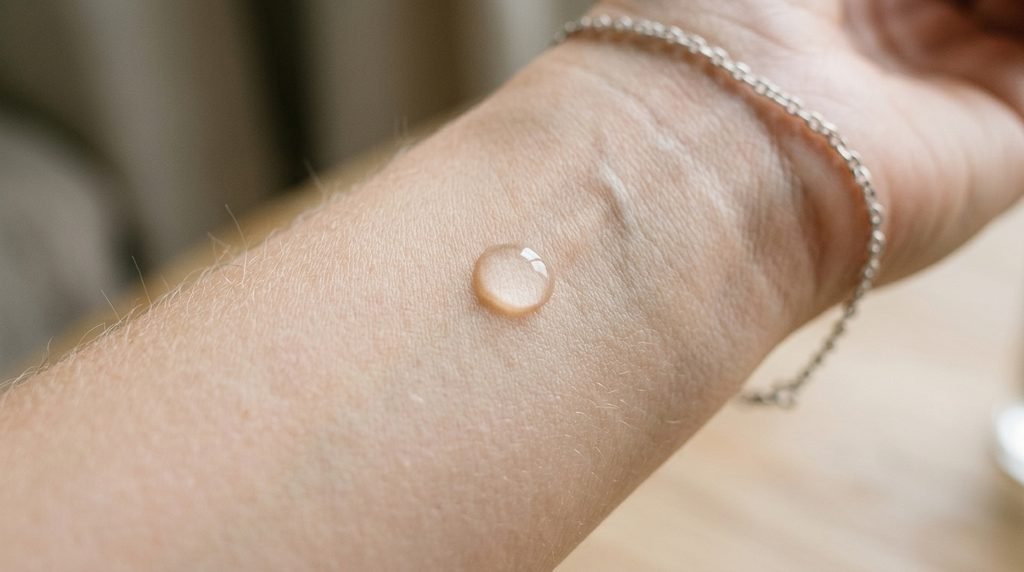
Choose a discrete, thin-skinned area that mimics facial tissue without being overly conspicuous. The inner arm near the elbow bend or the side of the neck right behind your jawline are ideal locations. Avoid testing on thick skin like the outer forearm, as it absorbs active compounds differently than facial skin.
Executing the Patch Protocol
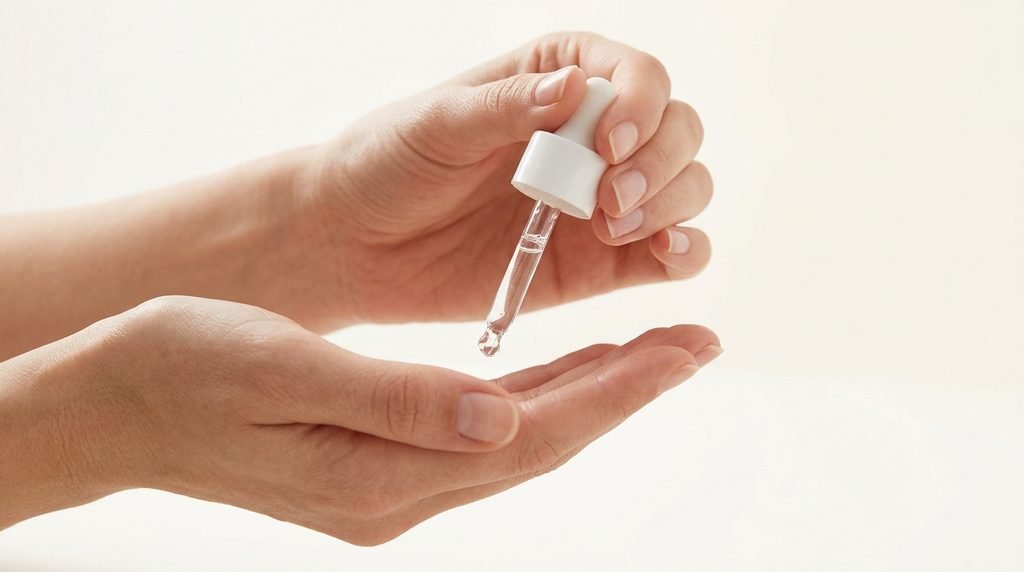
- Cleanse a nickel-sized area of skin with a gentle, non-stripping cleanser and pat dry.
- Apply 1 to 2 drops of the new serum and allow it to dry completely.
- Leave the site untouched and unwashed for 24 to 48 hours.
If you observe any itching, hives, swelling, or distinct redness during this timeframe, rinse the area with cool water immediately and do not apply the product to your face.
Step 2: Isolating Your New Product in Your Daily Routine
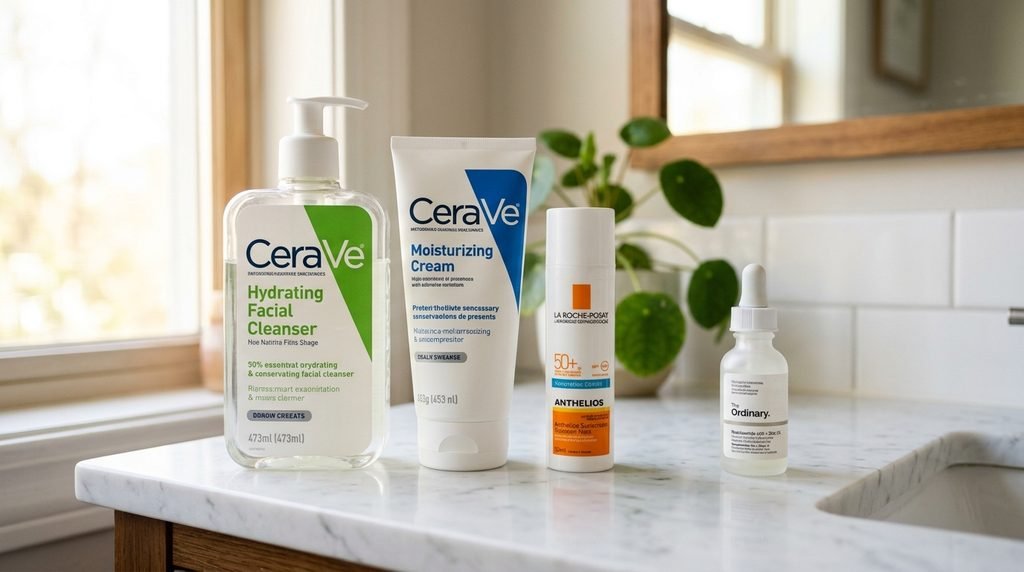
One of the most common skincare mistakes is launching multiple new products at the exact same time. If your skin reacts poorly, it becomes impossible to identify which product caused the issue.
To isolate your new serum, maintain a completely stable base routine for at least 14 days prior. Your base routine should consist exclusively of well-tolerated basics:
- A gentle, non-foaming or low-foaming cleanser
- A simple, fragrance-free barrier moisturizer
- A broad-spectrum mineral or chemical sunscreen
Pro Tip: Never introduce a new active serum while your skin is recovering from an active breakout, sun exposure, or recent clinical treatments like chemical peels or microneedling.
When adding a new active, avoid combining it simultaneously with other strong exfoliants or retinoids. For instance, if you are learning How to Layer Skincare Properly for maximum absorption, keep your existing active ingredients paused or separated into alternate nights while the new formula settles in.
Step 3: Following a Gradual Frequency-Ramp Schedule
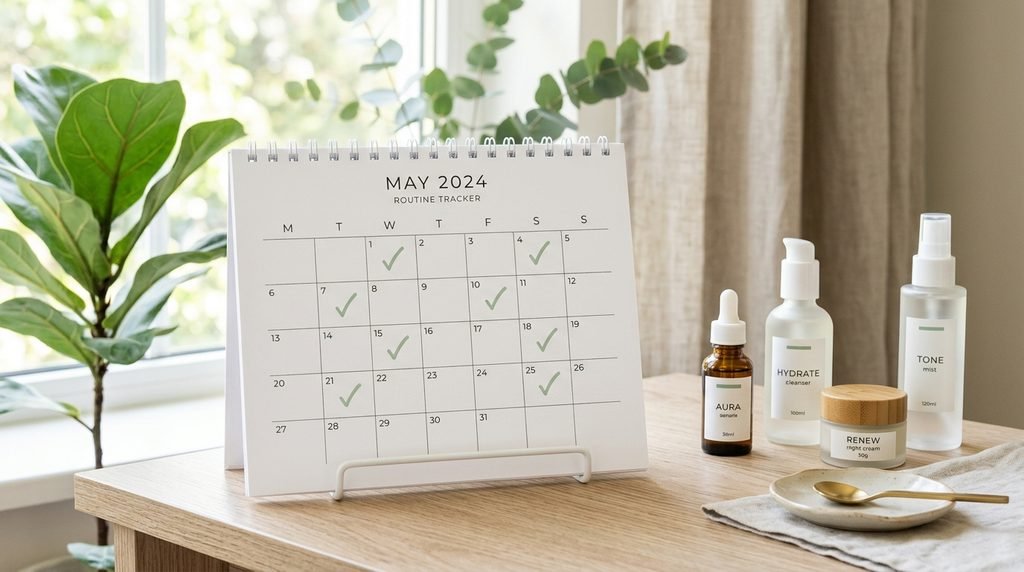
Your skin cells require time to adapt to concentrated ingredients, particularly direct acids, vitamin C, and retinoids. Applying a potent active daily right out of the bottle overwhelms the stratum corneum, compromising your moisture barrier.
| Week | Application Frequency | Best Time of Day | Objective |
| Week 1 | 1 to 2 times per week | Evening | Assess initial tolerance & immediate reactivity |
| Week 2 | 2 to 3 times per week | Evening | Monitor for delayed sensitivity or subtle flaking |
| Week 3 | Every other night | Evening or Morning* | Build cellular tolerance toward regular usage |
| Week 4+ | Daily (if needed/tolerated) | Preferred time | Maintain steady results without barrier stress |
*Note: Antioxidants like L-ascorbic acid belong in your morning routine under sunscreen, whereas retinoids and exfoliating acids should strictly be applied at night.
If you are introducing retinol slowly or working with potent AHA/BHA exfoliants, capping usage at 2 to 3 times per week long-term is often ideal for sensitive skin types.
Step 4: Skin Purging vs. Allergic Reaction — How to Tell the Difference
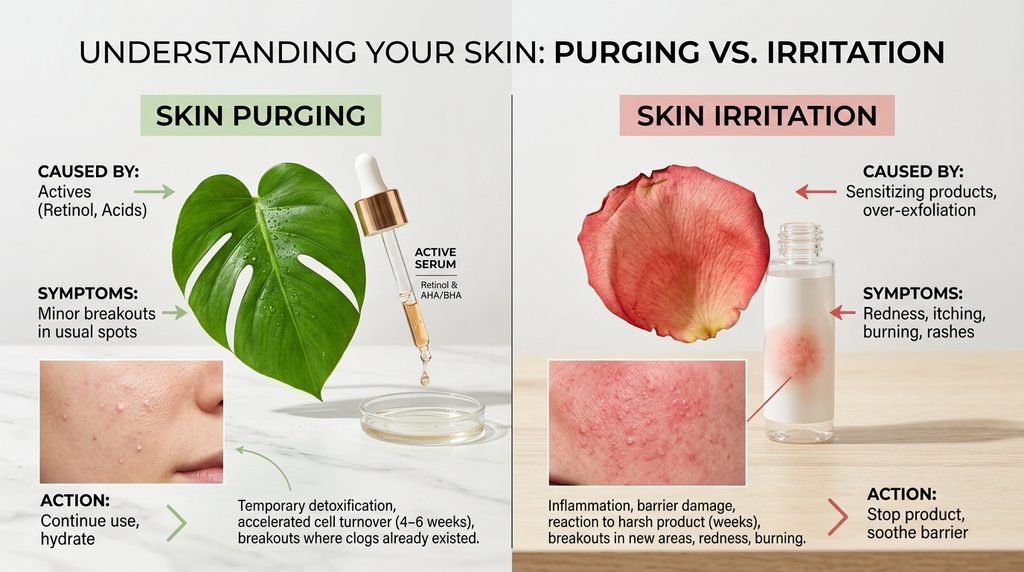
A major roadblock when adding new products is determining whether a breakout is a temporary adjustment or a sign of product rejection. Confusing skin purging with an allergic reaction causes many people to keep using a product that is actively damaging their moisture barrier.
                  ┌───────────────────────────────┐
                  │   Noticeable Skin Response    │
                  └───────────────┬───────────────┘
                                  │
         ┌────────────────────────┴────────────────────────┐
         ▼                                                 ▼
┌─────────────────────────┐               ┌─────────────────────────┐
│       SKIN PURGING      │               │    ALLERGIC REACTION    │
├─────────────────────────┤               ├─────────────────────────┤
│ • Accelerates turnover  │               │ • Immune/irritant response
│ • Occurs in usual zones │               │ • Appears in NEW areas   │
│ • Small whiteheads/papules              │ • Itching, hives, burn  │
│ • Resolves in 4-6 weeks │               │ • Persists/worsens      │
└─────────────────────────┘               └─────────────────────────┘
Understanding Skin Purging
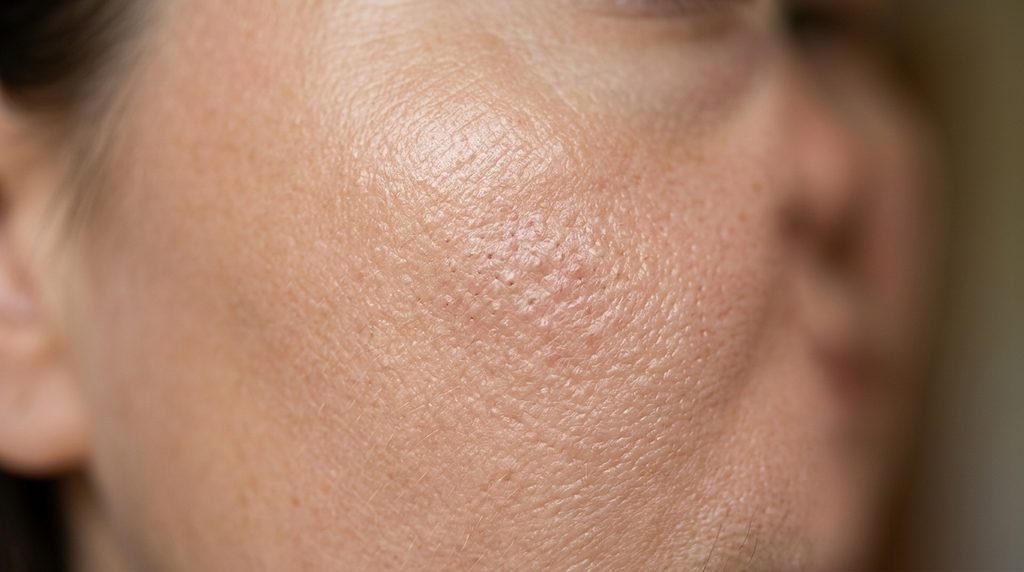
Skin purging occurs when an active ingredient accelerates cellular turnover, bringing pre-existing micro-comedones (under-the-surface clogs) to the top at an expedited rate.
- Trigger Ingredients: Retinoids (retinol, tretinoin), hydroxy acids (glycolic, lactic, salicylic acid), and benzoyl peroxide.
- Characteristics: Tiny papules or whiteheads appearing strictly in areas where you normally experience breakouts.
- Duration: Typically clears up within 4 to 6 weeks, coinciding with a full natural skin cell cycle.
Identifying an Irritant or Allergic Reaction

An allergic reaction or contact dermatitis is an immune response to an ingredient that your skin cannot tolerate, such as synthetic fragrances, essential oils, or severe pH imbalances.
- Trigger Ingredients: Any ingredient, including non-active hydrating serums, botanical extracts, or preservatives.
- Characteristics: Intense itching, burning, red bumps, or rash-like patches appearing in new areas where you rarely break out.
- Action Required: Discontinue use immediately. Continued application can lead to a damaged skin barrier, causing prolonged inflammation. For a deeper breakdown on repairing a compromised skin barrier, review our comprehensive guide on What Causes a Damaged Skin Barrier and How to Fix It.
How Long to Wait Between Introducing New Skincare Products

Patience is the ultimate virtue in topical skincare. Dermatologists generally recommend waiting 2 to 4 weeks between introducing separate new products into your routine.
This timeline aligns directly with the skin’s natural renewal cycle (approximately 28 days for young adults, lengthening as we age). Waiting a full cycle allows you to:
- Observe the true efficacy and side-effect profile of the newly introduced item.
- Ensure your skin barrier remains stable before introducing another potential stressor.
- Accurately pinpoint the culprit if sudden irritation or dryness develops later.
For authoritative safety guidelines on cosmetic ingredient testing and skin sensitivity standards, refer to resources published by the U.S. Food and Drug Administration (FDA) Cosmetic Safety Division.
Conclusion

Learning how to introduce a new serum without irritating your skin boils down to discipline, observation, and timing. By executing a proper 24-to-48 hour patch test, isolating the product within a stable base routine, and ramping up application frequency over 4 weeks, you protect your skin barrier while maximizing ingredient benefits. Remember to monitor your skin closely for signs of purging versus genuine allergic reactions, and always give your skin a 2-to-4-week resting period before adding another new active.
Ready to streamline your daily regimen without risking irritation? Explore our step-by-step breakdown on How to Properly Layer Active Ingredients to build a safe, highly effective routine tailored to your skin goals!
Frequently Asked Questions (FAQ)

Q: How do you introduce a new serum without irritating your skin?
A: Introduce a new serum by patch testing it behind your jawline for 24–48 hours first. Then, apply it to clean skin just 1 to 2 times a week, gradually increasing frequency over 4 weeks. Keep the rest of your skincare routine simple and stable during this period to avoid overwhelming your barrier.
Q: How do you patch test a new skincare product correctly?
A: Apply 1–2 drops of the new serum to a clean patch of skin on your inner arm or behind your jawline. Leave the area dry and unwashed for 24 to 48 hours. If you experience redness, itching, burning, or swelling, rinse immediately and refrain from using the product on your face.
Q: How long should you wait between introducing new skincare products?
A: You should wait at least 2 to 4 weeks between adding new products to your skincare routine. This timeline matches the natural skin renewal cycle (about 28 days), giving your skin ample time to adjust while allowing you to isolate and identify any adverse reactions.
Q: What is the main difference between skin purging and an allergic reaction?
A: Skin purging occurs only with cell-turnover actives (like acids or retinol) in areas where you normally break out, resolving within 4 to 6 weeks. An allergic reaction involves itching, red rashes, or breakouts in entirely new areas and can be caused by any ingredient.
Q: Should you start a new serum every day or a few times a week?
A: Always start a new serum 1 to 2 times a week, especially if it contains active ingredients like vitamin C, AHA/BHA acids, or retinoids. Gradually increase usage to 3 times a week, and eventually daily, only if your skin shows no signs of flaking, redness, or stinging.
Q: How do you know if a new serum isn’t working for your skin?
A: A serum isn’t working if you experience continuous burning upon application, tight or flaky skin, persistent itching, or breakouts in areas where you rarely get acne. If these symptoms continue beyond 7–10 days without improvement, discontinue use to prevent deep barrier damage.