Executive Summary
Managing rosacea requires a thoughtful, targeted approach to ingredient selection rather than a complex ten-step routine. Because rosacea involves persistent facial redness, hyper-reactivity, and a compromised moisture barrier, introducing the wrong topical formula can easily trigger a prolonged flare-up. This complete guide breaks down the essential ingredients that soothe vascular inflammation and strengthen skin protection, alongside the common irritants to avoid. Learn how soothing actives like azelaic acid and niacinamide calm visible flushing, discover why certain popular ingredients (like harsh essential oils or strong acids) cause irritation, and get a clear, step-by-step framework to build a safe, daily routine that restores balance to your complexion.
Rosacea Skincare: Navigating Soothing vs Triggering Ingredients
Finding the right balance in your daily routine can feel overwhelming when your skin reacts to almost everything. Rosacea is an inflammatory skin condition characterized by facial redness, visible blood vessels, and a fragile moisture barrier. Because rosacea-prone skin is inherently hyper-reactive, applying aggressive exfoliants or heavily fragranced products can trigger instant stinging and persistent flushing. By identifying key rosacea skincare ingredients that calm vascular reactivity while pinpointing hidden triggers, you can build a minimalist routine that calms active redness and keeps future flare-ups under control.
       ROSACEA SKINCARE INGREDIENT MAP
┌───────────────────────────┬───────────────────────────┐
│     INGREDIENTS THAT      │     INGREDIENTS THAT      │
│           HELP            │         IRRITATE          │
├───────────────────────────┼───────────────────────────┤
│ • Azelaic Acid (10-15%)   │ • Fragrance (Parfum)      │
│ • Niacinamide (2-5%)      │ • Denatured Alcohol       │
│ • Ceramides & Fatty Acids │ • Essential Oils          │
│ • Centella Asiatica       │ • High-% AHA/BHA Acids    │
│ • Hyaluronic Acid         │ • Physical Facial Scrubs  │
└───────────────────────────┴───────────────────────────┘
Ingredients That Help Rosacea: Top Actives for Soothing Redness
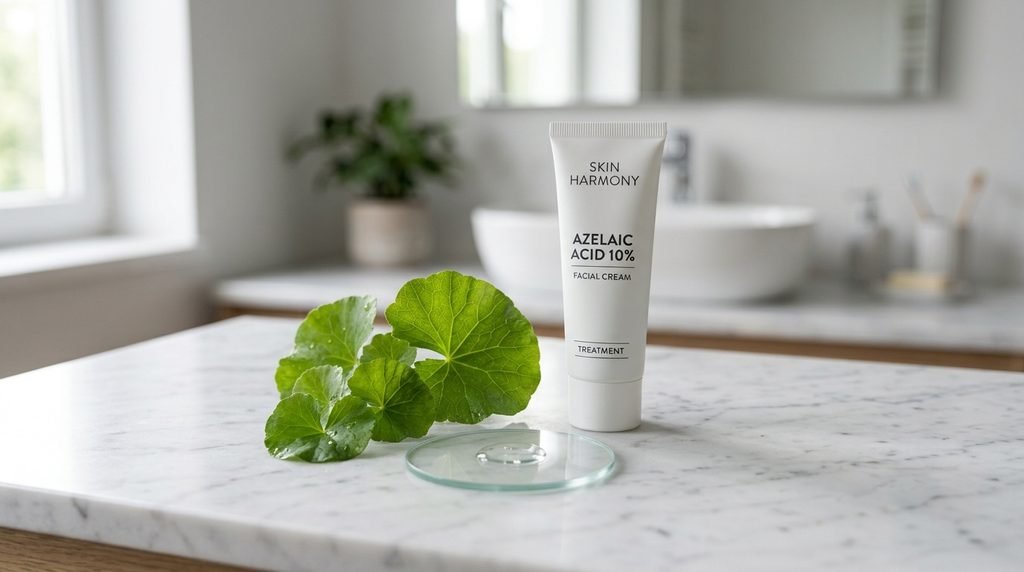
Calming rosacea-prone skin centers on lowering surface inflammation, reducing micro-vascular redness, and rebuilding a damaged skin barrier. Rather than overloading your face with complex formulations, focus on well-tolerated actives that restore skin comfort.
Azelaic Acid (10% to 15%)
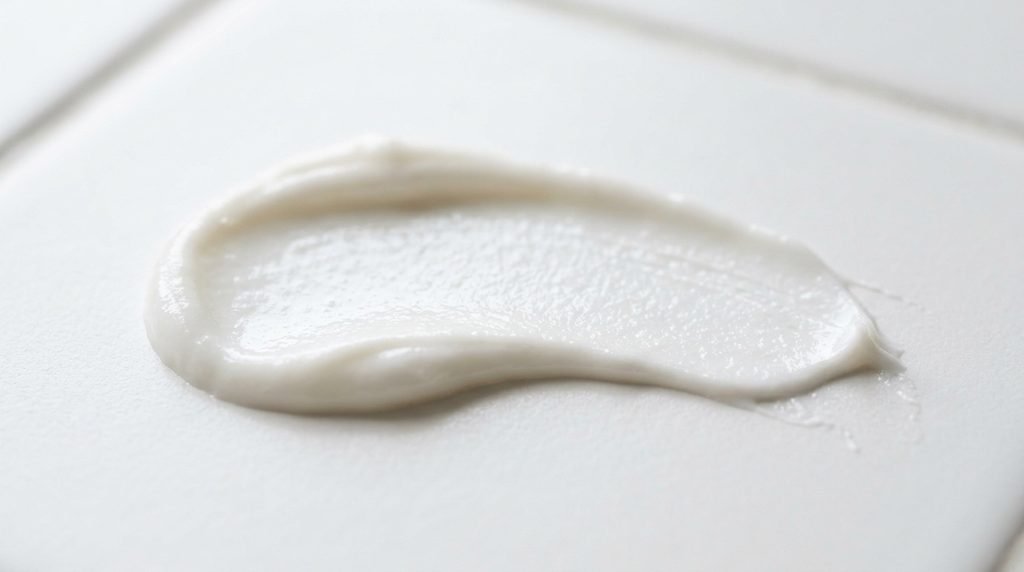
Azelaic acid is widely regarded as a gold-standard over-the-counter and prescription option for rosacea. This naturally occurring dicarboxylic acid provides potent antioxidant benefits, reduces swelling, and actively mitigates red bumps (papules and pustules) without causing the intense dryness linked to conventional acne treatments.
Niacinamide (Vitamin B3)
At gentle concentrations between 2% and 5%, niacinamide strengthens the skin barrier by stimulating lipid and ceramide production. Its inherent anti-inflammatory properties help reduce blotchiness and diminish flushing. For more details on incorporating this multi-tasking active into your daily regimen, check out our guide on What Is Niacinamide and How It Works.
Ceramides and Centella Asiatica
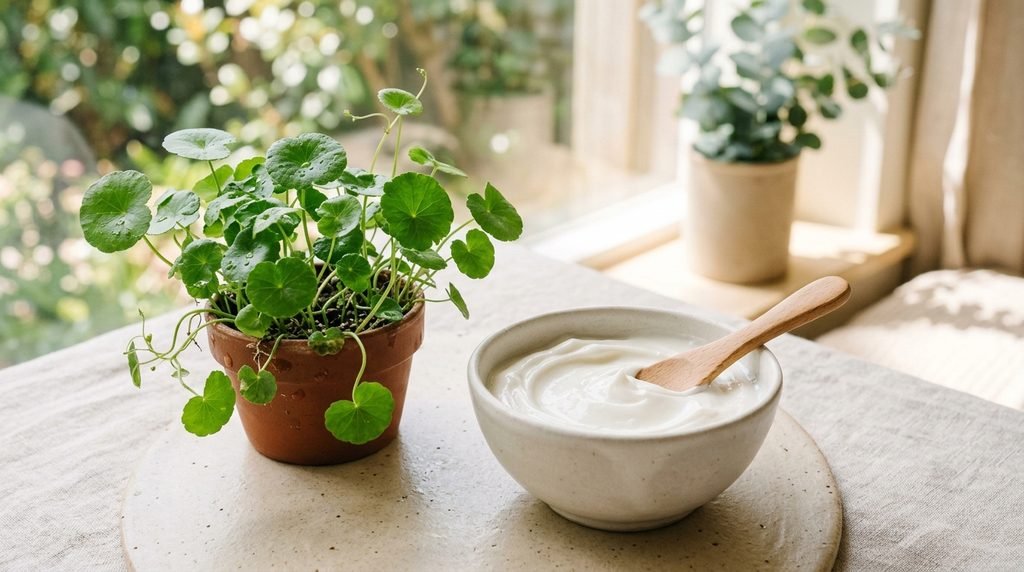
Skin affected by rosacea often suffers from high transepidermal water loss (TEWL). Replenishing skin lipids using ceramides, cholesterol, and fatty acids reinforces barrier resilience. Combining ceramides with Centella Asiatica (cica) or colloidal oatmeal provides an immediate soothing effect that dampens heat sensations during flare-ups.
Ingredients That Irritate Rosacea: Common Triggers to Avoid
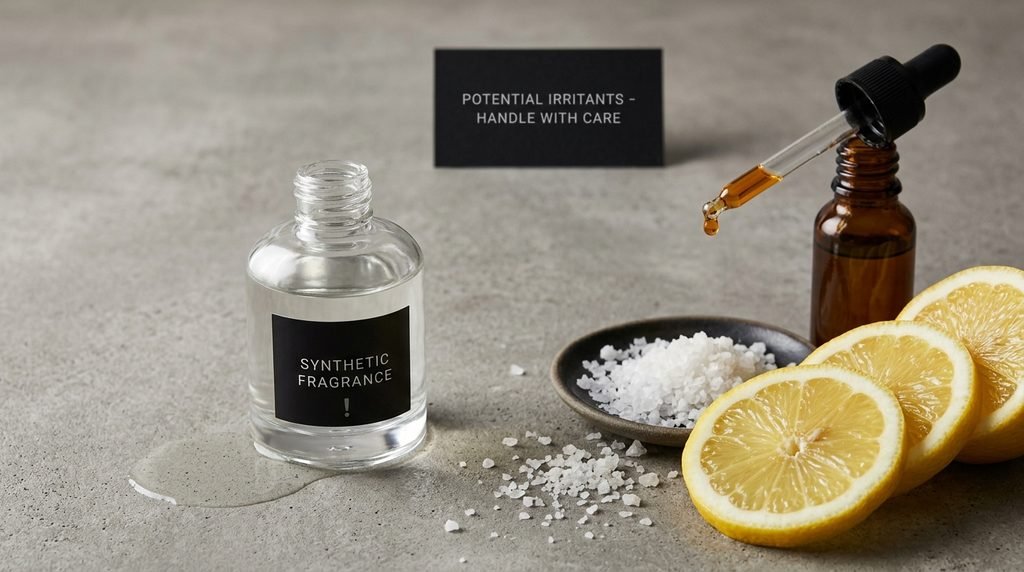
Steering clear of skin irritants is just as crucial as applying soothing formulas. Many conventional anti-aging and deep-cleansing products contain ingredients that disrupt the skin barrier, dilate blood vessels, or spark instant burning sensations.
                  FLARE-UP RISK MATRIX
   High Risk                              Moderate Risk
┌──────────────┐                       ┌─────────────────┐
│ Essential    │  Immediate Stinging   │ High-% Vitamin C│
│ Oils & Citrus│ ────────────────────► │ (Pure L-Ascorbic│
├──────────────┤   & Micro-Vascular    │ Acid < pH 3.5)  │
│ Denatured    │      Dilation         └─────────────────┘
│ Alcohol      │                               │
├──────────────┤                               ▼
│ Physical     │                       ┌─────────────────┐
│ Scrubs       │                       │ Low-Dose Retinol│
└──────────────┘                       │ (Requires Slow  │
                                       │ Introduction)   │
                                       └─────────────────┘
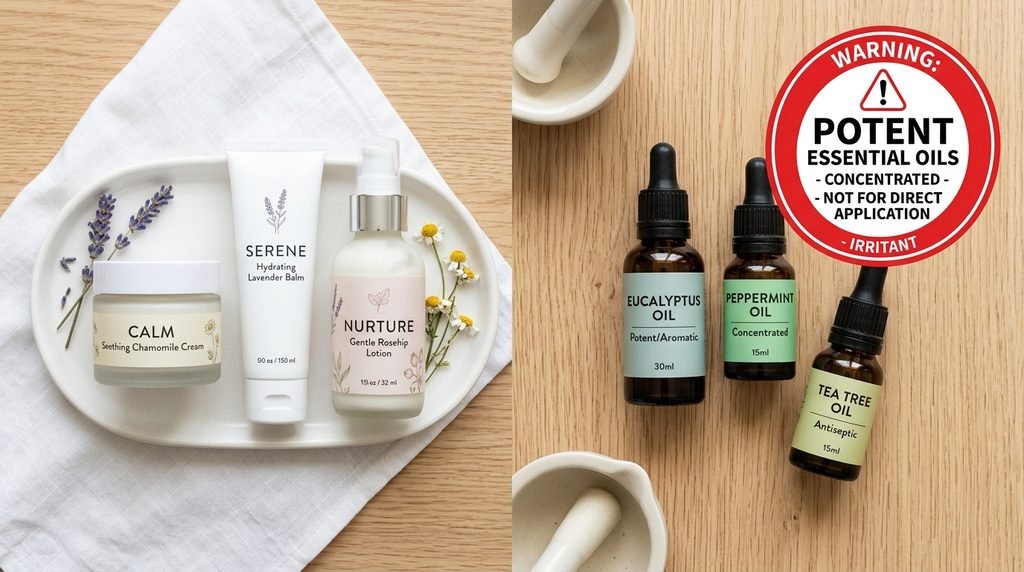
- Fragrance and Essential Oils: Both synthetic perfumes and natural essential oils (such as peppermint, eucalyptus, tea tree, and citrus oils) contain volatile aromatic compounds. These frequently cause contact sensitivity, flushing, and burning in delicate skin.
- Denatured Alcohol (Alcohol Denat / SD Alcohol): Commonly found in matte sunscreens and lightweight toners, astringent alcohols strip natural lipids, causing severe dryness and sudden barrier disruption.
- High-Concentration AHA/BHA Acids: Glycolic acid and strong salicylic acid peels lower skin pH significantly. While beneficial for oily skin types, strong chemical exfoliants strip rosacea-prone skin, leading to persistent redness.
- Physical Facial Scrubs: Mechanical exfoliants featuring walnut shells, sugar crystals, or stiff bristles inflict micro-tears and friction, dilating capillaries near the skin surface.
Rosacea vs. Sensitive Skin: Understanding the Difference
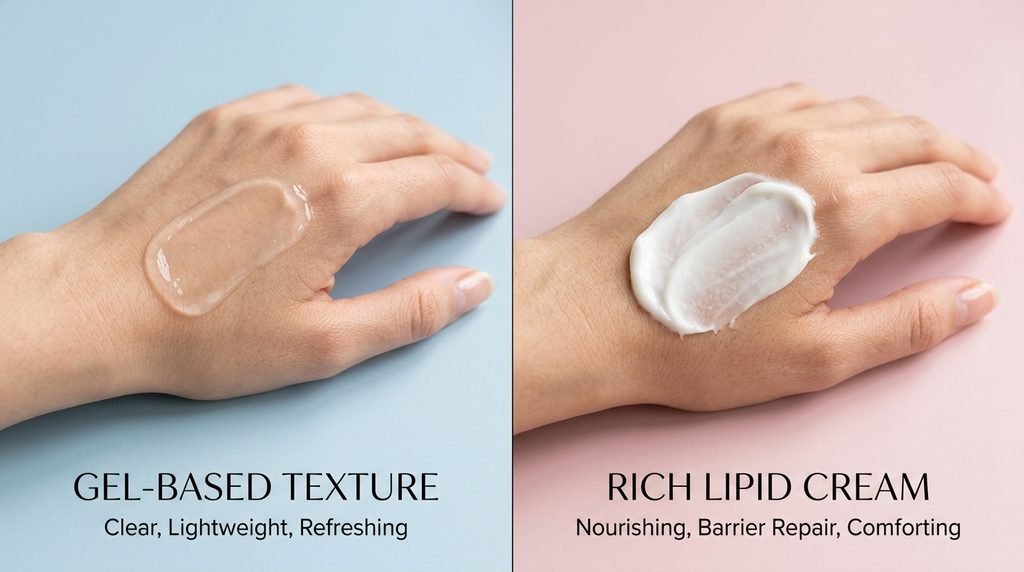
It is common to confuse rosacea with generic skin sensitivity, but recognizing the distinction ensures you choose appropriate treatments.
| Key Feature | Sensitive Skin | Rosacea-Prone Skin |
| Primary Trigger | External factors (harsh weather, new skincare products, friction). | Internal & external factors (spicy foods, heat, stress, UV, skincare). |
| Visual Appearance | Occasional mild pinkness, tightness, or localized scaling. | Persistent central redness, visible broken capillaries (telangiectasia), bumps. |
| Underlying Nature | Heightened nerve-ending reactivity or temporary barrier weakness. | Chronic inflammatory vascular condition requiring targeted care. |
| Primary Goal | Mild hydration, fragrance elimination, barrier protection. | Vascular soothing, inflammation control, targeted active management. |
Ingredients That Help vs. Irritate: Quick Comparison
Use this reference guide when reviewing product label ingredient lists (INCI) before buying new skincare formulas.
| Ingredient | Status | Primary Effect on Rosacea | Usage Recommendation |
| Azelaic Acid | Helps | Reduces inflammatory bumps & calms redness | Apply 1–2 times daily in a serum or cream |
| Niacinamide (2–5%) | Helps | Reinforces moisture barrier & lowers blotchiness | Pair with ceramides in morning/night moisturizers |
| Centella Asiatica | Helps | Soothes sensation of heat and tightness | Ideal in recovery creams during active flare-ups |
| Denatured Alcohol | Irritates | Strips surface lipids, causes severe tightness | Avoid completely in toners and sunscreens |
| Essential Oils | Irritates | Triggers contact dermatitis & micro-vascular flushing | Avoid peppermint, eucalyptus, and citrus extracts |
| Glycolic Acid (>5%) | Irritates | Over-exfoliates and disrupts delicate skin barrier | Replace with gentle PHA exfoliants if needed |
For authoritative clinical perspectives on managing vascular hypersensitivity, review the guidelines curated by the National Rosacea Society.
Building a Rosacea-Safe Skincare Routine
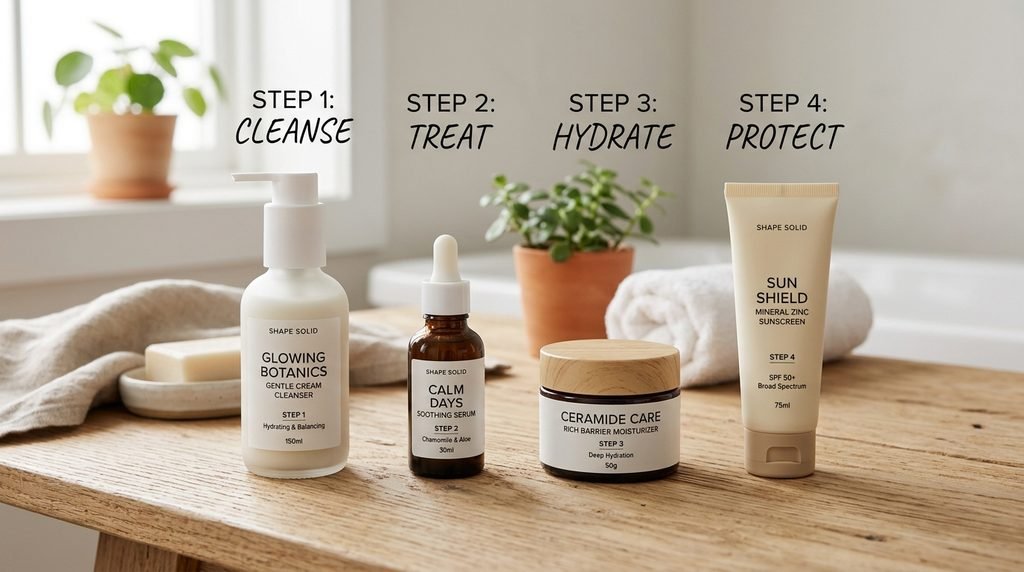
When managing active flushing, a minimalist approach works best. Limit your daily regimen to essential steps designed to clean, hydrate, protect, and repair without overwhelming your complexion.
MORNING (AM) ROUTINE           EVENING (PM) ROUTINE
┌─────────────────────────┐   ┌─────────────────────────┐
│ 1. Gentle Cleanser      │   │ 1. Gentle Cleanser      │
│    (Cream/Milk texture) │   │    (Remove SPF & grime) │
├─────────────────────────┤   ├─────────────────────────┤
│ 2. Soothing Active      │   │ 2. Treatment Serum      │
│    (Azelaic Acid 10%)   │   │    (Niacinamide 2-5%)   │
├─────────────────────────┤   ├─────────────────────────┤
│ 3. Barrier Moisturizer  │   │ 3. Rich Barrier Cream   │
│    (Ceramides + Cica)   │   │    (Ceramides & Lipids) │
├─────────────────────────┤   └─────────────────────────┘
│ 4. Mineral SPF 30+      │
│    (Zinc Oxide preferred)│
└─────────────────────────┘
- Gentle Cleansing: Wash morning and night with a non-foaming, sulfate-free cream or gel cleanser. Use lukewarm water, as extreme hot or cold temperatures trigger vascular flushing.
- Targeted Treatment: Apply a dedicated calming active like azelaic acid on clean, dry skin. To learn how this compound compares to other soothing treatments, explore our deep dive on Azelaic Acid Explained.
- Moisturization: Lock in hydration using a fragrance-free cream rich in ceramides, hyaluronic acid, and squalane to support daily barrier function.
- Mineral Sun Protection: Finish every morning with a broad-spectrum mineral sunscreen containing zinc oxide or titanium dioxide. Mineral filters reflect UV light directly, generating far less surface heat than chemical filters.
Conclusion
Managing rosacea successfully comes down to prioritizing barrier-supportive, anti-inflammatory ingredients while eliminating known irritants like fragrances, harsh alcohols, and strong exfoliants. Focus on a simple daily routine built around azelaic acid, low-dose niacinamide, ceramides, and zinc oxide sun protection. By choosing calm, consistent care over aggressive treatments, you can maintain a peaceful, comfortable, and resilient complexion.
Ready to build your ideal soothing routine? Start by auditing your current skincare shelf for hidden irritants, or explore our companion guide on Retinol Basics Explained to learn how to safely introduce anti-aging treatments without sparking skin irritation.
Frequently Asked Questions
Q: Can you use vitamin C if you have rosacea?
A: Pure L-ascorbic acid often triggers stinging on rosacea-prone skin due to its low pH requirements. However, buffered or lipid-soluble vitamin C derivatives—such as sodium ascorbyl phosphate or tetrahexyldecyl ascorbate—are far gentler. These offer antioxidant protection without causing unnecessary flushing when introduced gradually.
Q: What skincare ingredients irritate rosacea the most?
A: Synthetic fragrances, denatured alcohol, essential oils (like menthol, eucalyptus, and tea tree), high-percentage glycolic or salicylic acids, and physical scrubs cause severe irritation. These ingredients strip protective lipids, increase transepidermal water loss, and cause visible micro-vascular dilation.
Q: What skincare ingredient is best for rosacea?
A: Azelaic acid (10% to 15%) is widely considered one of the best over-the-counter ingredients for rosacea. It delivers potent anti-inflammatory and antioxidant benefits, helping reduce central face redness, calm heat, and smooth inflammatory bumps without stripping moisture.
Q: Can essential oils trigger rosacea flare-ups?
A: Yes, essential oils are frequent triggers for rosacea flare-ups. Aromatic extracts contain concentrated volatile compounds that can easily cause contact irritation and vascular dilation. It is best to stick to 100% fragrance-free and essential-oil-free skincare formulations.
Q: Should rosacea-prone skin avoid retinol entirely?
A: Not necessarily, but proceed with extreme caution. Traditional retinoids can disrupt a fragile skin barrier and spark intense flushing. If you wish to use retinoids, choose ultra-low concentrations, utilize buffering techniques over moisturizer, or select gentle alternatives like bakuchiol.
Q: What calms rosacea redness quickly during an active flare-up?
A: To calm active flushing, stop applying all active acids or exfoliants immediately. Apply a cool (not ice-cold) compress, followed by a fragrance-free barrier cream containing Centella Asiatica, colloidal oatmeal, or ceramides to soothe burning sensations and support barrier recovery.