Executive Summary
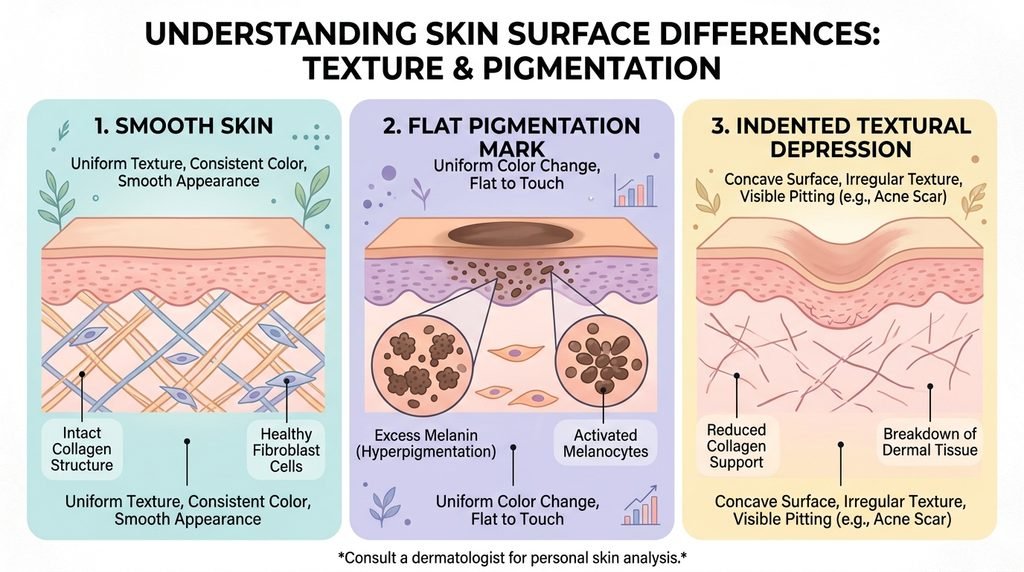
Post-acne skin changes leave many confused about whether they are dealing with temporary dark spots or permanent textural scarring. Topical skincare ingredients like retinoids, niacinamide, and chemical exfoliants excel at smoothing mild surface irregularities and fading post-inflammatory hyperpigmentation (PIH). However, deep structural changes—such as indented atrophic scars or raised hypertrophic scars—involve damaged collagen in the deeper dermal layers. While a tailored topical routine can refine overall skin texture, deeper structural scarring requires realistic expectations and professional dermatological interventions. This guide breaks down scar classification, topical ingredient mechanisms, realistic fading timelines, and clear indicators for when to consult a specialist.
Clear skin after a breakout feels like a major victory, until you are left with persistent marks. Many people spend months testing expensive serums only to see minimal progress. The reason is simple: flat red or dark marks left behind by pimples respond very differently to skincare than actual indented or raised scars. To figure out how to reduce acne scars effectively, you must first pinpoint exactly what type of mark is on your skin. Once you align the right active ingredients with the specific scar type, you can build a routine that delivers visible, lasting improvements.
Acne Scars vs. Dark Spots: What is the Difference?
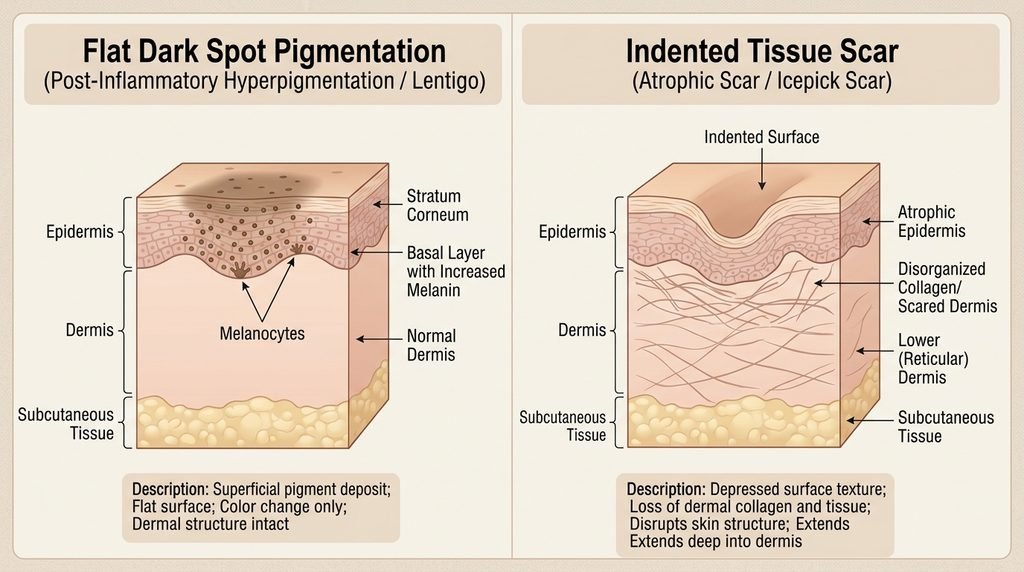
The distinction between dark spots and true acne scars comes down to skin structure. Dark spots—known scientifically as Post-Inflammatory Hyperpigmentation (PIH) or Post-Inflammatory Erythema (PIE)—are smooth to the touch. They occur when skin inflammation triggers excess melanin production or temporary vascular dilation. The underlying collagen framework remains intact.
True acne scars result from structural damage to the dermal tissue. When a severe breakout destroys deep skin tissue, the body attempts to repair it by producing new collagen. An underproduction of collagen results in indented pits, while an overproduction leads to raised tissue.
Because dark spots are confined to pigment changes in the upper skin layers, topical skincare can fade them entirely over time. True scars alter skin topography, meaning topical products can soften their appearance, but complete resolution usually requires targeted clinical procedures. Understanding this difference prevents wasted effort on treatments that do not match your skin’s actual structural needs. For a deeper breakdown of surface discoloration, see our detailed guide on Understanding Hyperpigmentation.
Atrophic vs. Hypertrophic Scars: Classification Guide
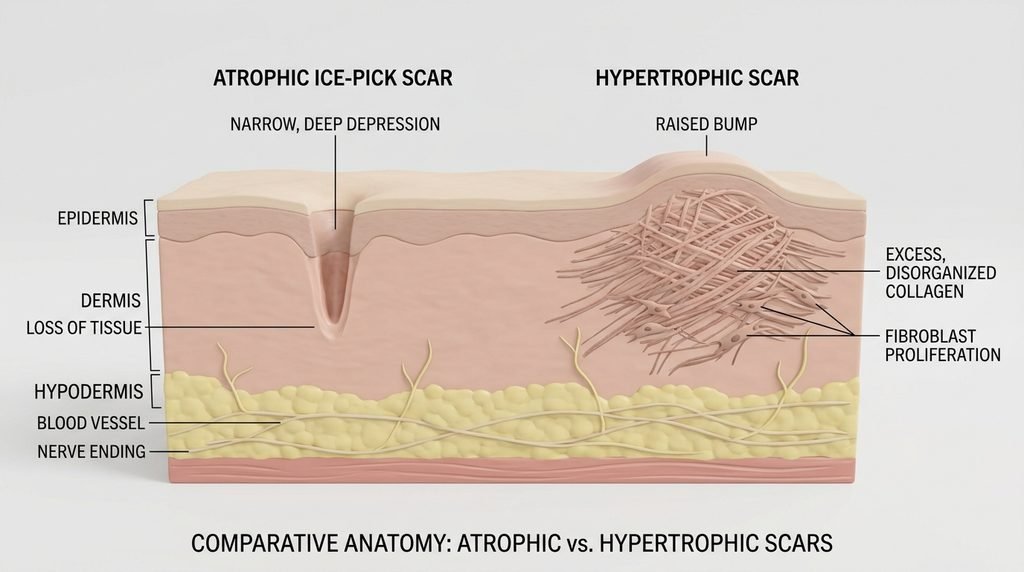
When structural collagen changes occur during wound healing, acne scars form in two primary ways:
Atrophic Scars (Indented)
Atrophic scars are the most common type resulting from inflammatory acne. They occur when skin tissue is lost during healing, creating depressions below the surrounding skin surface. They fall into three categories:
- Ice Pick Scars: Deep, narrow, V-shaped punctures extending into the dermis.
- Boxcar Scars: Broad, round or oval depressions with sharp, vertical edges.
- Rolling Scars: Wide, shallow depressions with sloping edges that give skin a undulating, uneven surface.
Hypertrophic Scars (Raised)
Hypertrophic scars occur when the skin produces excess collagen during the repair process, resulting in firm, raised bumps elevated above the normal skin surface. Unlike keloids, hypertrophic scars stay strictly within the boundaries of the original acne lesion. They are most commonly found on the jawline, chest, back, and shoulders.
Can Skincare Actually Fix Acne Scars?

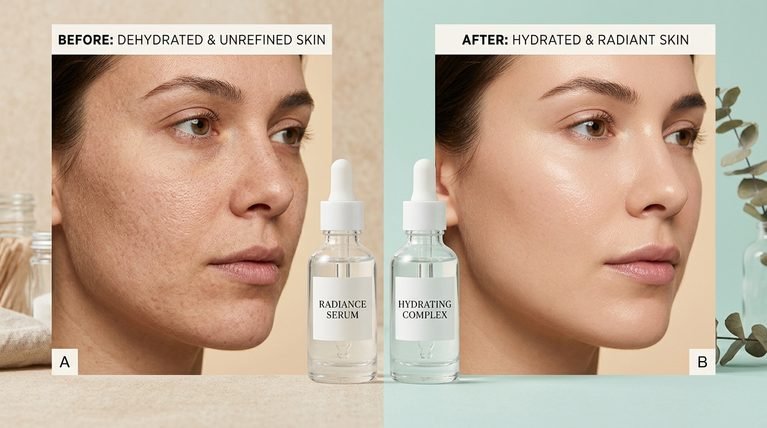
Topical skincare can significantly smooth mild surface texture, improve overall skin elasticity, and brighten surrounding pigment. Active ingredients like retinoids support natural cell turnover and boost collagen production over time, which gradually softens shallow rolling or boxcar scars.
However, topical products cannot fully rebuild missing dermal tissue or flatten dense fibrous keloidal tissue. Expecting a serum to erase deep ice pick scars is a common pitfall. Setting honest expectations ensures you use topical products for what they do best—refining texture and tone—while turning to professional clinical procedures for structural repair.
Best Ingredients for Acne Scars & Surface Texture
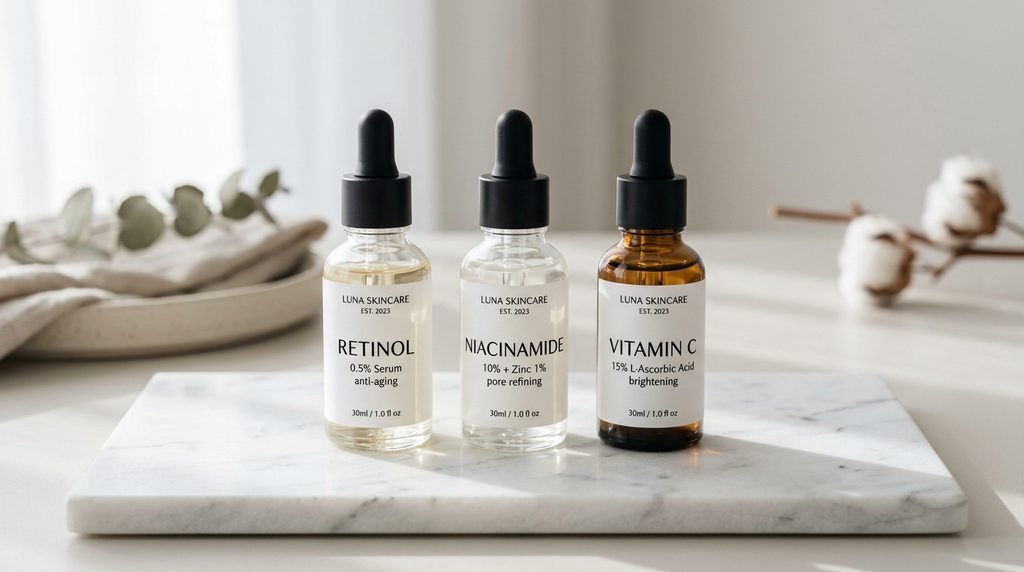
Combining targeted active ingredients into a consistent routine is the most reliable way to improve skin texture and fade residual discoloration.
| Ingredient | Mechanism of Action | Primary Benefit |
| Retinol | Accelerates epidermal cell turnover and stimulates dermal collagen synthesis. | Softens shallow textural depressions and smooths overall roughness. |
| Niacinamide (Vitamin B3) | Reduces cutaneous inflammation and inhibits melanosome transfer. | Fades dark spots, strengthens the skin barrier, and calms redness. |
| Vitamin C (L-Ascorbic Acid) | Neutralizes free radicals and inhibits tyrosinase activity. | Brightens hyperpigmentation and supports overall collagen production. |
| Alpha Hydroxy Acids (AHAs) | Dissolves intercellular desmosomes to exfoliate surface dead cells. | Smooths surface roughness and enhances penetration of other actives. |
To learn how to safely introduce these active ingredients into your routine without causing irritation, explore our guides on Retinol Basics Explained, What Is Niacinamide, and What Is Vitamin C Serum?. For published safety and biological mechanisms on topical retinoids, refer to the National Center for Biotechnology Information (NCBI) PubChem Database.
Realistic Timelines: How Long Do Acne Scars Take to Fade?

Improving skin texture requires patience. Surface discoloration like post-inflammatory hyperpigmentation typically takes 8 to 12 weeks of consistent active ingredient application to fade significantly.
Textural scars take longer because dermal collagen remodeling is a slow biological process. Noticeable softening of mild shallow scars generally requires 3 to 6 months of continuous retinoid use paired with daily sun protection. Sun exposure darkens pigmentation and breaks down collagen, stalling visible progress.
When to See a Dermatologist for Professional Care
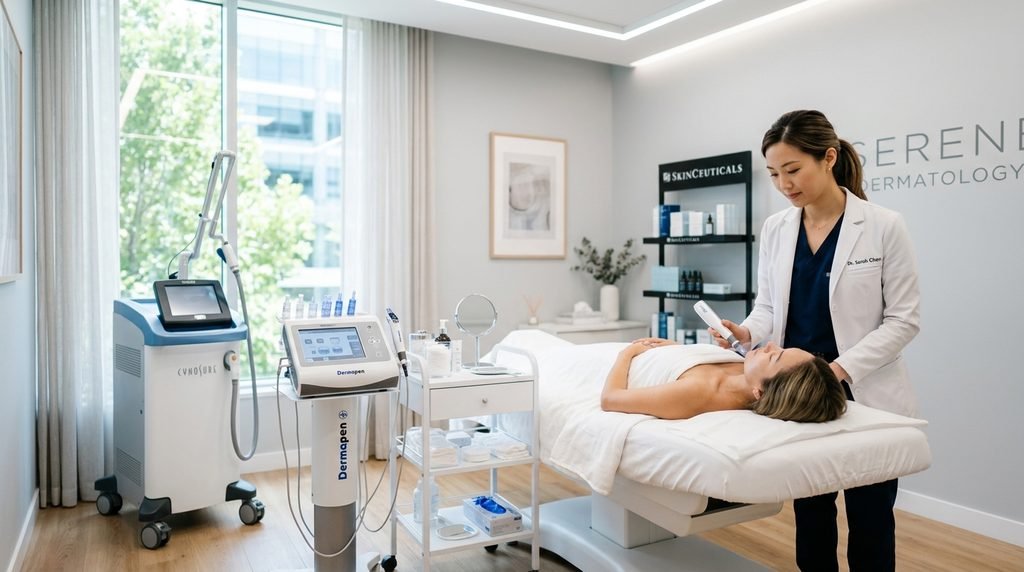
If topical skincare plateaued after 6 months or if you are dealing with severe atrophic or hypertrophic scarring, consult a board-certified dermatologist. In-office treatments penetrate into the dermal layers where topical serums cannot reach.
Common clinical options include:
- Microneedling / Radiofrequency Microneedling: Creates controlled micro-injuries to trigger robust collagen production.
- Chemical Peels (TCA / High-Percentage AHAs): Removes damaged outer skin layers to encourage fresh epidermal regeneration.
- Laser Resurfacing (Ablative & Non-Ablative): Uses light energy to target scar tissue and promote structural remodeling.
- Subcision & Fillers: Manually releases fibrous scar bands tethering the skin down or temporarily plumps deep depressions.
Conclusion

Reducing the appearance of acne scars requires matching your expectations to your specific scar type. Flat dark spots respond well to topical brighteners and exfoliants, while true textural scars require collagen-stimulating actives like retinoids alongside daily sun protection. Severe structural scarring often necessitates professional dermatological procedures for optimal restoration. By building a consistent, targeted routine and protecting your skin from daily UV exposure, you can gradually smooth texture and restore an even, radiant complexion over time.
FAQ Section

Q: What is the main difference between acne scars and dark spots?
A: Dark spots (post-inflammatory hyperpigmentation) are flat pigment changes in the top skin layer that fade over time. Acne scars involve actual structural tissue changes—either indented depressions or raised tissue—caused by deeper collagen damage during acne healing.
Q: Can topical skincare completely remove deep acne scars?
A: Topical skincare cannot completely erase deep structural scars like ice pick or severe boxcar scars. However, active ingredients like retinoids and chemical exfoliants can visibly soften shallow texture irregularities and brighten surrounding skin.
Q: How long does it take for acne scars and marks to fade?
A: Flat dark spots usually take 8 to 12 weeks to fade with consistent topical care. True textural scars require 3 to 6 months of active treatment, like topical retinoids, to show visible softening through collagen remodeling.
Q: What skincare ingredients are most effective for acne scar texture?
A: Retinol is key for stimulating collagen synthesis and cellular turnover. Niacinamide calms inflammation and evens tone, while glycolic and lactic acids exfoliate surface cells to smooth rough texture and enhance product absorption.
Q: Do acne scars go away on their own without treatment?
A: Flat post-acne dark spots often fade naturally over several months as skin cells turn over. True textural scars—whether indented or raised—rarely resolve completely on their own without active topical treatments or clinical interventions.
Q: When should I consider seeing a dermatologist for acne scars?
A: You should consult a dermatologist if topical skincare shows no progress after 3 to 6 months, or if you have deep atrophic scars or raised hypertrophic tissue, which require clinical treatments like microneedling, laser therapy, or subcision.