Navigating chemical exfoliants doesn’t need to feel like a chemistry exam. Alpha Hydroxy Acids (AHAs), Beta Hydroxy Acids (BHAs), and Polyhydroxy Acids (PHAs) each target different skin layers and concerns. AHAs sweep away dead surface cells to restore glow and smooth out rough texture. BHAs dive deep into oil-filled pores to dissolve clog-causing debris, making them ideal for breakout-prone skin. PHAs deliver similar surface-smoothing benefits using larger molecules that penetrate slowly, minimizing irritation for sensitive skin types. This guide breaks down the core differences, ingredient names, and exact usage guidelines so you can choose the right acid for your routine without risking damage to your moisture barrier.
Executive Summary
Ever bought a glowing, highly recommended chemical exfoliant only to end up with red, stingy skin two days later? You’re not alone. The world of chemical exfoliation can feel downright overwhelming when every bottle promises smooth, radiant skin, yet each uses different active ingredients. Choosing between an AHA vs BHA vs PHA comes down to understanding how your unique skin type reacts to water-soluble, oil-soluble, or large-molecule formulations. Rather than guessing and hoping for the best, understanding how these three acid families work helps you pick the exact exfoliant your skin actually needs. Let’s break down the science in simple terms, dispel common myths, and help you find your perfect match.
What Are AHAs, BHAs, and PHAs?
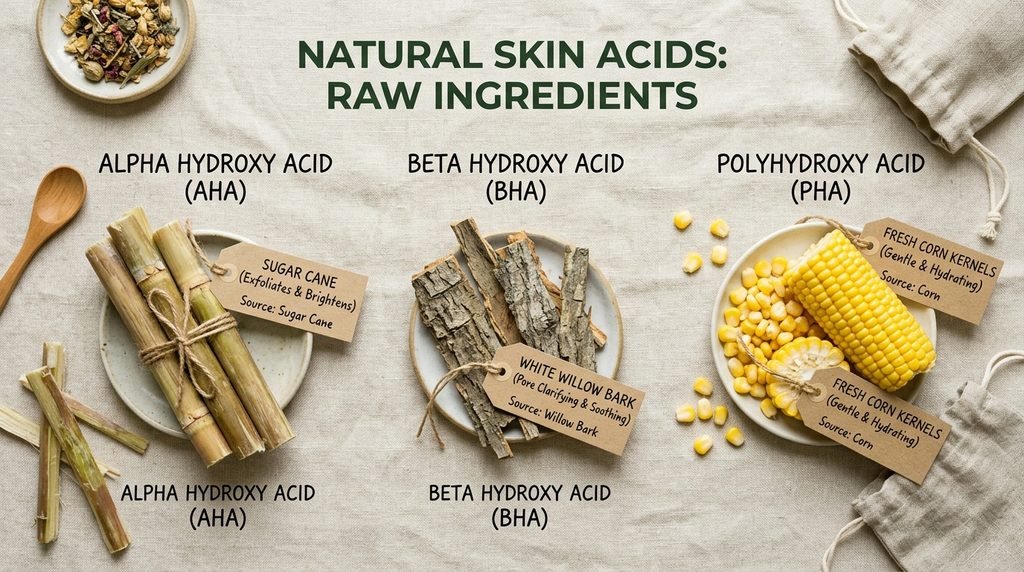
Chemical exfoliants fall into three primary categories based on their molecular structure, solubility, and depth of penetration. Unlike harsh physical scrubs that use rough particles to scrape away dead skin, liquid exfoliants break down the cellular “glue” holding dull, dead cells to your skin’s surface.
- AHAs (Alpha Hydroxy Acids): Water-soluble acids derived from sugary fruits, milk, or synthetic sources. Because they love water, they work primarily on the outermost surface of the skin. They shed dead surface cells, boost natural hydration, and smooth out visible texture.
- BHAs (Beta Hydroxy Acids): Oil-soluble acids that pass through your skin’s natural oils. This oil solubility allows them to travel beneath the surface, deep into the lining of your pores, to break down trapped sebum and dead cell buildup.
- PHAs (Polyhydroxy Acids): The next generation of surface exfoliants. Structurally similar to AHAs, PHAs feature a significantly larger molecular size. This means they penetrate the skin far more slowly, delivering gentle surface exfoliation without the stinging or flushing often associated with stronger acids.
+-----------------------------------------------------------------------------------------+
|                                    SKIN SURFACE LAYER                                   |
|  [PHA] Larger molecules -> Slow, surface-only exfoliation (Gentle, hydrating)           |
|  [AHA] Water-soluble   -> Surface cell turnover & hydration (Texture, dullness)         |
+-----------------------------------------------------------------------------------------+
|                                    DEEP PORE LINING                                     |
|  [BHA] Oil-soluble     -> Penetrates sebum to clear pore buildup (Blackheads, oil)      |
+-----------------------------------------------------------------------------------------+
AHA vs BHA vs PHA: Direct Side-by-Side Comparison
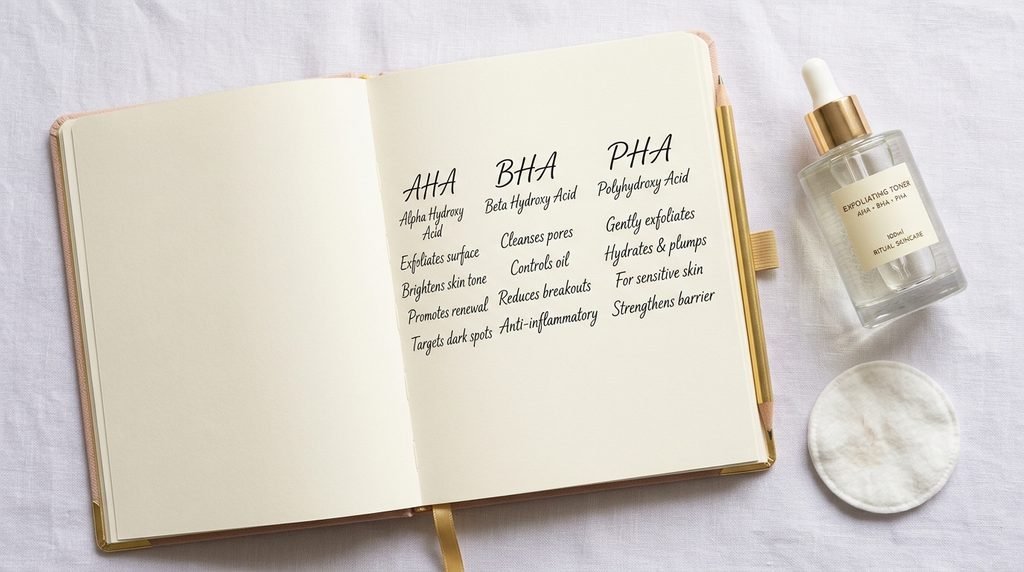
To understand which acid fits your daily routine, it helps to look at how their physical properties translate to real-world skin benefits.
| Feature | AHAs (Alpha Hydroxy Acids) | BHAs (Beta Hydroxy Acids) | PHAs (Polyhydroxy Acids) |
| Solubility | Water-soluble | Oil-soluble | Water-soluble |
| Depth of Action | Skin surface | Surface + inside pore lining | Outer skin surface only |
| Primary Benefits | Texture smoothing, surface glow, hydration | Pore clearing, blackhead reduction, oil balance | Ultra-gentle smoothing, moisture retention |
| Best Skin Types | Dry, sun-damaged, or mature skin | Oily, combination, and acne-prone skin | Sensitive, reactive, or rosacea-prone skin |
| Sensitivity Risk | Moderate (increases sun sensitivity) | Low to Moderate | Very Low |
| Common Concentrations | 5% – 10% | 0.5% – 2% | 5% – 15% |
Understanding these distinctions prevents you from using an oil-soluble pore cleanser when what your skin actually craves is deep surface hydration.
Key Ingredients: How to Read Your Skincare Labels
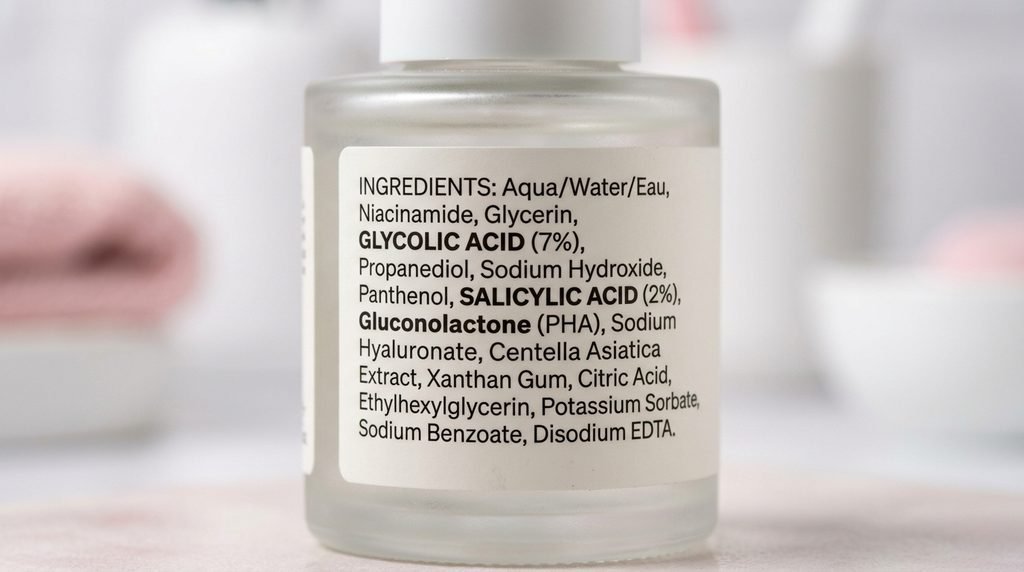
Skincare packaging rarely prints “AHA” or “PHA” in giant letters on the front label. Instead, you’ll find specific acid names listed in the ingredients deck. Knowing which category your bottle belongs to helps you manage strength and frequency.
Common AHAs
- Glycolic Acid: The smallest molecular size among AHAs, allowing it to penetrate quickly and deeply into the surface layers. Highly effective for smoothing rough patches, but can trigger irritation if overused.
- Lactic Acid: A slightly larger molecule than glycolic acid, making it milder. Lactic acid is a natural humectant, meaning it pulls water into the skin while exfoliating.
- Mandelic Acid: Derived from bitter almonds, this acid has the largest molecule in the AHA family, offering a very gentle surface refresh.
Common BHAs
- Salicylic Acid: The gold standard BHA. It cuts through surface oil, calms visible redness, and keeps pore walls clear of congestion.
- Betaine Salicylate: A milder derivative often found in gentle daily toners, offering BHA benefits with less drying potential.
Common PHAs
- Gluconolactone: A widely used PHA that exfoliates while reinforcing the skin’s protective barrier and acting as an antioxidant.
- Lactobionic Acid: Derived from milk sugar, this ingredient hydrates skin aggressively while soothing surface redness.
If you are exploring other gentle active ingredients to target uneven tone or redness alongside your acid routine, read our detailed guide on [Azelaic Acid Explained] for a complete breakdown of its unique barrier-safe benefits.
How to Choose the Right Acid for Your Skin Type
Selecting the right chemical exfoliant boils down to matching the acid’s strengths to your primary skin concerns.
For Dry or Sun-Damaged Skin: Choose AHAs
Dry skin often struggles to shed dead cells on its own, leading to a dull, flaky finish. AHAs work double duty by dissolving surface flakes while enhancing your skin’s ability to hold onto moisture. Lactic acid is an exceptional starting place if your skin leans dry.
For Oily, Clogged, or Breakout-Prone Skin: Choose BHAs
If you deal with stubborn blackheads, persistent shine, or clogged pores, water-soluble acids won’t address the root issue. BHAs dissolve the oil plugs sitting inside your pores, keeping sebum flowing freely and reducing the look of enlarged pores.
For Sensitive or Reactive Skin: Choose PHAs
If traditional acids leave your face feeling hot, tight, or flaky, PHAs provide a safe alternative. Because their large molecules can’t dive deeply into the epidermal layers, they deliver soft, smooth skin without triggering inflammation.
Can You Use AHA, BHA, and PHA Together?

Yes, but how you combine them matters tremendously for maintaining a healthy moisture barrier.
Many modern formulations mix low percentages of all three acids into a single product. These pre-formulated blends are balanced by cosmetic chemists to remain stable and gentle. However, layering three separate full-strength acid serums on top of one another in the same routine is a fast track to over-exfoliation, raw skin, and barrier damage.
SAFE ROUTINE PATTERNS:
1. Combination Formulations: Use a single multi-acid product 1-2x per week.
2. Alternating Nights: AHA on Monday night -> BHA on Wednesday night -> Rest nights in between.
3. Zone Application (Multi-Toning): BHA on oily T-zone -> PHA or AHA on dry cheeks.
If your routine already contains potent actives like retinoids, proceed with caution. Mixing high-strength exfoliants with vitamin A derivatives often leads to severe irritation. For a step-by-step breakdown on structuring your evening actives safely, check out our guide on [Retinol Basics Explained].
According to safety reviews by the Cosmetic Ingredient Review (CIR) Expert Panel, topical hydroxy acids are safe for consumer use when formulated to minimize skin irritation and accompanied by daily sun protection.
How Often Should You Use Chemical Exfoliants?

Over-exfoliation is one of the most common causes of barrier dysfunction. When introducing any new exfoliating acid, patience yields better results than frequency.
- Start Slow: Begin by applying your chosen exfoliant just once or twice a week at night.
- Monitor Your Skin: Look for signs of tolerance—smooth texture, good product absorption, and zero stingings. If you notice redness, tightness, or a shiny, plastic-like appearance, back off immediately.
- Build Up Gradually: If your skin tolerates the initial frequency after three weeks, you can increase usage to two or three times per week. Most skin types rarely need daily strong exfoliation.
- Always Wear Sunscreen: AHAs in particular increase your skin’s sensitivity to sunlight. Apply a broad-spectrum SPF 30 or higher every morning, regardless of the weather.
Conclusion

Finding the ideal exfoliating acid isn’t about buying the strongest concentration on the shelf—it’s about matching the right molecule to your specific skin needs. AHAs offer brilliant surface smoothing and hydration for dry or dull skin, BHAs clear deep-pore congestion for oily and breakout-prone types, and PHAs deliver gentle, barrier-friendly radiance for sensitive skin. By choosing thoughtfully, starting slowly, and respecting your skin’s protective barrier, you can achieve a clear, healthy glow without the irritation. Ready to refine your daily skincare habits? Explore our full collection of ingredient guides to build a balanced, effective routine tailored just for you.
FAQ Section
Q: Is PHA better than AHA and BHA?
A: PHAs are not inherently better than AHAs or BHAs; they simply serve different skin needs. PHAs excel for sensitive, easily irritated skin due to their large molecular structure that stays on the surface. However, BHAs remain superior for clogged pores, and AHAs provide stronger surface renewal for dry skin.
Q: Can PHA remove stubborn blackheads?
A: PHAs are water-soluble and work exclusively on the skin’s surface, meaning they cannot dive into pores to dissolve oil plugs. While PHAs help clear dead surface cells that trap oil, a BHA like salicylic acid is much more effective for targeting and clearing stubborn blackheads deep within pores.
Q: Which is better for acne scars, BHA or AHA?
A: AHAs like glycolic or lactic acid are generally more effective for fading surface post-acne dark spots (hyperpigmentation) by accelerating dead cell turnover. However, BHAs are better for active breakouts because they clean deep inside pores. Many people use both strategically to manage active congestion and post-blemish marks.
Q: How do I know if I need AHA or BHA?
A: Look at your main skin concern. If your primary goal is fixing dullness, rough texture, or surface dryness, an AHA is your best choice. If your main struggles are blackheads, excess shine, enlarged pores, or frequent breakouts, a BHA will yield better results by penetrating pore oil.
Q: Is glycolic acid an AHA or BHA?
A: Glycolic acid is an Alpha Hydroxy Acid (AHA). Derived naturally from sugar cane, it has the smallest molecule size of any AHA, making it highly effective at sweeping away dead surface cells. Because it is water-soluble, it works primarily on skin texture rather than deep inside oily pores.
Q: Can you use exfoliating acids on the same night as retinol?
A: It is generally not recommended to layer exfoliating acids and retinol during the same evening routine. Combining these potent active ingredients significantly increases the risk of dryness, redness, and moisture barrier breakdown. Instead, alternate nights—use your exfoliating acid one evening and your retinol product the next.