Executive Summary
A damaged skin barrier shows up as persistent redness, stinging, tightness, and unexpected breakouts. When your skin’s protective lipid mantle gets compromised by over-exfoliation, harsh cleansers, or stacking too many active ingredients, it loses its ability to lock in hydration and keep irritants out.
Fixing your skin barrier requires taking an immediate pause on active ingredients and switching to a simplified recovery routine focused on lipid-replenishing ingredients like ceramides, fatty acids, cholesterol, and niacinamide. Repair typically takes anywhere from two to eight weeks depending on severity. This guide breaks down the core causes of barrier damage, provides a self-diagnosis checklist, clarifies the common confusion between purging and barrier breakdown, and walks you through a step-by-step recovery plan.
The Signs and Hidden Causes of Barrier Damage
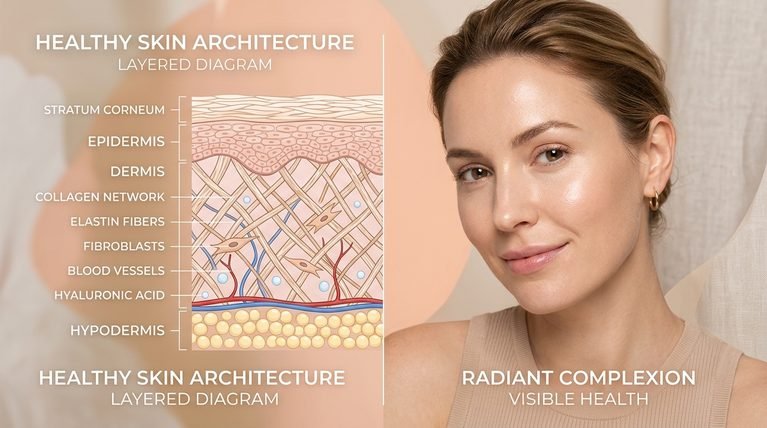
If your regular daily moisturizer suddenly stings upon application or your skin feels uncomfortably tight even when oily, your skin barrier is signaling for help. The stratum corneum—the outermost layer of your skin—acts like a brick wall where skin cells are the bricks and natural lipids (ceramides, cholesterol, and free fatty acids) act as the mortar. When this mortar washes away, water escapes rapidly (known as trans-epidermal water loss) while environmental irritants penetrate freely.
       HEALTHY BARRIER                      DAMAGED BARRIER
+---------------------------+        +---------------------------+
| [Cell] [Lipid] [Cell]     |        | [Cell]   GAP   [Cell]     |  <-- Lipids washed away
|   Locked Moisture (TEWL)  |        |    Moisture Escapes!      |  <-- Rapid water loss
|   Irritants Blocked       |        |   Irritants Penetrate     |  <-- Stinging & Redness
+---------------------------+        +---------------------------+
Understanding what triggers this disruption is the first step toward lasting skin health.
5 Clear Signs Your Skin Barrier Is Damaged
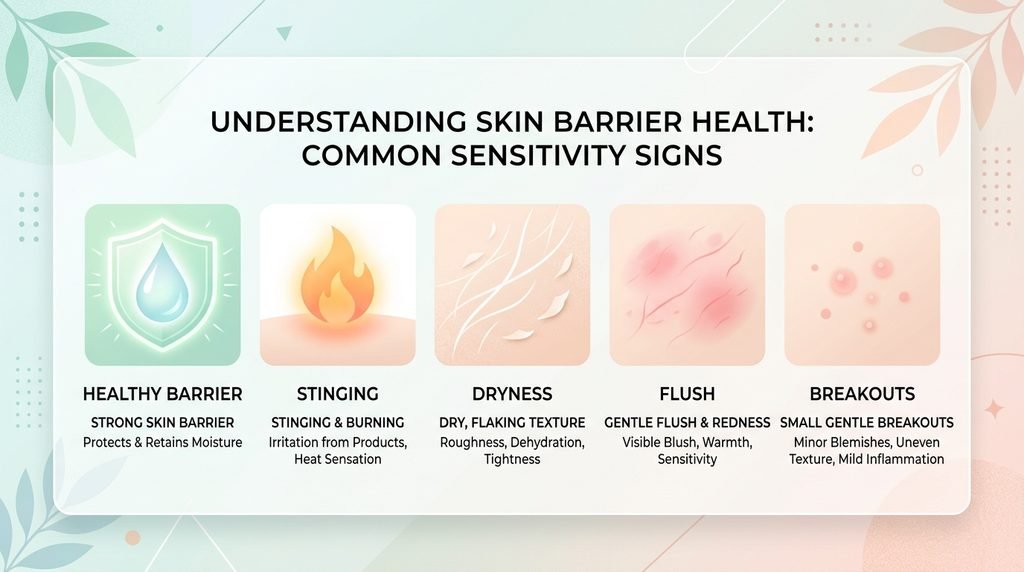
Recognizing barrier damage early prevents prolonged inflammation and hyperpigmentation. Check if you are experiencing any of these five classic warning signs:
- Persistent Stinging or Burning: Gentle, basic products that never bothered you before—like a simple hydrating lotion—suddenly sting or burn upon contact.
- Dehydrated Yet Oily Texture: Your skin feels tight, paper-dry, or stretched underneath, yet produces an oily sheen on the surface as it tries to compensate for moisture loss.
- Widespread Flaking and Redness: Noticeable rough spots, dry patches, or diffuse flushness across your cheeks and around your mouth.
- Increased Sensitivity to Everything: Weather changes, mild tap water, or soft cotton pads leave your face feeling irritated and raw.
- Sudden Small Bumps or Breakouts: A wave of tiny, surface-level breakouts or cluster spots appearing in areas where you rarely break out.
What Causes a Damaged Skin Barrier?
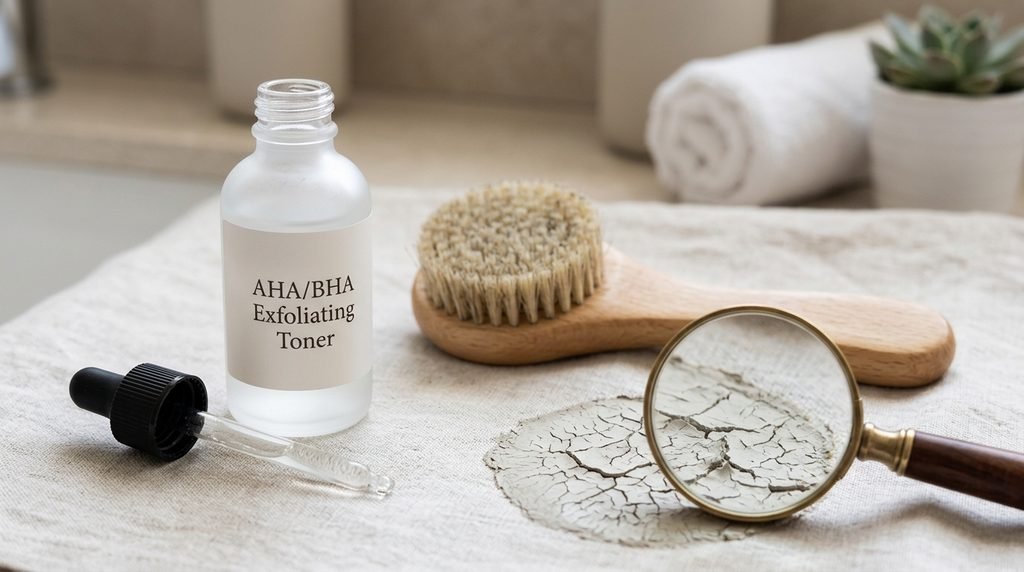
Skin barrier disruption rarely happens overnight from a single source. It is usually the cumulative result of common skincare mistakes or environmental stress:
- Over-Exfoliation: Using physical scrubs or chemical exfoliants (AHAs like glycolic acid, BHAs like salicylic acid) daily strips away living surface cells before they can mature.
- Layering Too Many Actives: Stacking high-potency retinoids, L-ascorbic acid (Vitamin C), and exfoliation acids in the same routine overburdens skin capacity.
- Harsh Cleansers: High-pH bar soaps or sulfate-heavy foaming cleansers strip away the natural sebum mantle during cleansing.
- Environmental Stressors: Dry indoor heating, cold winter winds, low humidity, and unprotected UV exposure sap moisture levels rapidly.
- Hot Water Routine: Washing your face with hot water in the shower dilutes natural protective oils and accelerates water loss.
Damaged Skin Barrier vs. Purging: How to Tell the Difference
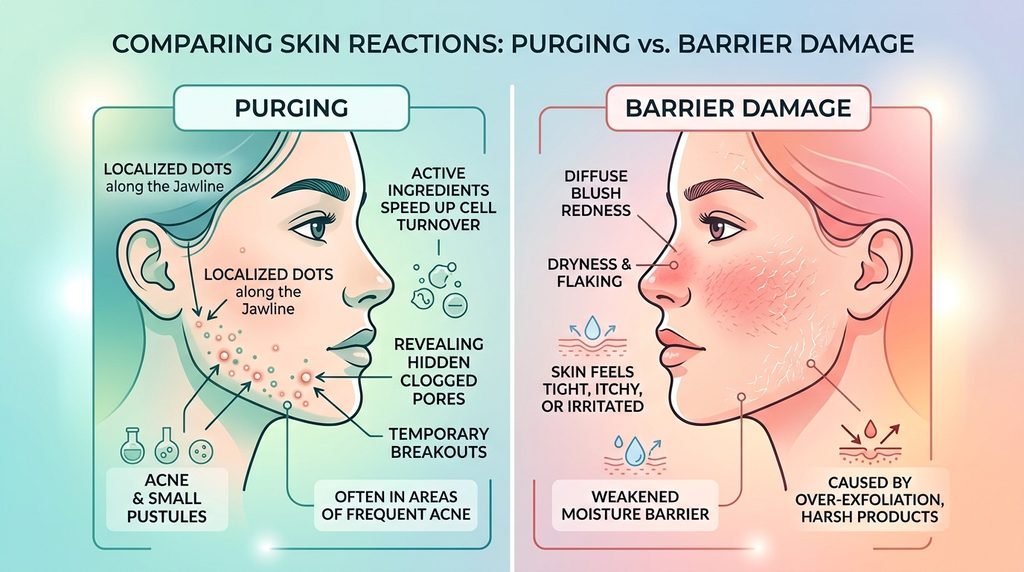
Differentiating between active purging and true barrier damage is a critical fork in your skincare path. Treating barrier damage as a mere “purge” will only exacerbate skin irritation.
| Feature | Skin Purging | Damaged Skin Barrier |
| Primary Cause | Accelerated cell turnover from actives (retinoids, exfoliants) | Breakdown of protective lipid lipids and surface cells |
| Breakout Location | Appears strictly in areas where you normally get clogged pores | Appears anywhere, including areas that are usually totally clear |
| Associated Sensations | Mild, temporary breakouts with minimal overall stinging | Burning, tightness, extreme dryness, and constant redness |
| Duration | Resolves on its own within 4–6 weeks as cell cycle completes | Persists or worsens until you stop active ingredients |
| Reaction to Moisturizer | Soothed and hydrated by basic barrier creams | Stings or burns even when applying basic, plain creams |
If you are experiencing purging alongside retinoid usage, reviewing proper application methods in our Retinol Basics Guide can help manage initial adjustment phases without causing barrier breakdown.
How to Repair Your Skin Barrier (The 4-Step Recovery Routine)
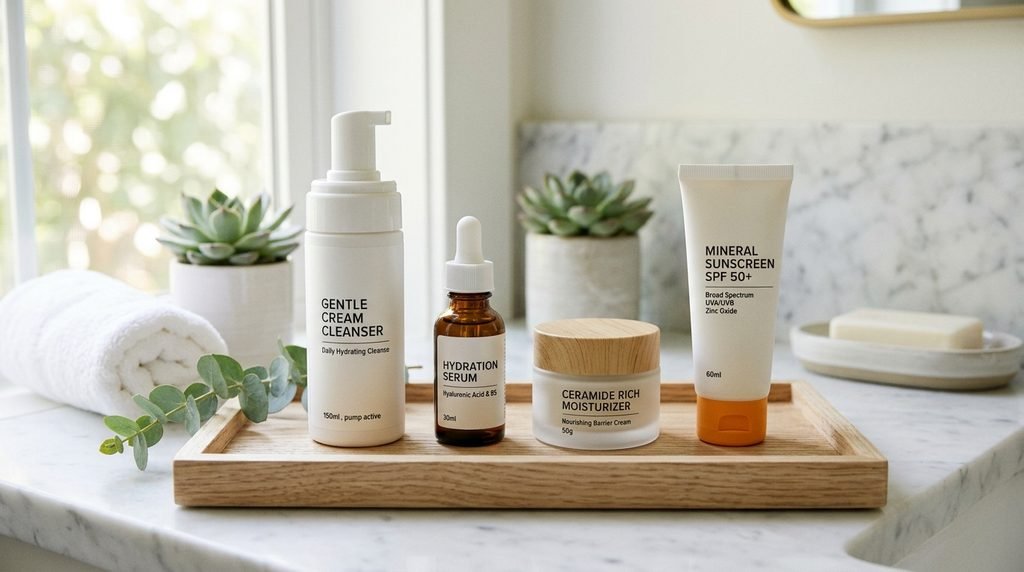
Restoring your skin barrier requires a minimalist, protective approach. Strip your daily routine down to pure hydration, lipid replacement, and physical protection.
Step 1: Put All Actives on Pause
Immediately stop using retinoids, vitamin C, exfoliating acids, facial scrubs, cleansing brushes, and clay masks. Give your skin a complete rest period from chemical exfoliants.
Step 2: Switch to a Low-pH, Non-Foaming Cleanser
Cleanse only once or twice daily using a gentle, sulfate-free, non-foaming lotion or cream cleanser. In the morning, rinsing with lukewarm water alone is often enough to preserve natural oils.
Step 3: Prioritize Lipid-Replenishing Ingredients
Look for repair creams rich in lipid-mimicking compounds that replace missing mortar:
- Ceramides: Crucial lipid molecules that rebuild the stratum corneum structure. (Learn more in our deep-dive on Ceramides in Skincare).
- Free Fatty Acids & Cholesterol: Work synergistically with ceramides in a balanced ratio to restore long-term skin elasticity.
- Niacinamide (1–2% Low Concentration): Supports natural ceramide synthesis and reduces surface redness without causing irritation.
- Hyaluronic Acid & Panthenol (Vitamin B5): Draw atmospheric moisture into dehydrated layers and calm active burning.
Step 4: Seal Moisture and Protect Daily
Finish your evening routine with an occlusive balm or ointment (containing petrolatum, squalane, or shea butter) over dry areas to halt water evaporation overnight. During the day, apply a broad-spectrum mineral sunscreen (zinc oxide) to shield compromised skin from UV-induced inflammation.
Compromised skin that remains chronically irritated can sometimes trigger post-inflammatory hyperpigmentation; read our guide on Understanding Hyperpigmentation to learn how gentle care prevents long-term discoloration. For clinical background on lipid barrier physiology, consult the open-access research archived on PubMed Central.
How Long Does It Take to Repair a Damaged Skin Barrier?
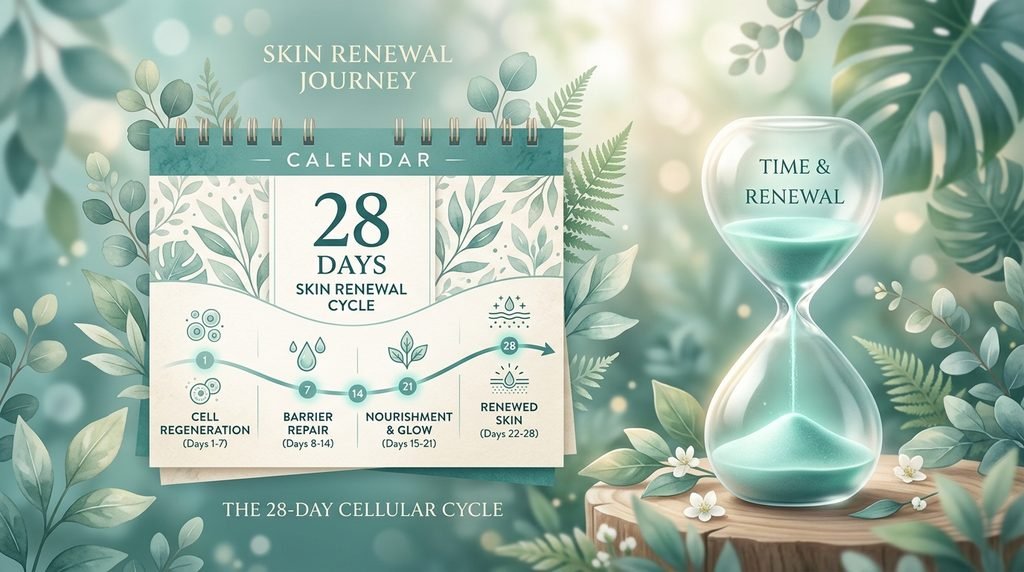
A mild barrier disruption can begin feeling more comfortable within 3 to 7 days after removing harsh actives. However, full structural repair of the stratum corneum generally takes 2 to 4 weeks, matching your skin’s natural cell turnover cycle.
If your barrier was severely damaged over several months, full recovery may require 6 to 8 weeks of strict, uninterrupted repair steps. Consistency is key: introducing even one strong active tool too early can reset your progress.
Conclusion

A damaged skin barrier is a temporary setback, not a permanent skin type. By recognizing early signs like stinging, tightness, and diffuse redness, you can quickly pivot to a minimalist recovery routine. Cease active ingredients, cleanse with gentle low-pH formulas, and nourish your skin with ceramides and cholesterol. Once your skin feels resilient, soft, and completely calm for several consecutive weeks, you can slowly reintroduce active ingredients—one at a time, with patience and restraint.
Got questions about your current recovery setup? Leave a comment below or share your favorite barrier-soothing ingredients with our community!
FAQ Section

Q: How do I know if my skin barrier is damaged or if I am having an allergic reaction?
A: Barrier damage typically develops gradually after using harsh products, causing tightness, stinginess, and dryness across your face. An allergic reaction usually appears suddenly as localized hives, swelling, intense itching, or contact dermatitis shortly after applying a specific new product.
Q: Should I stop using my retinoid if my skin barrier is damaged?
A: Yes, you should temporarily pause all retinoid use immediately. Continuing retinoids on a broken barrier causes further irritation and delays healing. Pause all retinoids until your skin feels completely calm and comfortable for at least two consecutive weeks, then reintroduce slowly.
Q: Can a damaged skin barrier heal itself without special products?
A: Skin naturally produces lipids and regenerates cells over time, so it can technically heal on its own if irritants are removed. However, using gentle hydrating cleansers and ceramide-rich moisturizers significantly speeds up the healing process and reduces discomfort during recovery.
Q: Will a damaged skin barrier cause acne breakouts?
A: Yes, a compromised barrier allows acne-causing bacteria to enter more easily while micro-tears and inflammation disrupt healthy pore shedding. Furthermore, severe dehydration causes skin to overproduce surface oil, leading to sudden, scattered breakouts across dry patches.
Q: How long should I wait before reintroducing glycolic acid or exfoliants?
A: Wait until all stinging, redness, tightness, and flaking have been completely absent for 2 to 3 weeks. Reintroduce exfoliants slowly—starting once per week with a low concentration—and monitor your skin closely for any returning signs of irritation or sensitivity.
Q: Is slugging good for a damaged skin barrier?
A: Slugging—applying an occlusive ointment like petrolatum over moisturizer at night—is very effective for sealing in hydration and speeding barrier repair. However, avoid slugging over strong active ingredients, as occlusives intensify active ingredient absorption and increase irritation risks.