Executive Summary

Managing bumps along your hairline or crown starts with recognizing that true scalp acne is only one of several possible causes—many tender spots are actually folliculitis or yeast-related irritation. Learning about scalp acne causes and treatment helps you clear excess sebum, sweat, and heavy styling residue without stripping your scalp barrier. In this practical guide, you’ll discover how to tell common scalp look-alikes apart, which clarifying ingredients like salicylic acid help reduce pore buildup, daily hair-care habits that prevent friction and congestion after workouts, and clear warning signs that mean it’s time to see a board-certified dermatologist.
Running your fingers through your hair only to hit a tender, painful bump near your crown or the nape of your neck is instantly frustrating. Because you can’t easily see the top of your head in the mirror, scalp breakouts are easy to accidentally scratch with a hairbrush or irritate with heavy styling sprays.
When looking into scalp acne causes and treatment, the first thing worth knowing is that not every pimple-like bump on your head is classic acne. Your scalp is packed with hair follicles and oil glands, making it prone to several overlapping conditions that look similar on the surface. Below, we’ll break down what triggers scalp congestion, compare four common look-alikes, share gentle washing habits that help keep follicles clear, and outline when professional care is the smartest move.
What Causes Acne and Bumps on the Scalp?

Just like the skin on your face, chest, and back, your scalp contains thousands of sebaceous glands attached to hair follicles. When dead skin cells, excess natural oil (sebum), and daily residue clump together inside a follicle opening, a clogged pore forms.
Several everyday triggers speed up that buildup along the hairline and crown:
- Heavy hair styling products: Thick pomades, waxes, dry shampoos, and silicone-rich leave-in conditioners can coat the scalp and trap oil inside follicles—a pattern sometimes called pomade acne.
- Sweat and post-workout delay: Letting sweat sit on your scalp after exercising or wearing tight helmets, caps, or headbands creates a warm, damp environment where surface microbes thrive.
- Infrequent or rushed rinsing: Conditioner or hair mask residue left along the nape of the neck and hairline frequently leads to localized bumps.
- Friction and physical irritation: Tight ponytails, rough brushing, or picking at existing spots damages the follicle opening and worsens redness.
Scalp Acne or Something Else? 4 Common Look-Alikes
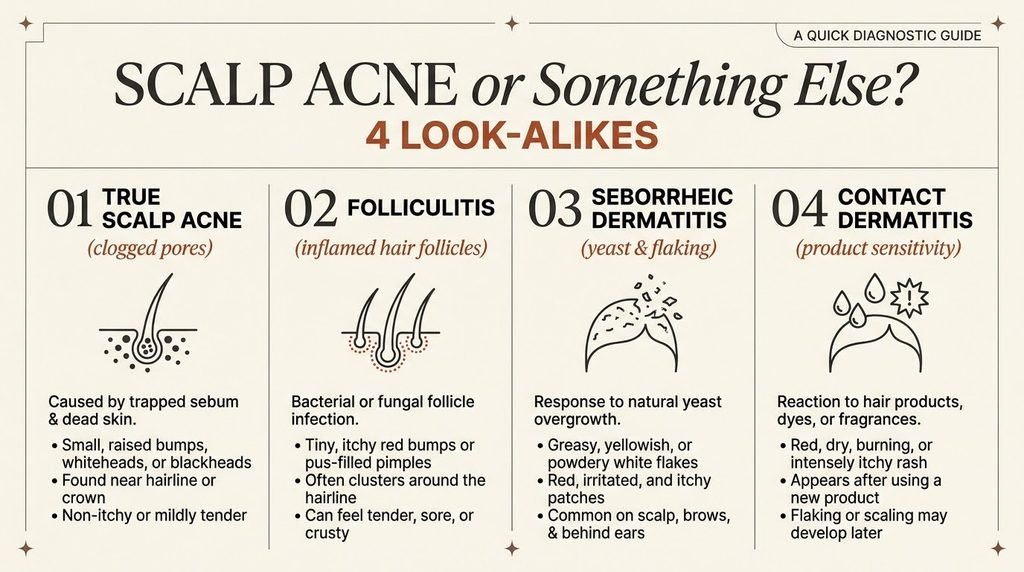
Because several scalp conditions produce red bumps, itching, or flaking, treating every spot as regular acne can backfire. A dermatologist can give an accurate diagnosis, yet knowing the general differences helps you understand what might be happening.
| Condition | Typical Appearance & Feel | Common Underlying Trigger |
| True Scalp Acne | Small whiteheads, blackheads, or tender red bumps along the hairline and neck | Excess sebum, dead skin cells, and product buildup clogging follicles |
| Folliculitis | Tiny, uniform, itchy or tender red bumps or small pustules centered around hair strands | Inflammation or irritation of hair follicles from bacteria, yeast, sweat, or friction |
| Seborrheic Dermatitis | Greasy yellowish scales, pink patches, and persistent itching rather than distinct pimples | Overreaction to normal skin yeast (Malassezia) combined with excess scalp oil |
| Contact Dermatitis | Itchy rash, tiny blisters, or dry tenderness appearing shortly after a new hair product | Sensitivity or allergic reaction to fragrances, preservatives, or hair dye |
Notice how closely folliculitis and yeast-related bumps overlap with true acne. If you’ve noticed similar small, uniform bumps along your forehead or chest too, check out our comparison on Acne vs. Fungal Acne.
Gentle Scalp Care and Ingredients That Help Clear Buildup
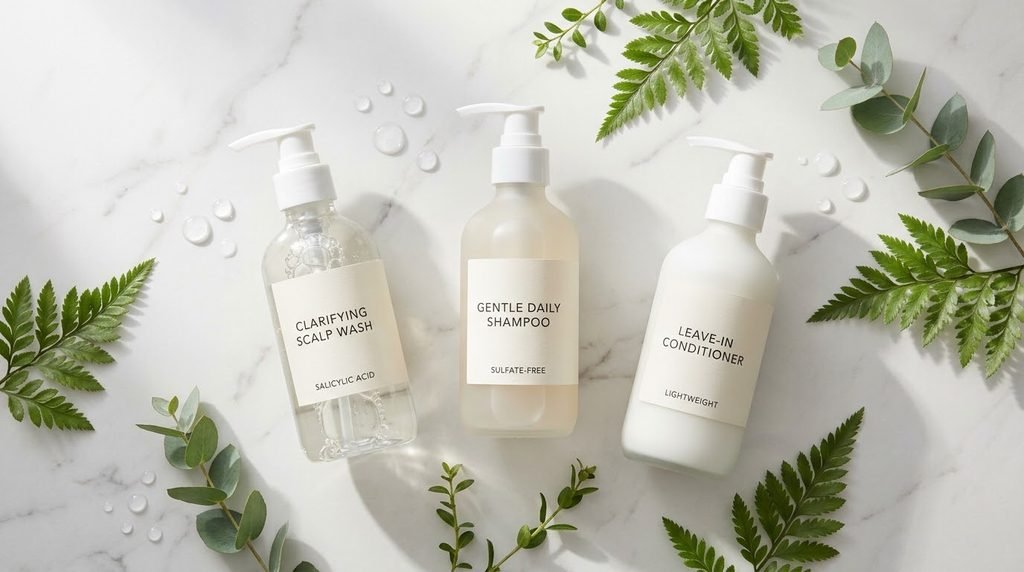
For mild, occasional scalp congestion caused by oil and styling residue, adjusting how you wash your hair often makes a noticeable difference over a few weeks. Keep your expectations realistic—no shampoo clears stubborn bumps overnight, and harsh scrubbing only irritates the skin further.
Clarifying Ingredients Commonly Used for Scalp Bumps
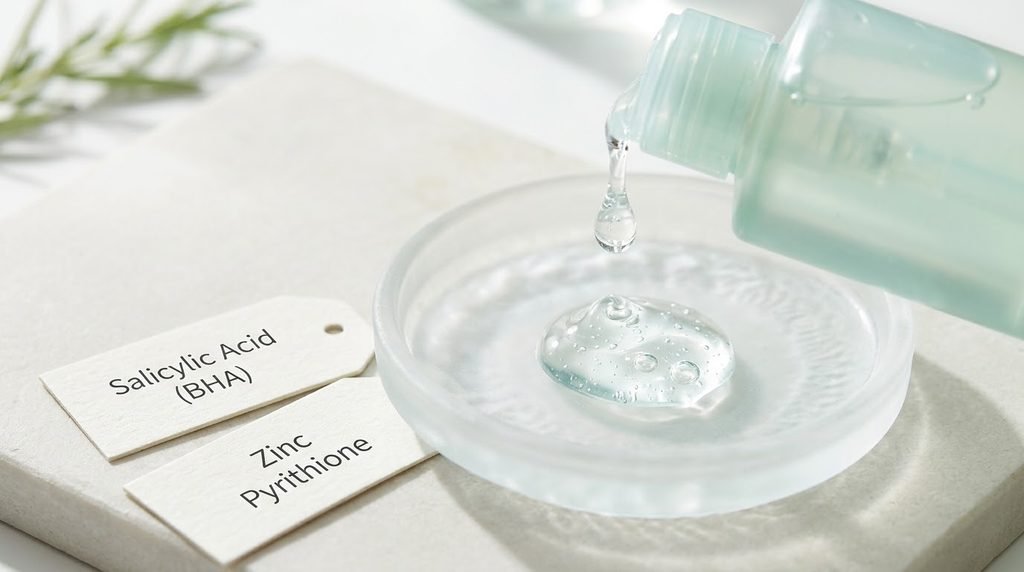
- Salicylic acid (BHA): An oil-soluble beta hydroxy acid commonly formulated into clarifying shampoos (usually around 1.5% to 3%). Salicylic acid helps loosen dead skin cells and dissolve excess sebum inside follicle openings without harsh physical grit. Learn how BHAs work on skin in AHA vs. BHA vs. PHA.
- Zinc pyrithione or ketoconazole: Frequently found in anti-dandruff washes, these ingredients help manage excess surface yeast when mild folliculitis or flaking overlaps with oily buildup.
- Benzoyl peroxide (used cautiously): Sometimes recommended in wash-off formulations to reduce surface bacteria, though it can bleach towels, pillowcases, and hair color if not rinsed completely.
Daily Habits to Prevent New Scalp Congestion
- Wash promptly after heavy sweating: If you work out regularly or wear hats in hot weather, rinsing your scalp with lukewarm water and a gentle shampoo soon afterward prevents sweat and oil from sitting on follicles.
- Keep conditioner off your roots: Apply rich conditioners and hair masks strictly from mid-length to ends, and rinse your hairline and back of the neck thoroughly afterward.
- Switch to non-comedogenic hair products: Look for lightweight, water-based styling formulas and wash your hairbrushes and pillowcases weekly.
- Never pop or scratch scalp bumps: Squeezing pimples on your head pushes debris deeper into the follicle, raising the risk of infection, dark marks, and localized scarring.
If you’re also managing breakouts on your face alongside scalp congestion, see How to Build a Skincare Routine for Acne-Prone Skin for balanced, barrier-friendly steps.
What About Home Remedies for Scalp Pimples?
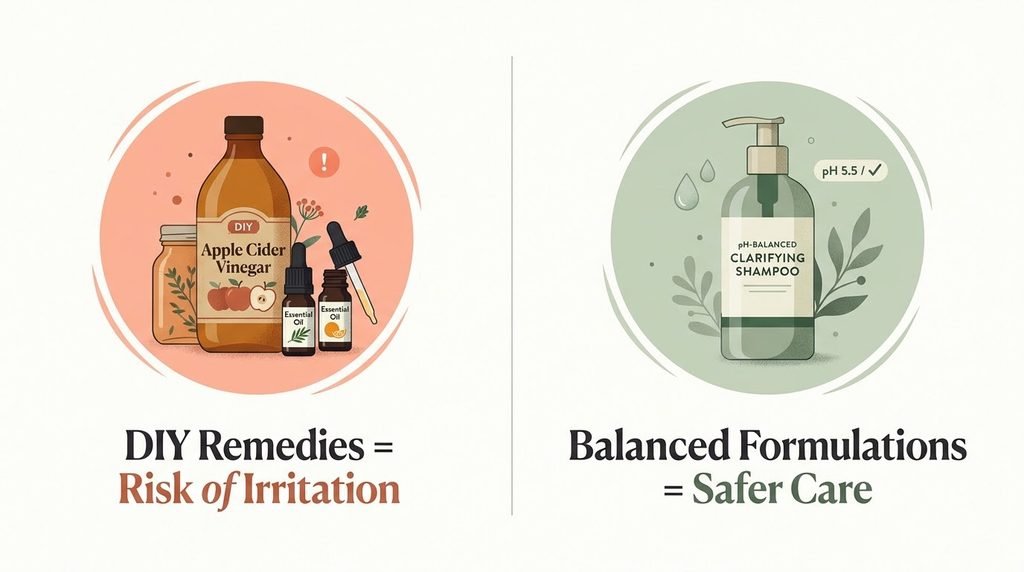
It’s tempting to dab diluted tea tree oil, apple cider vinegar, or baking soda pastes onto sore scalp spots. While diluted tea tree oil shows mild antimicrobial activity in laboratory settings, clinical evidence supporting most DIY kitchen remedies for scalp bumps is very limited.
Undiluted essential oils and strong acids can trigger painful contact dermatitis, dryness, and flaking on already tender scalp skin. Sticking to properly formulated, pH-balanced clarifying washes is far safer and more predictable than experimenting with homemade mixtures.
When to See a Dermatologist About Scalp Bumps
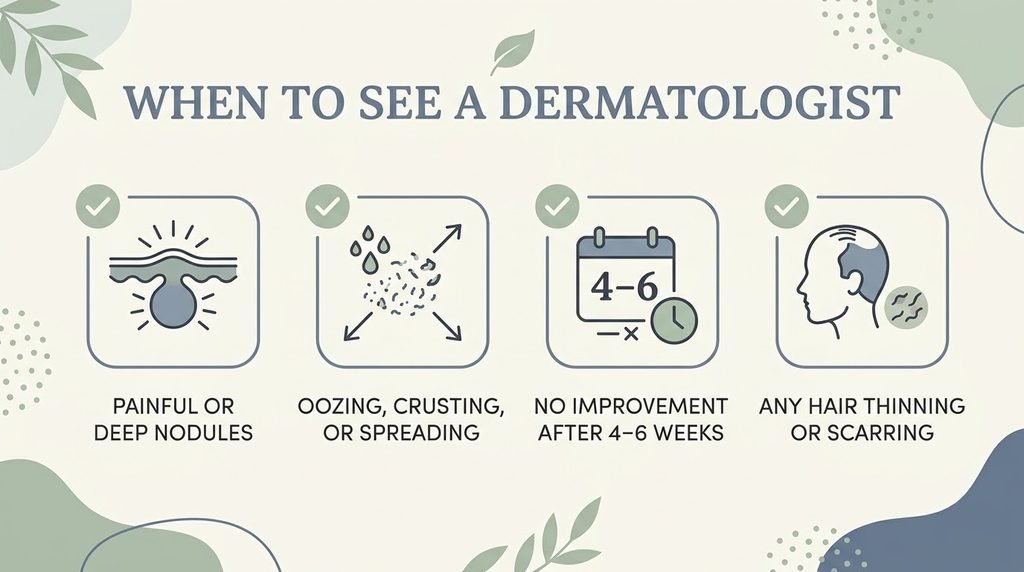
While mild product buildup often settles with gentler hair-care habits, persistent or painful scalp bumps deserve an in-person look from a medical professional. According to general scalp and acne guidance from the American Academy of Dermatology, proper diagnosis matters because bacterial folliculitis, fungal folliculitis, and deeper cystic breakouts each require different targeted care.
Schedule a visit with a board-certified dermatologist if you notice:
- Deep, hard, or painful nodules that don’t improve after four to six weeks of gentle clarifying washes.
- Bumps that ooze pus, crust over, feel hot to the touch, or spread rapidly.
- Any thinning hair, patchy hair loss, or smooth scarred spots around recurring bumps.
- Intense itching or thick scaling that disrupts your sleep or daily comfort.
FAQ Section

Q: How do you get rid of acne on your scalp?
A: Managing mild scalp acne starts with removing excess oil, sweat, and hair-product buildup. Wash your hair promptly after sweating, keep heavy conditioners away from your roots, and use a gentle clarifying shampoo containing salicylic acid once or twice a week. If painful or recurring bumps persist past a few weeks, consult a dermatologist.
Q: What causes pimples on the scalp?
A: Scalp pimples usually form when hair follicles become clogged with excess natural sebum, dead skin cells, and residue from heavy hair oils, waxes, or dry shampoo. Sweat trapped under tight hats or helmets, friction from hairstyles, and mild yeast or bacterial overgrowth can also trigger tender bumps along the hairline and crown.
Q: Is scalp acne the same as folliculitis?
A: Scalp acne and folliculitis look very similar and often overlap, yet they aren’t identical. True scalp acne stems primarily from clogged pores filled with oil and dead skin, whereas folliculitis involves inflammation or infection of the hair follicle itself—often triggered by bacteria, yeast, friction, or sweat. A dermatologist can tell them apart.
Q: Should you pop pimples on your scalp?
A: No, you should never pop, squeeze, or scratch pimples on your scalp. Picking breaks the skin barrier, pushes debris deeper into the hair follicle, and introduces bacteria from your fingernails—which can lead to worse inflammation, secondary infection, dark spots, and potential localized scarring or hair loss.
Q: How often should you wash your hair if you have scalp acne?
A: Washing your hair more frequently—especially right after heavy sweating or workouts—helps keep oil and residue from building up around follicles. Most people with oily scalps benefit from washing every one to two days with a gentle cleanser, alternating with a salicylic acid clarifying shampoo once or twice weekly.
Q: When should you see a doctor about bumps on your scalp?
A: See a board-certified dermatologist if scalp bumps are large, hard, very painful, oozing pus, or spreading, or if they haven’t improved after four to six weeks of gentle cleansing. You should also seek prompt medical evaluation if you notice any hair thinning, patchy hair loss, or scarring near the bumps.
Conclusion
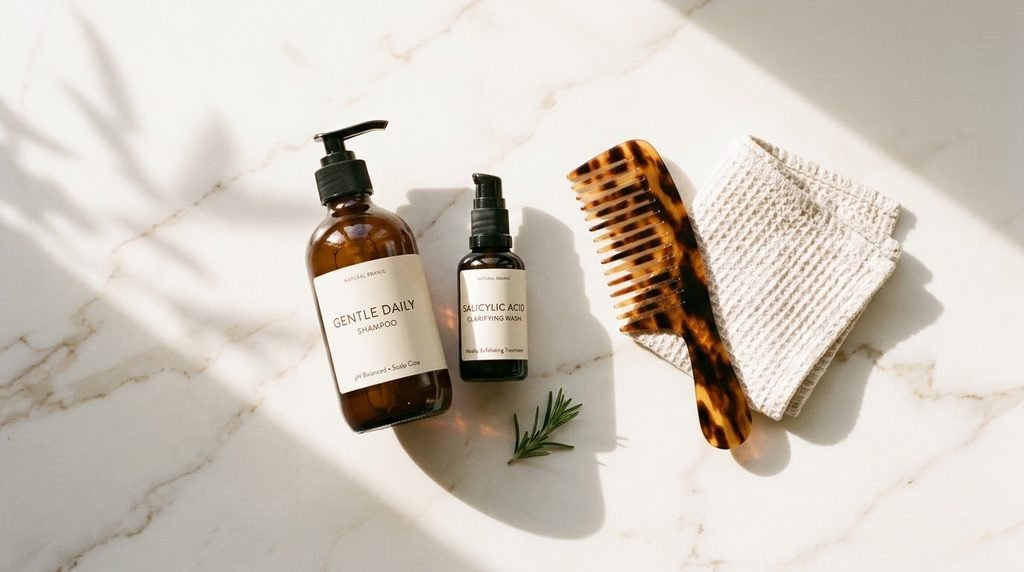
Understanding scalp acne causes and treatment starts with knowing that excess oil, sweat, heavy styling products, and look-alike conditions like folliculitis all play a role. Keeping your scalp clean after workouts, keeping rich conditioners away from your roots, and using a gentle salicylic acid shampoo a couple of times a week helps clear pore buildup without irritating your skin—while hands-off patience prevents scarring.
Tonight, check the ingredient labels on your styling products for heavy oils or waxes, swap in a lightweight clarifying wash for your next shower, and book a dermatologist visit if painful or recurring bumps persist.