Executive Summary
Dealing with stubborn dry patches on face and skin usually comes down to localized barrier stress rather than your whole complexion suddenly changing skin types. Common triggers include cold or heated indoor air, harsh foaming cleansers, over-exfoliating acids, strong retinoids, and underlying skin conditions like eczema or seborrheic dermatitis that need a doctor’s diagnosis. In this practical, research-grounded guide, you’ll learn how to map dry spots by facial location, calm flaky areas with gentle cleansing and barrier-supporting ceramides, spot habits like scrubbing or picking that worsen irritation, and recognize clear warning signs that mean it’s time to consult a board-certified dermatologist.
Noticing a rough, flaky spot clinging stubbornly to your cheek or the corner of your mouth—right where your concealer suddenly refuses to blend—is one of the most frustrating skincare surprises. Even when the rest of your forehead or T-zone feels completely normal, a single dry patch can make your whole face feel tight and uncomfortable.

When trying to figure out what causes dry patches on face and how to calm them safely, the first step is understanding why moisture disappears in isolated spots. (While our Best Skincare Routine for Dry Skin covers full-face dryness, this guide focuses specifically on localized flaky patches and when they signal something beyond simple dryness.) Below, we’ll walk through the everyday triggers behind dry spots, map common facial locations to likely causes, share gentle barrier-repair steps, and outline when professional evaluation matters most.
What Causes Dry Patches on the Skin?

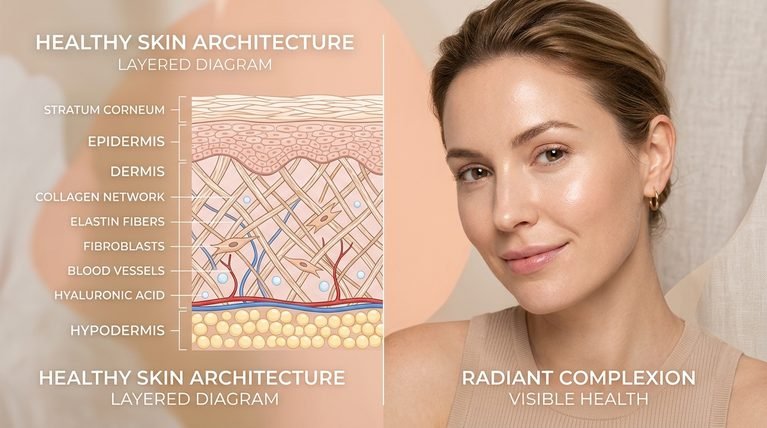
Localized dry spots happen when the outer layer of your skin—the stratum corneum—loses surface lipids and water faster than it can replace them. Rather than one single culprit, dry patches usually stem from a mix of environmental stress, skincare habits, or underlying skin sensitivity:
- Dry indoor air and weather shifts: Cold winter wind, low outdoor humidity, and forced-air heating or air conditioning pull moisture directly from exposed areas like your cheekbones and nose.
- Over-cleansing and hot water: Foaming washes with harsh surfactants, combined with hot shower water, strip away natural protective oils in fragile zones.
- Active skincare irritation: Introducing retinoids, glycolic acid, salicylic acid, or benzoyl peroxide too quickly frequently leaves localized peeling around the mouth, chin, and sides of the nose.
- Friction and contact sensitivity: Frequent nose-blowing with rough tissues, wool scarves, or sensitivity to fragrances and essential oils in cosmetics can trigger localized rough spots.
- Underlying skin conditions: Sometimes a flaky patch isn’t simple dryness at all—conditions such as eczema (atopic dermatitis), seborrheic dermatitis, contact dermatitis, or psoriasis produce dry, scaly spots that look similar on the surface and require a medical diagnosis.
If your whole face feels tight rather than just isolated spots, read How to Care for Dehydrated Skin and What Causes a Damaged Skin Barrier.
Dry Patches by Location: What Your Skin Zone Might Mean
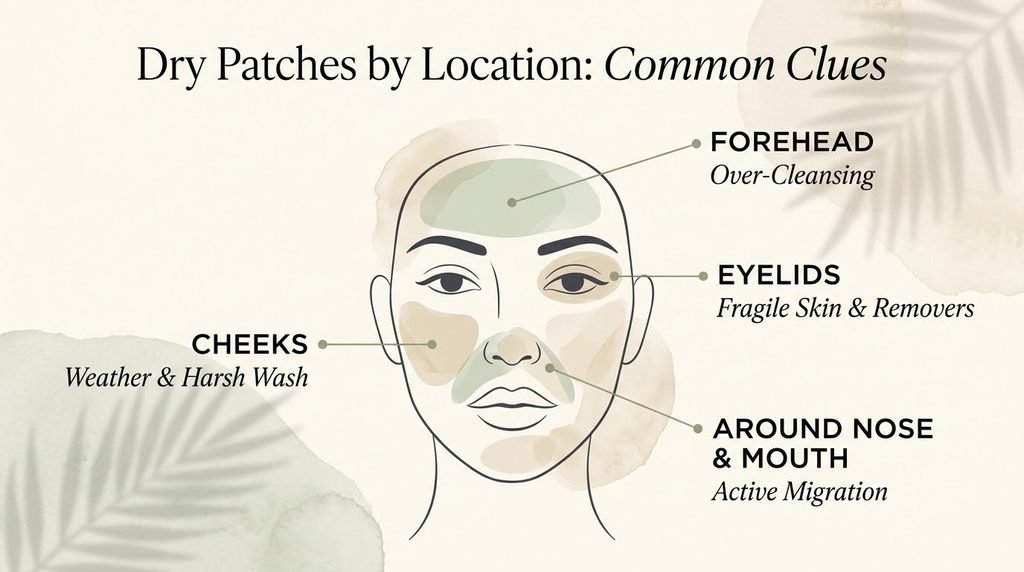
Where a dry patch shows up often offers a helpful clue about what is irritating your skin. While you can’t diagnose a skin condition from location alone, checking these common patterns helps you adjust your daily habits.
| Facial Location | Common Everyday Triggers | Gentle First Step |
| Cheeks & Cheekbones | Wind exposure, dry indoor heating, harsh foaming cleansers | Switch to lukewarm water, a milk cleanser, and a ceramide-rich cream |
| Around the Nose & Mouth | Retinoid or acid migration, frequent tissue wiping, toothpaste residue, or seborrheic dermatitis | Buffer actives away from corners; apply plain petrolatum or ointment before brushing teeth |
| Forehead & Between Brows | Over-washing an oily T-zone, drying acne spot treatments, or mild flaking from seborrheic dermatitis | Pause strong exfoliants and hydrate with a light, fragrance-free barrier lotion |
| Eyelids & Under-Eyes | Thin skin reacting to eye makeup removers, fragrances, or retinoids migrating upward | Stop all actives near the eyes and use only bland, ophthalmologist-tested plain ointments |
Notice how often active ingredients migrate into creases around the nostrils and corners of the lips. If you recently started a retinoid, see Retinol Basics Explained for pacing and buffering tips.
How to Gently Care for Dry, Flaky Patches at Home
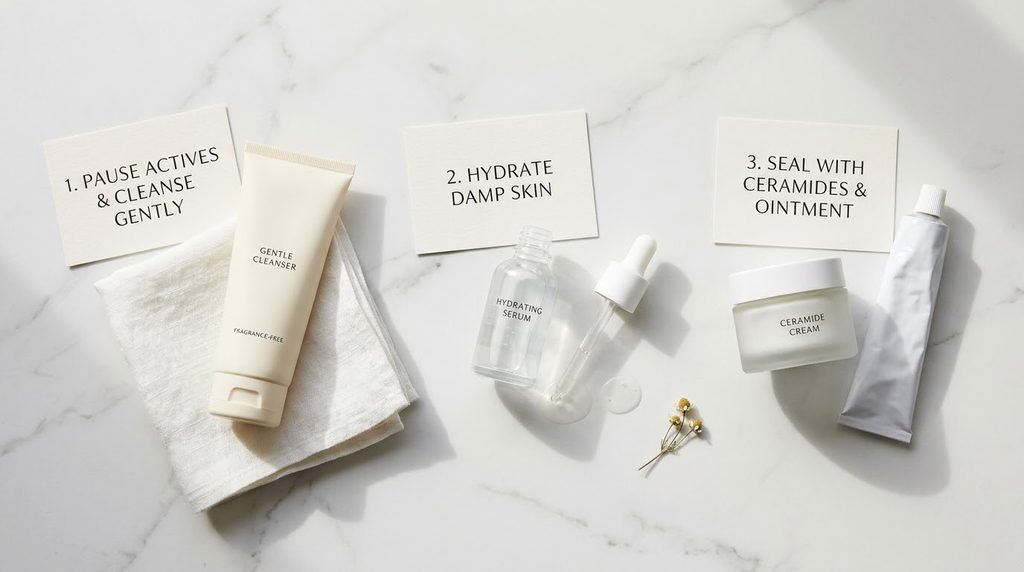
When a dry patch is caused by weather, over-exfoliating, or a harsh cleanser, simplifying your routine gives your moisture barrier space to recover over one to two weeks.
1. Pause All Exfoliating Acids and Retinoids

Step away from glycolic acid, salicylic acid, scrubs, vitamin C, and retinoids until the flaky patch feels completely smooth and calm again. Pushing active ingredients onto already compromised skin slows recovery and deepens redness.
2. Cleanse with Lukewarm Water and a Non-Foaming Wash

Hot water dissolves your skin’s natural surface lipids. Wash with cool or lukewarm water using a gentle, fragrance-free cream or lotion cleanser—or simply rinse with plain water in the morning—and pat your face dry softly with a clean cotton towel instead of rubbing.
3. Layer Humectants Under Barrier Lipids and Occlusives

While your skin still feels slightly damp after washing, apply a plain hydrating serum containing glycerin or hyaluronic acid, then immediately smooth on a fragrance-free moisturizer rich in ceramides, cholesterol, and fatty acids. At night, dabbing a thin layer of plain petrolatum ointment over stubborn dry spots helps lock moisture in overnight. Learn how barrier lipids work in Ceramides Explained.
What to Avoid When You Have Dry Patches
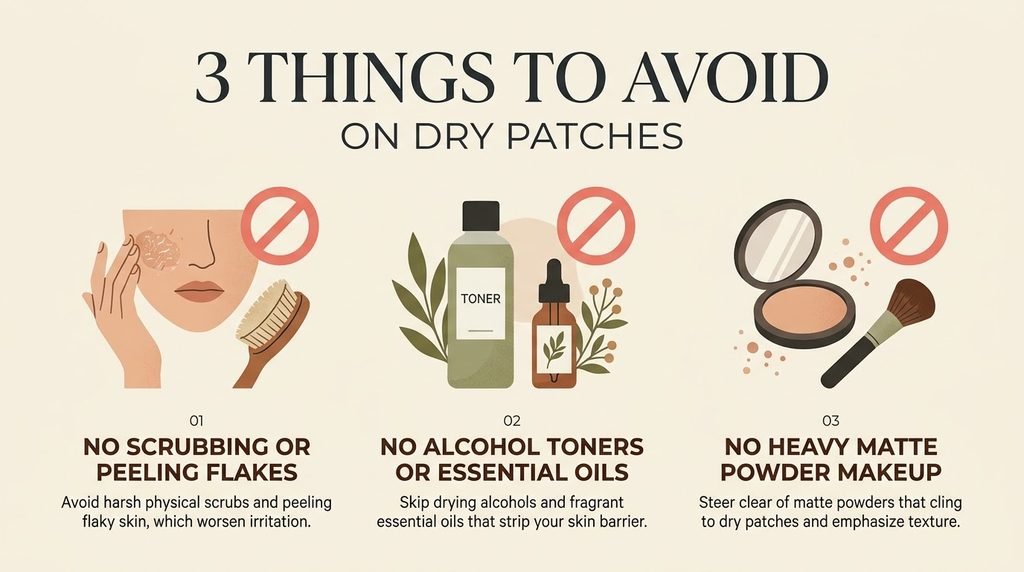
Trying to “fix” a flaky spot quickly often leads to habits that make the patch redder and slower to heal.
- Never scrub or peel off loose flakes: Using physical sugar scrubs, washcloths, or fingernails pulls away healthy new skin cells underneath, leaving raw, tender spots behind.
- Skip alcohol-heavy toners and essential oils: Denatured alcohol, witch hazel, menthol, and scented botanical oils sting fragile skin and worsen moisture loss.
- Don’t cake thick powder makeup over dry flakes: Heavy matte powders cling to rough texture and dry out the surface further—opt for a hydrating skin tint over well-moisturized skin, or let the area breathe while it settles.
Dry Patches vs. Eczema: When to See a Dermatologist

Because dry skin patches overlap closely with diagnosable skin conditions like eczema, contact dermatitis, fungal infections, or psoriasis, moisturizer alone won’t always resolve them. According to guidance from the American Academy of Dermatology, persistent, itchy, or inflamed patches warrant an in-person evaluation so you get safe, accurate care rather than guessing with over-the-counter creams.
Schedule a visit with a board-certified dermatologist if your dry patches:
- Last longer than two weeks despite switching to gentle, fragrance-free cleansing and regular moisturizing.
- Itch intensely, burn, crack, bleed, or ooze clear or yellowish fluid.
- Appear as well-defined red, silvery, or scaly plaques that spread to your scalp, ears, elbows, or hands.
- Keep returning in the exact same spot around your nose, mouth, or eyelids.
FAQ Section

Q: What causes dry patches on the skin and face?
A: Dry patches usually develop when the outer skin barrier loses water and protective lipids in localized spots. Common triggers include cold or heated indoor air, hot shower water, harsh foaming cleansers, irritation from retinoids or exfoliating acids, and underlying conditions such as eczema, contact dermatitis, or seborrheic dermatitis.
Q: How do you get rid of dry flaky patches on your face safely?
A: Calm flaky facial patches by pausing all exfoliating acids and retinoids, washing with lukewarm water and a gentle fragrance-free cleanser, and applying a ceramide-rich moisturizer onto slightly damp skin. Dabbing a thin layer of plain petrolatum ointment over the dry spot at night helps lock in moisture while avoiding scrubbing.
Q: Are dry patches on the face a sign of eczema?
A: Dry patches can sometimes be a sign of eczema (atopic dermatitis), though simple weather dryness, product irritation, or seborrheic dermatitis look very similar. Because eczema patches often itch intensely, look inflamed, and persist despite regular moisturizing, a board-certified dermatologist is the best person to tell them apart accurately.
Q: Can retinol or exfoliating acids cause dry patches?
A: Yes, retinoids and exfoliating acids (like glycolic or salicylic acid) frequently cause localized dry, peeling patches—especially around the corners of the mouth, nostrils, and chin where product tends to collect. Pausing the active until skin recovers and buffering with moisturizer usually prevents future flaking.
Q: Is plain petrolatum (like Vaseline) good for dry patches of skin?
A: Yes, plain petrolatum is an effective occlusive that forms a breathable surface seal to slow down water loss over dry, chapped patches. Applying a thin layer over a damp moisturizer at night helps soften rough flakes safely, though people prone to clogged pores should keep it strictly on dry spots.
Q: When should you see a dermatologist for dry patches on your face?
A: See a board-certified dermatologist if dry patches don’t improve after two weeks of gentle, fragrance-free skincare, or if they itch severely, crack, bleed, ooze, or spread. Persistent scaly spots around the eyelids, nose, or hairline also benefit from a professional diagnosis rather than trial-and-error products.
Conclusion

Calming dry patches on face and skin starts with recognizing whether your moisture barrier needs gentle protection or a professional look. Stepping back from retinoids and exfoliating acids, washing with lukewarm water, sealing damp skin with ceramides and plain ointment, and resisting the urge to scrub flakes handles most everyday dry spots smoothly.
Tonight, press pause on any stinging actives, smooth a fragrance-free ceramide cream over damp skin, and book a dermatologist appointment if stubborn or itchy patches don’t settle within two weeks.