Executive Summary
Struggling with dullness, flaky patches, or persistent tightness despite layering on thick moisturizers? You might be treating the wrong skin concern. While dry skin and dehydrated skin look and feel remarkably similar, they stem from two entirely different root causes. Dry skin is a genetic skin type that lacks natural oils (lipids), while dehydrated skin is a temporary condition caused by a lack of water.
In this comprehensive guide, you’ll discover how to accurately self-diagnose your skin, why oily skin can actually suffer from severe dehydration, and how to build a targeted routine using humectants and emollients to restore your moisture barrier.
The Moisture Mystery: Why Your Skin Feels Tight

Have you ever piled on a heavy, rich cream only to have your face feel uncomfortably tight and parched just twenty minutes later? It is one of the most frustrating skincare dilemmas out there, and it almost always points to a fundamental misunderstanding: confusing dry skin with dehydrated skin.
Because both issues cause rough texture, dullness, and discomfort, it is easy to assume they require the exact same fix. However, slathering heavy oils on water-starved skin won’t solve the issue—and might even trigger unexpected breakouts. Understanding the critical difference between oil deficiency and water depletion is the ultimate secret to unlocking a calm, plump, and healthy complexion. Let’s break down what your skin is actually craving.
       ┌─────────────────────────────────────────────────────────────┐
       │                THE CORE DIFFERENCE AT A GLANCE              │
       ├──────────────────────────────┬──────────────────────────────┤
       │           DRY SKIN           │       DEHYDRATED SKIN        │
       │       (SKIN TYPE)            │      (SKIN CONDITION)        │
       ├──────────────────────────────┼──────────────────────────────┤
       │ • Lacks OIL (Lipids)         │ • Lacks WATER                │
       │ • Genetic trait              │ • Temporary, fluctuating state│
       │ • Small, invisible pores     │ • Pores can be any size      │
       │ • Constant flaking/roughness │ • Tight, paper-like fine lines│
       │ • Needs rich emollients/oils │ • Needs humectants/hydration │
       └──────────────────────────────┴──────────────────────────────┘
Skin Type vs. Skin Condition: The Essential Distinction
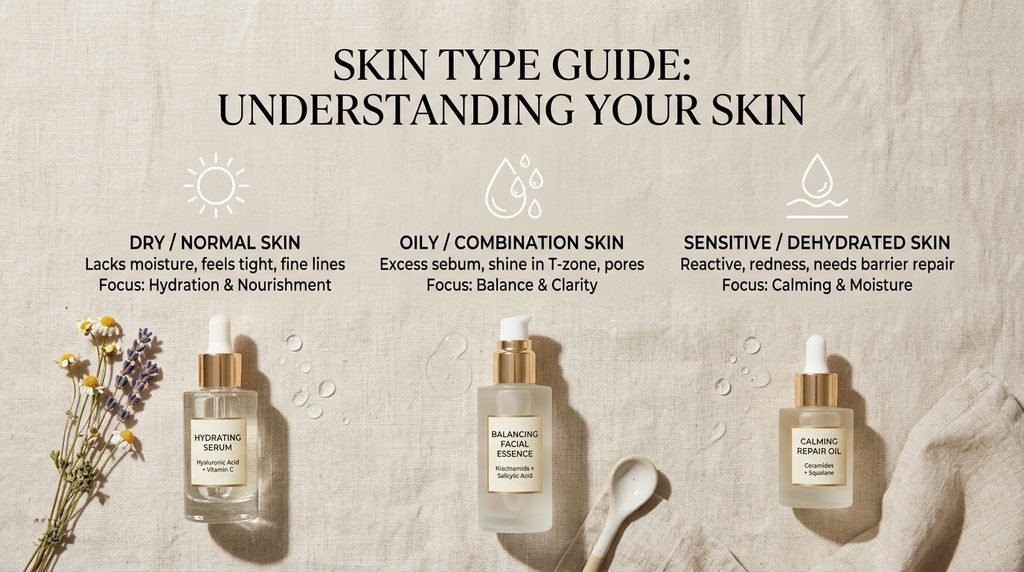
To fix skin discomfort permanently, you first need to understand the broader framework of skincare classification: the distinction between your skin type and your skin condition.
Your skin type is predetermined by genetics. It refers to the amount of natural oil (sebum) your sebaceous glands produce. Standard skin types include dry, oily, combination, and normal. Your skin type remains relatively stable throughout your adult life, changing mostly due to major hormonal shifts or aging. Dry skin simply doesn’t produce enough natural lipids to keep the protective moisture barrier intact.
In contrast, a skin condition is a temporary state that can affect any skin type at any time. Conditions are driven by external factors like climate changes, harsh ingredients, diet, stress, or lifestyle habits. Dehydration, sensitivity, hyperpigmentation, and acne are all skin conditions. This means you can have naturally oily skin that is temporarily dehydrated, or naturally dry skin that is perfectly hydrated with water.
Dry Skin Explained: An Oil Deficiency
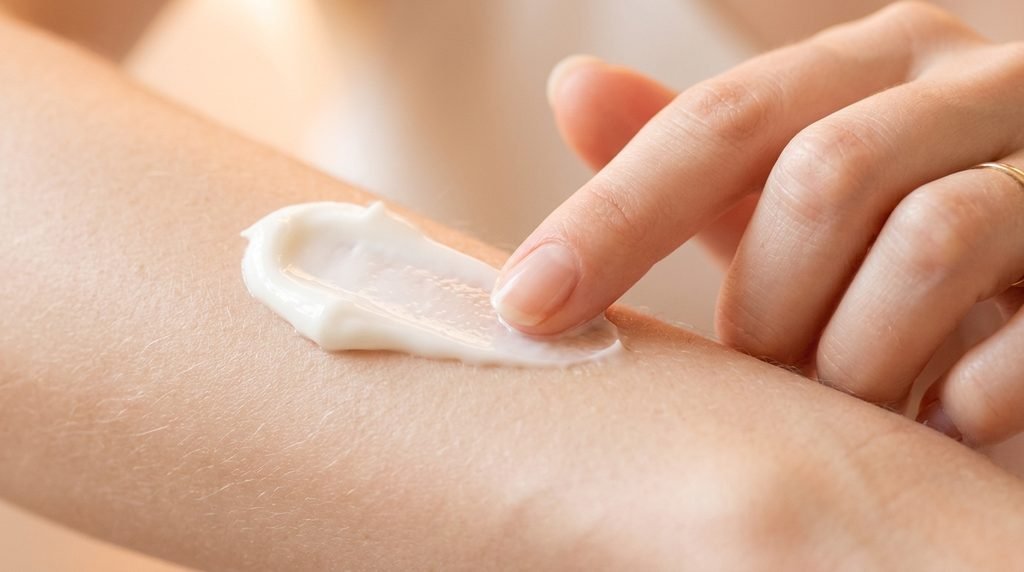
If you have dry skin, your oil glands naturally produce less sebum than normal. Sebum plays a crucial structural role: it acts as the mortar between your skin cells, trapping moisture inside and keeping external irritants out.
When your skin lacks these crucial lipids, its outer layer (the stratum corneum) becomes compromised. Dry skin feels constantly coarse or rough, presents small and almost invisible pores, and rarely develops traditional acne. People with dry skin often notice that their face absorbs rich creams instantly without leaving a greasy residue. Without sufficient lipid protection, dry skin is particularly prone to premature fine lines, redness, and flaking year-round, regardless of the season.
To care for a dry skin type, your primary goal is barrier repair through lipid replacement. Incorporating nourishing ingredients like ceramides, squalane, plant oils, and fatty acids helps rebuild the protective barrier so water cannot easily evaporate.
Dehydrated Skin Explained: A Water Shortage
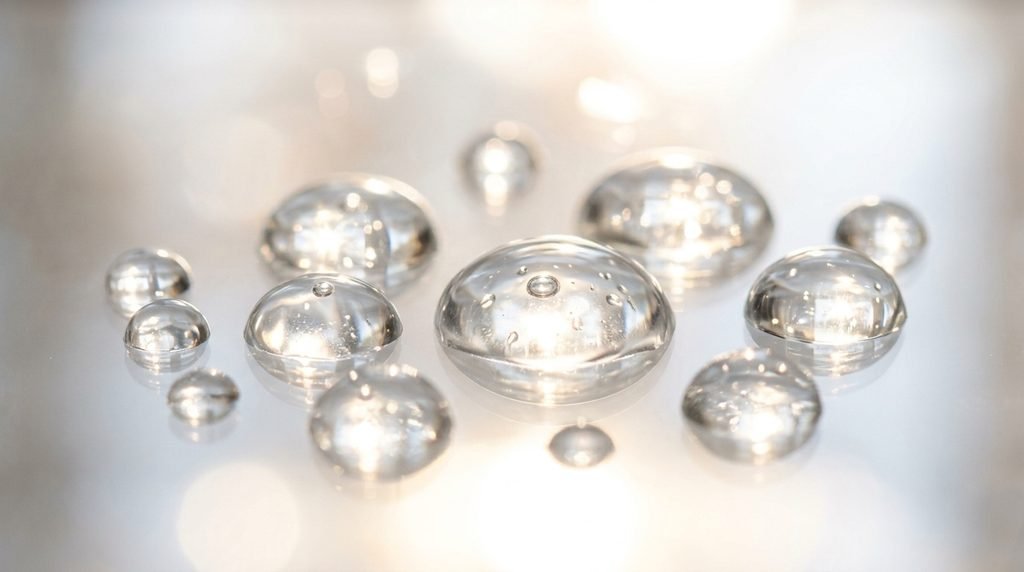
Dehydrated skin is entirely different: it is an indication that your skin cells are starved of water. This can happen to anyone—whether your skin type is dry, combination, or extremely oily.
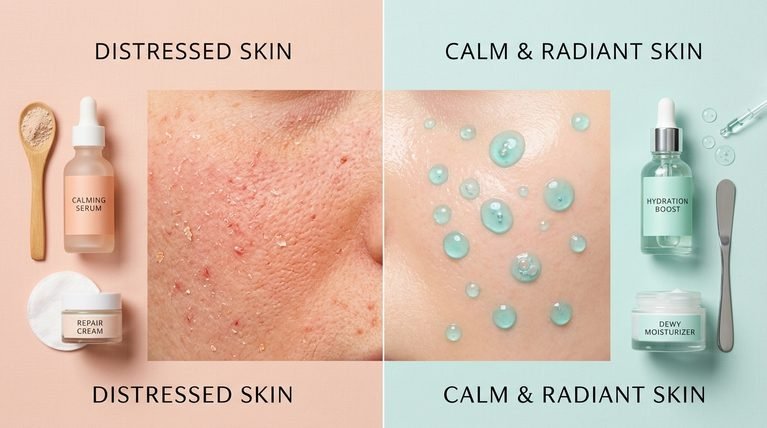
When skin is dehydrated, it loses its bounce and elasticity. A classic hallmark of dehydration is the appearance of tiny, crinkled fine lines (often called “dehydration lines”) that show up on the cheeks or forehead when you smile, but disappear once your skin receives adequate hydration. Dehydrated skin also looks noticeably dull, lacks a healthy glow, and feels tight—as if your skin is a size too small for your face.
Common culprits behind water loss include over-exfoliating with harsh acids, using stripping sulfate cleansers, exposure to dry climate conditions, indoor heating, or simply not drinking enough water throughout the day. Addressing dehydration requires flooding the skin with humectants—water-attracting molecules like hyaluronic acid and glycerin—while protecting that water with a lightweight seal.
Research Insight: According to dermatological studies indexed in theNational Center for Biotechnology Information (NCBI), trans-epidermal water loss (TEWL) is significantly accelerated when environmental humidity drops below 40%, emphasizing the need for humectants in dry environments.
The Paradox: Can You Have Oily AND Dehydrated Skin?

Yes, absolutely. In fact, oily, dehydrated skin is one of the most common issues seen in modern skincare routines.
When your skin becomes severely dehydrated from a lack of water, it panics. Recognizing that its protective moisture barrier is compromised and losing water rapidly, your sebaceous glands go into overdrive, producing excess oil in a desperate attempt to lubricate and protect the surface.
This creates a deceptive dynamic: your skin looks shiny and feels greasy on the surface, yet underneath it feels tight, uncomfortable, and irritated. Treating this situation by washing your face with aggressive acne cleansers or stripping toners only worsens the dehydration, triggering even more oil production and leading to clogged pores and breakouts.
If you suspect you’re dealing with this combination, check out our dedicated guide on Oily and Dehydrated Skin Routines to balance your lipid-to-water ratio without clogging your pores.
Key Differences: Causes, Signs, and Treatment
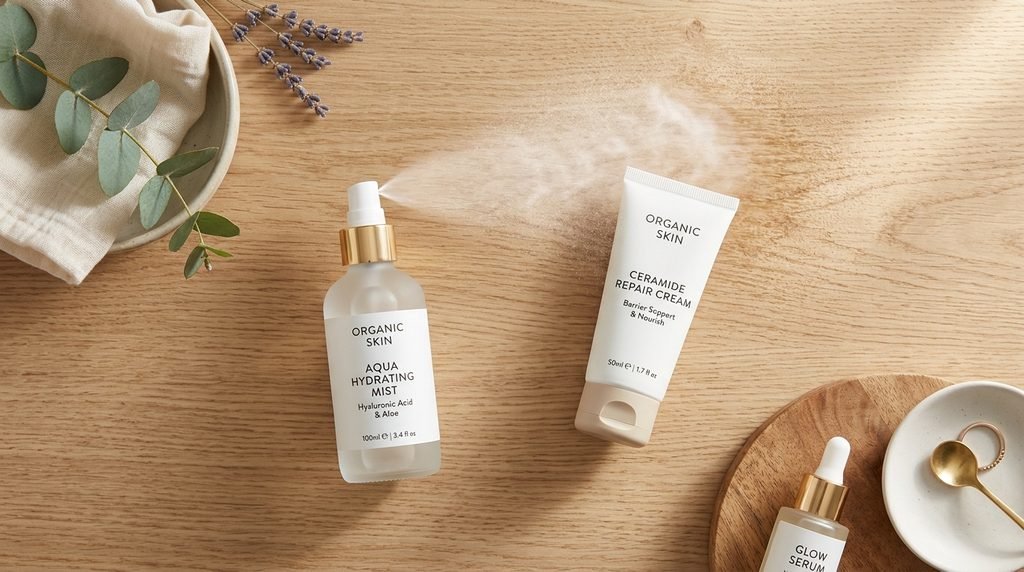
To help you quickly diagnose your skin’s exact needs, this side-by-side comparison breaks down the key characteristics of both conditions:
| Feature | Dry Skin (Skin Type) | Dehydrated Skin (Skin Condition) |
| Primary Cause | Underactive sebaceous glands (lack of oil) | Environmental factors, damaged barrier (lack of water) |
| Pore Appearance | Small, tight, almost invisible | Can range from tiny to enlarged and visible |
| Texture & Feel | Flaky, rough, tight year-round | Shiny yet tight, paper-like fine lines, dull |
| Breakout Potential | Low; rarely experiences acne | High; overproduction of oil can cause breakouts |
| Key Fix | Rich emollients, ceramides, facial oils | Water-rich humectants, gentle hydration layering |
How to Self-Diagnose: The 30-Second Pinch Test
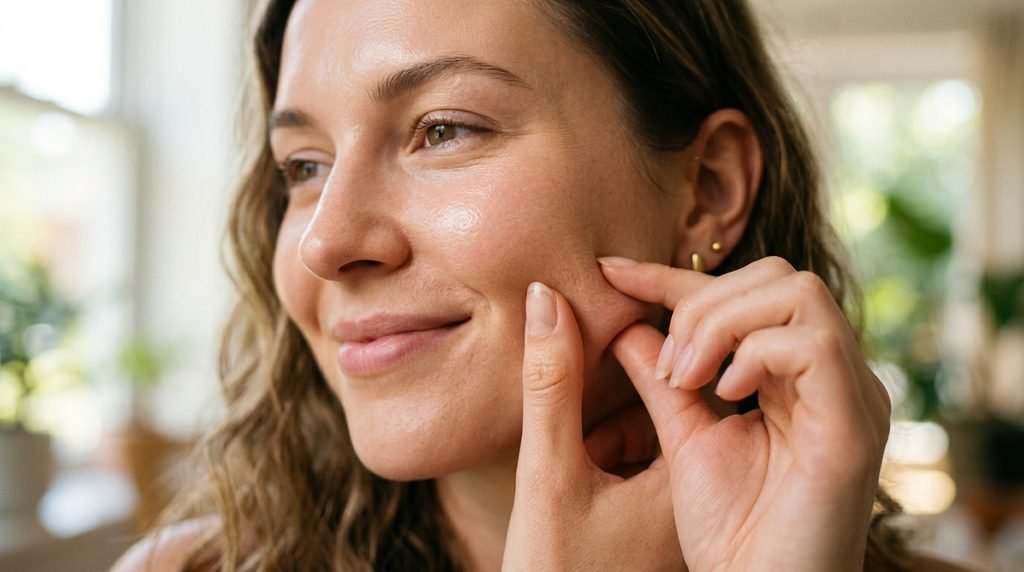
Unsure which issue you are facing? You can perform a simple diagnostic test at home right now:
- The Pinch Test: Gently pinch a small section of skin on your cheek or the back of your hand and hold it for two seconds, then release.
- If it snaps back instantly, your skin is well-hydrated.
- If it holds a tiny tent shape or takes a second to smooth out with fine crinkles, your skin is suffering from dehydration.
- The Blotting Test: Cleanse your face with a gentle, non-foaming cleanser and wait 30 minutes without applying any products.
- If your skin feels uniformly tight, rough, and shows no oil anywhere, you have dry skin.
- If your T-zone looks shiny or greasy but your skin simultaneously feels uncomfortably tight underneath, you have dehydrated oily skin.
Ingredients That Fix Dry vs. Dehydrated Skin
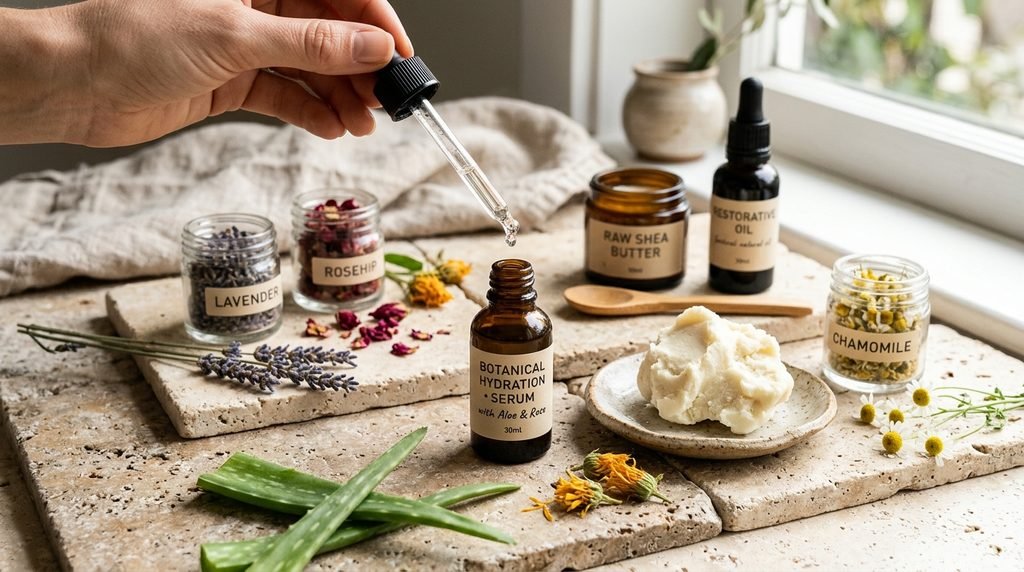
Using the wrong ingredients for your specific issue can stall your progress. Here is how to select the right topical treatments based on your diagnosis:
Ingredients for Dehydrated Skin (Humectants)
Humectants draw moisture from the air or deeper layers of the dermis into the surface layers of your skin.
- Hyaluronic Acid: Holds up to 1,000 times its weight in water, instantly plumping dehydrated tissue. (Learn more in our full breakdown on Understanding Hyaluronic Acid).
- Glycerin: A reliable, highly effective humectant that pulls water into the upper skin layers and restores elasticity.
- Sodium PCA & Aloe Vera: Lightweight hydrators that soothe surface inflammation while delivering deep water content.
Ingredients for Dry Skin (Emollients & Occlusives)
Emollients fill in the microscopic gaps between skin cells, while occlusives form a physical shield to trap moisture.
- Ceramides: Lipid molecules that restore the structural integrity of a compromised moisture barrier. (Read our guide on Ceramides Explained).
- Squalane & Jojoba Oil: Lightweight plant-derived lipids that mimic your skin’s natural sebum.
- Shea Butter & Petrolatum: Rich occlusives best suited for trapping water in very dry or flaking skin.
Conclusion

Distinguishing between dry and dehydrated skin is the turning point for effective skincare. Remember, dry skin lacks oil and requires rich, nourishing emollients to rebuild its natural lipid shield. Dehydrated skin lacks water and requires water-binding humectants to restore bounce, radiance, and comfort. By assessing your skin accurately and targeting its specific needs, you can calm irritation, balance oil production, and achieve a healthy, resilient glow. Take a close look at your current lineup today: are you nourishing your skin type, or hydrating your skin condition?
FAQ Section
Q: What is the main difference between dry skin and dehydrated skin?
A: Dry skin is a genetic skin type characterized by a natural lack of oil and lipids. Dehydrated skin is a temporary skin condition caused by a lack of water content in the skin cells, which can affect any skin type, including oily skin.
Q: Can oily skin be dehydrated?
A: Yes, absolutely. Oily skin often becomes dehydrated when stripped of moisture by harsh products or environmental factors. In response to water loss, the skin produces excess oil to compensate, resulting in a shiny surface that feels uncomfortably tight underneath.
Q: Is hyaluronic acid better for dry or dehydrated skin?
A: Hyaluronic acid is ideal for dehydrated skin because it is a humectant that attracts water to skin cells. While people with dry skin can benefit from hyaluronic acid, they must also apply rich emollients or oils over top to seal that hydration in place.
Q: Can dehydrated skin cause acne breakouts?
A: Yes, dehydrated skin can lead to breakouts. When skin lacks water, it often overcompensates by producing excess sebum. This oil, combined with dead skin cells that fail to shed properly due to dehydration, can clog pores and trigger acne flare-ups.
Q: How long does it take to fix dehydrated skin?
A: Dehydrated skin can improve quickly—often within 5 to 7 days of using gentle, humectant-rich products and repairing your moisture barrier. However, fully restoring deep hydration and barrier strength typically takes about 2 to 4 weeks of consistent care.
Q: Which is better for dry skin: a serum or a cream?
A: People with dry skin generally need both, used in layers. A hydrating serum delivers deep water-based moisture, while a rich cream provides essential lipids, ceramides, and emollients that seal in hydration and prevent water loss through the skin’s surface.