Executive Summary

For years, skincare enthusiasts were warned against layering vitamin C and niacinamide due to fears of neutralization or extreme skin redness. Modern dermatological consensus and advanced formulation science prove this caution is based on outdated data. You can safely mix vitamin C and niacinamide in the same skincare routine. Combining these powerful antioxidants works synergistically to brighten dull skin, even out hyperpigmentation, smooth rough texture, and bolster the skin barrier. This guide breaks down the science behind the original chemical myth, clarifies pH considerations, and delivers practical layering methods for every skin type—including sensitive skin.
The Ultimate Vitamin C and Niacinamide Guide
If you’ve spent any time reading ingredient labels or browsing skincare forums, you’ve likely seen conflicting advice about pairing vitamin C with niacinamide. One source claims they cancel each other out, while another warns that mixing them causes painful facial flushing and irritation. The truth? Modern skincare formulations have rendered those decades-old warnings obsolete. You don’t have to choose between the collagen-boosting power of vitamin C and the barrier-repairing benefits of niacinamide. When used correctly, these two heavyweight antioxidants form a power duo for glowing, healthy skin. Let’s separate internet myths from formulation facts and explore how to use them together safely.
The Origin of the Vitamin C and Niacinamide Myth

The belief that vitamin C and niacinamide are incompatible stems from 1960s laboratory research. In these early studies, researchers combined pure ascorbic acid and niacinamide in non-buffered aqueous solutions under extremely high temperatures. Under those artificial conditions, the two compounds bound together to create a complex called niacinamide ascorbate, which rendered both ingredients inactive. Additionally, the high heat degraded niacinamide into nicotinic acid (niacin), a compound known to cause temporary skin flushing and redness.
       [Historical 1960s Study Conditions]              [Modern Skincare Formulations]
• Pure L-Ascorbic Acid + Pure Niacinamide        • Stabilized Vitamin C Derivatives (or Buffered L-AA)
• High Heat / Unbuffered Aqueous Solution        • Room Temperature / Advanced Delivery Systems
                       │                                                │
                       ▼                                                ▼
     Niacinamide Ascorbate Complex                    Synergistic Antioxidant Activity
 (Inactivated Active + Nicotinic Acid)              (Brightening + Barrier Repair + Collagen)
Modern cosmetic chemistry operates under entirely different rules. Today’s serums use stabilized delivery systems, buffered pH levels, and refined derivatives stored at room temperature. Under standard daily application, vitamin C and niacinamide do not react to form nicotinic acid, nor do they neutralize each other’s benefits on your skin.
Why Mixing Vitamin C and Niacinamide Enhances Your Skin
Combining these two actives does not degrade their potency—it actually offers complementary skincare benefits. Each ingredient targets dullness and uneven tone through completely different biological pathways.
- Targeting Hyperpigmentation: L-ascorbic acid inhibits the enzyme tyrosinase, preventing the overproduction of melanin at the source. Niacinamide (Vitamin B3) prevents the transfer of existing melanin granules into surface skin cells. Using both simultaneously attacks dark spots from two distinct angles.
- Strengthening the Skin Barrier: Vitamin C provides potent free-radical protection against UV radiation and environmental pollution. Niacinamide stimulates ceramide production, locking in moisture and reinforcing the physical lipid barrier to minimize potential irritation.
- Refining Texture and Pores: Vitamin C promotes healthy collagen synthesis to keep skin firm, while niacinamide regulates sebum production and reduces the appearance of enlarged pores.
| Ingredient Feature | Vitamin C (L-Ascorbic Acid / Derivatives) | Niacinamide (Vitamin B3) |
| Primary Action | Antioxidant defense & tyrosinase inhibition | Barrier repair & melanosome transfer inhibition |
| Optimal pH Range | pH 3.0 – 3.5 (Pure L-AA) or pH 5.5 – 6.5 (Derivatives) | pH 5.0 – 7.0 |
| Key Skin Benefit | Brightens hyperpigmentation, boosts collagen | Reduces redness, balances oil, shrinks pore appearance |
| Synergy Potential | Neutralizes free radicals | Strengthens lipid barrier to reduce active-induced irritation |
Myth vs Fact: Debunking Common Skincare Assumptions
The Reality: Most claims about ingredient incompatibility stem from outdated processing methods, not how real serums behave on human skin.
- Myth: Vitamin C and niacinamide cancel each other out when applied together.
- Fact: Modern stabilized formulas do not bind or neutralize each other at body temperature.
- Myth: Mixing these ingredients causes immediate severe facial flushing.
- Fact: Flushing only occurs if niacinamide breaks down into nicotinic acid under high heat—a scenario that does not occur in daily room-temperature application.
- Myth: You must wait 30 minutes between applying vitamin C and niacinamide.
- Fact: Unless you have reactive or hypersensitive skin, layering them consecutively once the first layer absorbs is perfectly safe.
How to Layer Vitamin C and Niacinamide in Your Routine
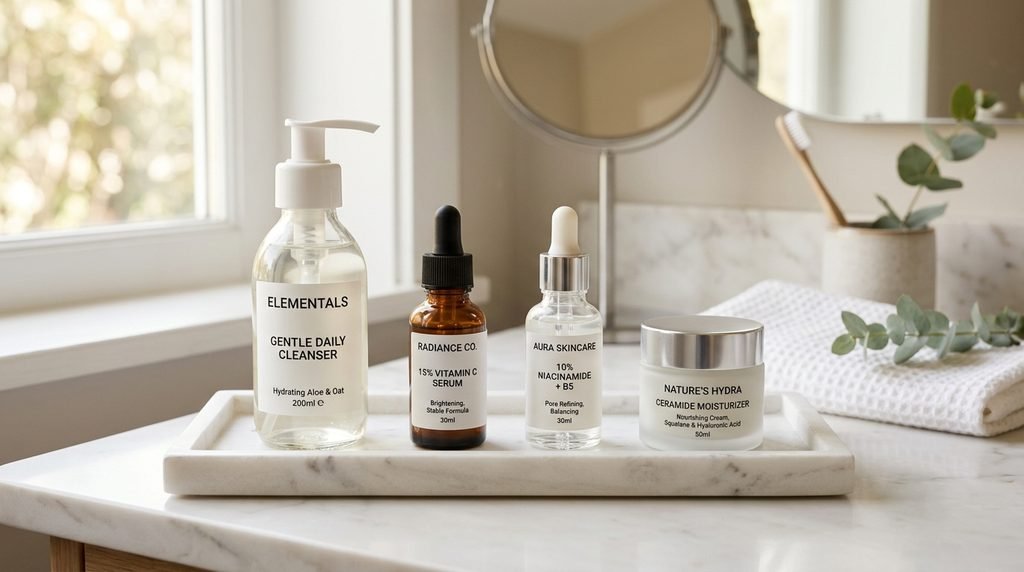
To maximize benefits and prevent pilling or mild sensitivity, follow a structured application order based on product texture and formulation pH.
- Cleanse: Wash your face with a gentle, pH-balanced cleanser to remove excess oil and debris.
- Apply Vitamin C First: Pure L-ascorbic acid requires a low pH (pH 3.0–3.5) to penetrate the stratum corneum efficiently. Apply your vitamin C serum directly to dry skin immediately after cleansing.
- Allow Absorption: Wait 1 to 2 minutes until the skin feels dry to the touch. This allows the low-pH serum to absorb without being immediately neutralized by higher-pH products.
- Apply Niacinamide: Layer your niacinamide serum (typically formulated at pH 5.0–7.0) over the vitamin C.
- Moisturize & Protect: Lock in hydration with a lightweight barrier cream. During your morning routine, finish with a broad-spectrum sunscreen rated SPF 30 or higher.
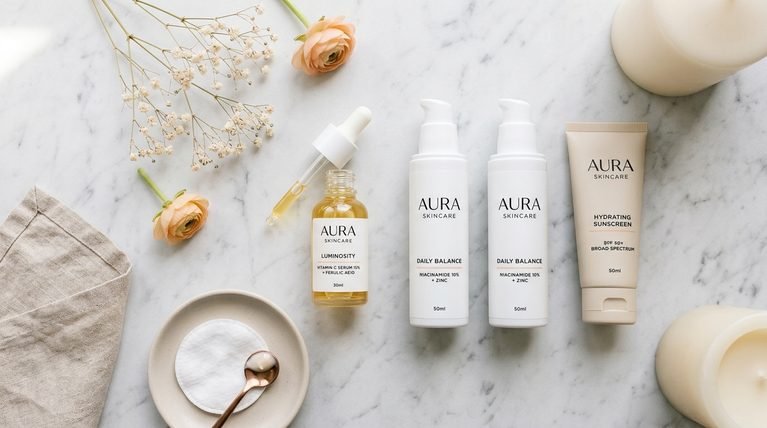
If you are using products from accessible lines like The Ordinary Niacinamide 10% + Zinc 1% alongside a pure vitamin C serum, this sequence ensures optimal absorption for both products. For additional guidance on structuring your daily steps, explore our dedicated guide on How to Properly Layer Skincare Actives.
Troubleshooting Sensitivity and Redness
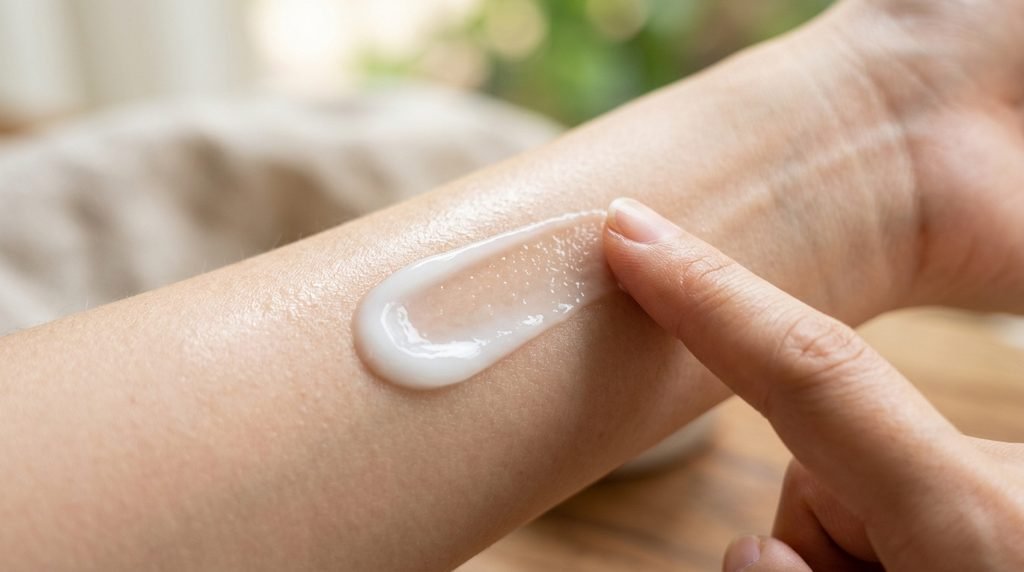
While chemical incompatibility is a myth, physical skin irritation remains possible if you introduce high concentrations of active ingredients simultaneously.
If you experience mild stinging or redness, it is rarely due to a chemical reaction between the two ingredients. Instead, it typically stems from using a high-concentration L-ascorbic acid (15–20%) alongside a high-percentage niacinamide formula (10%). High concentrations of niacinamide can cause temporary vasodilation or mild stinging in sensitive skin types.
To resolve irritation, consider using vitamin C in your morning routine for antioxidant defense and niacinamide in your evening routine for overnight repair. Alternatively, opt for gentler vitamin C derivatives such as Sodium Ascorbyl Phosphate or Tetrahexyldecyl Ascorbate, which operate at a skin-neutral pH closer to niacinamide. To understand more about gentler brighteners, check our deep-dive on What Is Vitamin C Serum and How to Choose the Right Form. You can also learn how Vitamin B3 supports skin health in our breakdown on What Is Niacinamide and Its Barrier Benefits.
For further reading on ingredient safety data, consult the research available on the National Center for Biotechnology Information (NCBI) Database.
Conclusion

The idea that you cannot mix vitamin C and niacinamide is a lingering skincare myth rooted in 60-year-old lab conditions that don’t apply to modern beauty formulations. When paired together, these two antioxidants deliver comprehensive brightening, environmental protection, and barrier support. By applying your low-pH vitamin C serum first, allowing it a minute to absorb, and following with niacinamide, you can safely enjoy the full benefits of both ingredients. Assess your skin’s sensitivity, start with lower concentrations, and adjust your routine as needed to maintain a smooth, radiant complexion.
FAQ Section

Q: Is it safe to mix vitamin C and niacinamide in the same routine?
A: Yes, it is entirely safe for most skin types. Modern cosmetic formulations are buffered and stabilized, preventing the chemical breakdown or skin flushing associated with outdated 1960s laboratory studies. Layering them helps address hyperpigmentation, uneven skin texture, and weakened barrier function simultaneously.
Q: Do vitamin C and niacinamide cancel each other out?
A: No, they do not cancel each other out. In modern room-temperature formulations, vitamin C and niacinamide remain chemically stable when applied to the skin. Each ingredient works through a distinct biological mechanism to brighten tone and repair skin without degrading the other’s efficacy.
Q: Should I apply vitamin C or niacinamide first?
A: Apply pure vitamin C (L-ascorbic acid) first because it requires a lower pH level (around 3.0 to 3.5) to penetrate the skin efficiently. Let it absorb for 1 to 2 minutes before applying your niacinamide serum, which typically sits at a higher, neutral pH.
Q: Why did my skin flush after using vitamin C and niacinamide together?
A: Facial flushing usually results from individual sensitivity to high concentrations of active ingredients rather than a negative chemical reaction. High-strength niacinamide (10%) or highly acidic pure L-ascorbic acid can trigger temporary redness. Switching to lower percentages or separating them between AM and PM routines resolves this issue.
Q: Can I use The Ordinary Niacinamide with a Vitamin C serum?
A: Yes, you can layer The Ordinary Niacinamide 10% + Zinc 1% with vitamin C. For best results, apply your vitamin C serum first, allow it to absorb fully into dry skin, and follow with the niacinamide serum. If skin irritation occurs, use vitamin C in the AM and niacinamide in the PM.