Executive Summary

Dehydrated skin is a temporary skin condition caused by a lack of water, distinct from dry skin, which lacks natural oils. Left unaddressed, it leads to tightness, dullness, accentuated fine lines, and increased sensitivity. Restoring hydration requires a two-step topical strategy: attracting water into the surface layers with humectants, and sealing it in with barrier-supportive emollients and occlusives. By removing stripping habits—such as hot water washes and harsh exfoliants—and adopting an intentional daily routine featuring ingredients like glycerin, hyaluronic acid, and ceramides, surface hydration typically improves within days, while full skin barrier recovery takes several weeks. This guide details exact morning and evening routines, key ingredient comparisons, and practical habit adjustments to restore comfortable, balanced skin.
Hook-Up Paragraph

If your skin feels tight, looks dull, or shows unexpected fine lines even when it looks oily on the surface, you are likely dealing with dehydration. Unlike dry skin, which is a genetic skin type lacking oil, dehydrated skin is a temporary state where the skin’s upper layers lack water. It affects every skin type—oily, combination, and dry alike—and often leaves people feeling confused when their usual products stop working. The good news? Learning how to fix dehydrated skin is straightforward once you understand how surface hydration actually works. Rather than slathering on heavy creams that just sit on top, fixing dehydrated skin requires a targeted approach: binding water into the skin cells, sealing it in with a protective barrier, and eliminating the daily habits that drain moisture. Here is your complete, practical guide to restoring balance, comfort, and a healthy glow.
Recognizing the Signs and Root Causes of Dehydrated Skin
Before adjusting your routine, it helps to understand why your skin loses water in the first place. The outer layer of your skin, known as the stratum corneum, relies on a balance of water, natural moisturizing factors (NMF), and lipids to maintain elasticity and protection. When trans-epidermal water loss (TEWL) accelerates—meaning water evaporates off the skin surface faster than it can be replenished—dehydration sets in.
Common symptoms include:
- A persistent “tight” feeling, especially immediately after cleansing.
- Dullness or a lack of natural radiance.
- Increased visibility of fine lines (often called dehydration lines) that flatten out when hydration improves.
- Surface flakiness accompanied by an oily t-zone.
The causes usually trace back to environmental factors or routine missteps. Environmental triggers include dry indoor heating, air conditioning, low ambient humidity, and sun exposure. Daily habits also play a massive role: using harsh, high-pH cleansers, over-using active exfoliants (like glycolic or salicylic acids), washing your face with excessively hot water, and skipping daily moisturizer.
Internal Link Placeholder: To determine whether your skin is lacking water or oil, read our detailed guide on [Dehydrated vs. Dry Skin: How to Tell the Difference and Choose the Right Care].
The Core Strategy: Bind, Seal, and Protect

Fixing dehydrated skin boils down to three fundamental actions that work together to restore water content and stop evaporation:
- Bind Water (Humectants): You must supply water-binding molecules to the skin. Ingredients called humectants draw water from the environment and deeper skin layers into the stratum corneum.
- Seal It In (Emollients & Occlusives): Humectants alone are not enough; without a protective seal, the water drawn to the surface simply evaporates into dry air. A quality moisturizer provides lipids and oils that form a physical barrier, locking that moisture in place.
- Protect the Barrier: You must temporarily stop any practices that disrupt your skin’s natural protective layer while it recovers.
| 1. BIND WATER | 2. SEAL MOISTURE | 3. PROTECT |
|---|---|---|
| Humectants: Glycerin, HA | Emollients/Ceramides | Gentle Care: No Hot Water |
Key Ingredients That Rehydrate the Skin

Not all moisturizing ingredients perform the same task. To select effective products, look for formulas containing a thoughtful mix of humectants, barrier-builders, and soothing agents.
Humectants (Water Magnet Ingredients)
- Glycerin: One of the most effective, thoroughly studied humectants in skincare. It penetrates easily, holding water securely within the upper layers of skin.
- Hyaluronic Acid: Known for holding up to 1,000 times its weight in water. Multi-molecular weight formulas work best, as smaller molecules penetrate deeper while larger ones hydrate the surface.
- Panthenol (Pro-Vitamin B5): Acts as both a humectant and a soothing agent, aiding barrier recovery while attracting moisture.
- Sodium PCA and Urea: Components of the skin’s Natural Moisturizing Factor that restore supple texture.
Barrier Support (Sealing Ingredients)
- Ceramides: Crucial lipids that fill the spaces between skin cells, repairing the protective mortar of the skin barrier.
- Squalane: A lightweight, non-comedogenic oil that mimics natural sebum, providing smoothness without clogging pores.
- Free Fatty Acids and Cholesterol: Essential lipid components that help reconstruct damaged surface layers.
External Source Placeholder: Research published in dermatological studies highlights the role of topical ceramides and humectants in reducing trans-epidermal water loss and repairing impaired barrier function. (Source: Journal of Investigative Dermatology / Dermatologic Therapy)
Step-by-Step Daily Routine for Dehydrated Skin
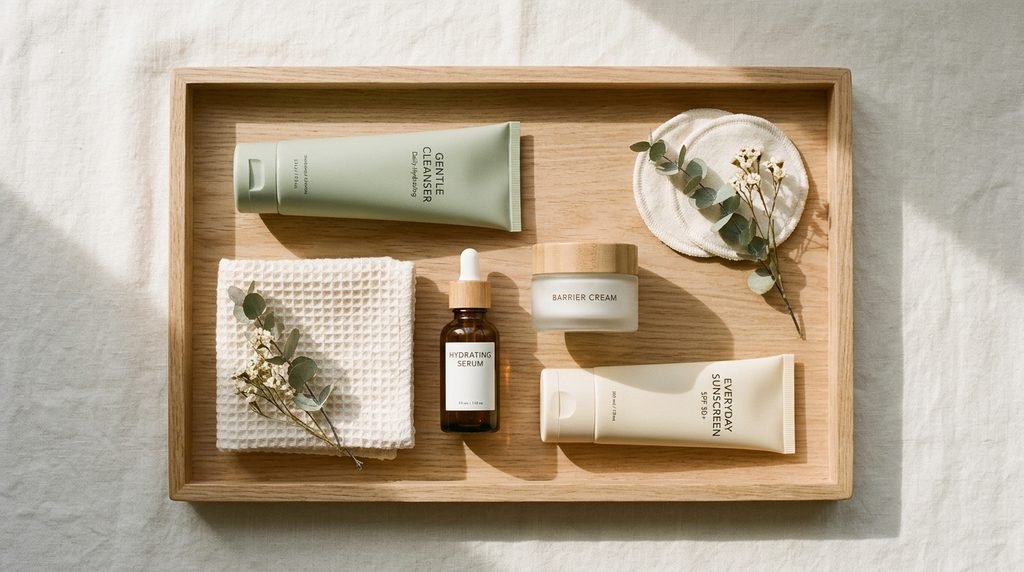
A effective routine for dehydrated skin does not need to be complex; in fact, simpler routines often yield faster results because they minimize potential irritants.
| Step | AM Routine | PM Routine | Primary Goal |
| 1. Cleanse | Lukewarm water or gentle hydrating cleanser | Gentle, non-foaming cream/gel cleanser | Cleanse without stripping natural lipids |
| 2. Hydrate | Apply humectant serum on damp skin | Apply humectant serum on damp skin | Bind water into the surface layers |
| 3. Seal | Lightweight barrier cream | Richer nourishing cream or facial oil | Lock in moisture and repair the barrier |
| 4. Protect | Broad-spectrum SPF 30+ | N/A | Shield skin from UV-induced water loss |
Morning (AM) Routine
- Cleanse: If your skin feels dry or tight in the morning, skip the cleanser entirely and rinse with lukewarm water. If you prefer cleansing, choose a gentle, low-foaming lotion or jelly cleanser.
- Serum: Leave your face damp after rinsing. Immediately apply 2–3 drops of a humectant serum containing glycerin or hyaluronic acid. Applying humectants to damp skin gives them water to pull into the skin rather than drawing moisture out from deeper layers.
- Moisturize: Follow immediately with a lightweight moisturizer rich in ceramides or squalane to seal in the hydrator.
- Sunscreen: Finish with a broad-spectrum sunscreen (SPF 30 or higher). Sun damage weakens the skin barrier and worsens dehydration.
Evening (PM) Routine
- Cleanse: Remove makeup and daily grime using a gentle, sulfate-free cleanser. Avoid aggressive scrubbing or harsh cleansing brushes.
- Serum: Reapply your humectant serum to damp skin.
- Moisturize: Apply a slightly richer barrier repair cream. Ingredients like cholesterol, ceramides, and fatty acids work overnight to rebuild the surface barrier while you sleep.
Skincare Habits Making Dehydration Worse (And What to Do Instead)
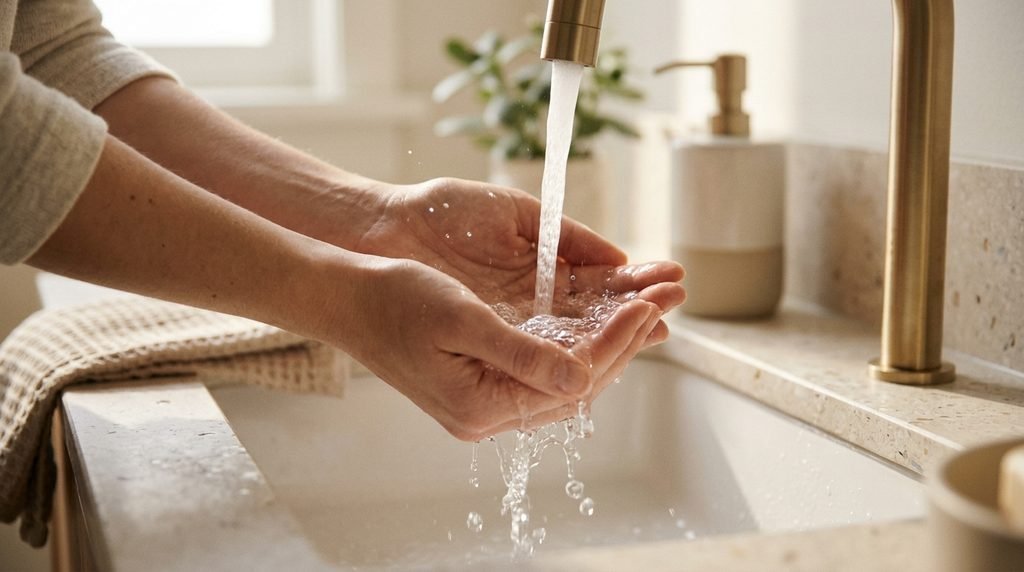
Often, fixing dehydrated skin is as much about what you stop doing as what you start doing. Here are five common habits that undermine surface hydration:
- Washing with Hot Water: Hot water strips away the protective lipid layer instantly. Fix: Switch to lukewarm water for all facial cleansing.
- Over-Exfoliating: Using chemical acids (AHAs/BHAs) daily or physical scrubs disrupts cell turnover and damages the moisture barrier. Fix: Pause all exfoliants completely for 2 to 3 weeks until tightness subsides.
- Applying Hyaluronic Acid to Bone-Dry Skin: In low-humidity environments, humectants applied to dry skin can draw moisture upward from deeper skin layers, worsening surface tightness. Fix: Always mist or wet your face before applying humectant serums.
- Skipping Moisturizer on Oily Skin: Dehydrated oily skin often produces more oil to compensate for lack of water. Skipping moisturizer perpetuates this cycle. Fix: Use a oil-free gel-cream rich in glycerin and niacinamide.
- Using Harsh, High-pH Cleansers: Traditional bar soaps and harsh foaming cleansers disrupt skin pH, weakening barrier integrity. Fix: Opt for pH-balanced (around 5.5) gentle cleansers.
Realistic Timelines: How Long Does It Take to Rehydrate Skin?

Managing expectations helps you stay consistent. The timeline for fixing dehydrated skin depends on the severity of the barrier disruption:
- Immediate (1–3 Days): Surface comfort improves significantly once you begin applying humectants to damp skin and sealing them properly. Tightness after cleansing usually lessens quickly.
- Short-Term (1–2 Weeks): Fine dehydration lines plump up, flakiness decreases, and overall radiance begins to return as surface water content stabilizes.
- Full Restoration (3–6 Weeks): The skin barrier fully rebuilds its lipid structure. Natural oil production balances out, sensitivity decreases, and the skin regains its natural resilience.
If skin remains severely irritated, stinging, or raw despite stopping active ingredients and using gentle care, consult a board-certified dermatologist to rule out underlying conditions like contact dermatitis or eczema.
Conclusion

Fixing dehydrated skin does not require an expensive 10-step routine or miracle products. By focusing on the core principles—binding water with humectants, sealing it with barrier-repairing lipids, and eliminating stripping habits—you can restore comfort, plumpness, and balance to your complexion. Remember to apply your hydrating serums directly to damp skin, hold off on active exfoliants while your barrier recovers, and never skip daily sunscreen. Start simplifying your routine today, and give your skin the hydration and protection it needs to thrive.
FAQ Section
Q: What is the fastest way to fix dehydrated skin?
A: The fastest way to relieve dehydrated skin is applying a humectant serum (containing glycerin or hyaluronic acid) directly to damp skin, immediately followed by a ceramide-rich moisturizer. Stopping harsh cleansers, hot water, and exfoliants provides noticeable comfort within 24 to 48 hours.
Q: Can drinking more water cure dehydrated skin?
A: While adequate internal hydration supports overall bodily health, drinking extra water alone cannot fix skin-surface dehydration if your moisture barrier is damaged. Topical humectants and barrier-sealing moisturizers are required to prevent water from evaporating off the skin surface.
Q: Should I apply hyaluronic acid on wet skin?
A: Yes. Hyaluronic acid is a humectant that binds water. Applying it to damp or wet skin gives the ingredient external moisture to pull into the upper layers of your skin, preventing it from drawing water out of deeper tissue in dry environments.
Q: Can dehydrated skin cause acne or extra oiliness?
A: Yes. When skin lacks water, it often compensates by producing excess sebum (oil) to prevent further moisture loss. This excess oil, combined with dehydrated surface flakes, can clog pores and lead to breakouts or a greasy surface appearance.
Q: How do I know if my skin is dry or dehydrated?
A: Dry skin is a genetic skin type characterized by a lack of oil, resulting in small pores and persistent dryness across the body. Dehydrated skin is a condition caused by a lack of water, affecting any skin type, often producing a tight feel alongside surface oiliness or dullness.
Q: How long should I pause exfoliants when repairing dehydrated skin?
A: Pause all chemical exfoliants (AHAs, BHAs) and physical scrubs for at least 2 to 4 weeks. Once your skin no longer feels tight after cleansing and surface comfort is fully restored, you can reintroduce a mild exfoliant gradually, starting once per week.
If your skin is combination rather than dehydrated, see our guide: How to Take Care of Combination Skin.