
Executive Summary

Navigating sensitive skin often feels like a constant balancing act between soothing sudden redness and preventing future breakouts. This guide breaks down a simple, dermatologist-backed 4-step skincare routine designed specifically for sensitive complexions. You will learn how to clean, soothe, moisturize, and protect your skin without triggering irritation. We highlight essential ingredients like ceramides and panthenol, flag hidden irritants such as synthetic fragrances and essential oils, and provide actionable tips for patching new products safely. Whether your skin is prone to flushing, stinging, or seasonal dryness, this straightforward approach restores calm and strengthens your natural skin moisture barrier.
Hook-Up Paragraph

If your skin stings when applying everyday lotions or flushes red at the slightest weather change, you are not alone. Building an effective skincare routine for sensitive skin does not require a dozen expensive bottles or complex steps. In fact, when it comes to reactive skin, less is almost always more. Overloading your face with active ingredients often leads to a compromised barrier, heightened reactivity, and ongoing discomfort. The goal is to strip away unnecessary additives and focus strictly on gentle nourishment. By following a streamlined four-step method, you can calm existing irritation, fortify your skin’s outer defense layer, and enjoy a healthy, glowing complexion every day.
Understanding Sensitive Skin and Your Skin Barrier
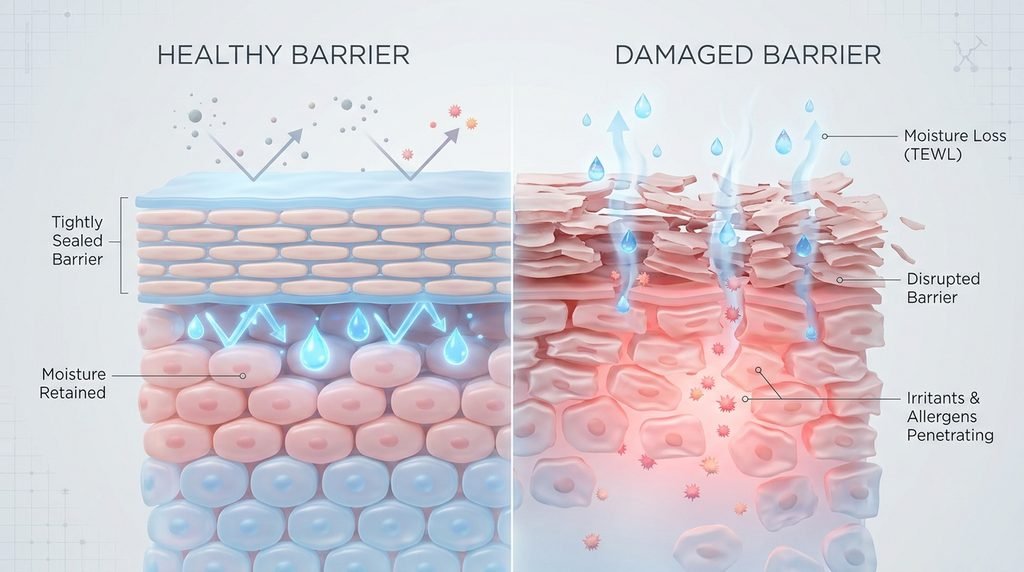
Sensitive skin is not strictly a medical diagnosis; rather, it is a descriptive term for skin that is easily hyper-reactive to environmental factors, topical products, or temperature shifts. Anyone can experience sensitive skin, regardless of whether their underlying type is oily, dry, or combination.
At the center of sensitivity lies the skin barrier—specifically the stratum corneum. When this protective outer layer functions properly, it seals in essential moisture and keeps external irritants, allergens, and bacteria out. However, when the barrier becomes damaged due to harsh weather, over-exfoliation, or irritating chemicals, microscopic cracks form. This leads to transepidermal water loss (TEWL) and allows irritants to penetrate deeper, triggering burning, itching, and visible redness. Understanding this mechanism is crucial because every product in your routine should focus on supporting barrier health rather than stripping it away.
The Ultimate 4-Step Sensitive Skincare Routine
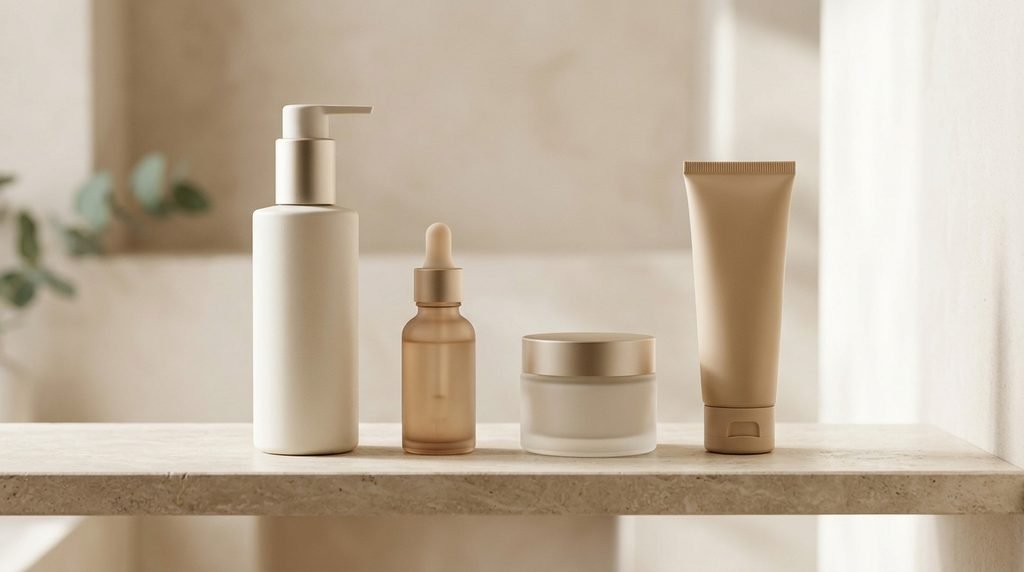
To keep reactive skin calm, stick to a streamlined routine that focuses on four fundamental goals: gentle cleansing, active calming, deep hydration, and mineral protection.
| Step | Product Type | Key Ingredients to Look For | Primary Benefit |
| 1. Cleanse | Non-foaming Cream/Gel Cleanser | Glycerin, Allantoin | Removes impurities without stripping lipids |
| 2. Calm | Hydrating Barrier Serum | Ceramides, Panthenol, Ectoin | Reinforces moisture barrier & soothes redness |
| 3. Hydrate | Fragrance-Free Moisturizer | Hyaluronic Acid, Squalane | Seals in hydration & prevents water loss |
| 4. Protect | Mineral Sunscreen (AM) | Zinc Oxide, Titanium Dioxide | Deflects UV rays without chemical irritation |
Step 1: Cleanse Gently
Start your morning and evening with a mild, non-foaming cleanser. Traditional foaming cleansers often rely on harsh sulfates (like sodium lauryl sulfate) that strip away the natural lipids essential for a strong barrier. Opt for creamy, gel-like, or lotion cleansers that leave the face feeling soft and supple rather than tight or squeaky clean. Always wash with lukewarm water, as hot water strips natural oils and exacerbates flushing.
Step 2: Soothe and Repair with a Targeted Serum
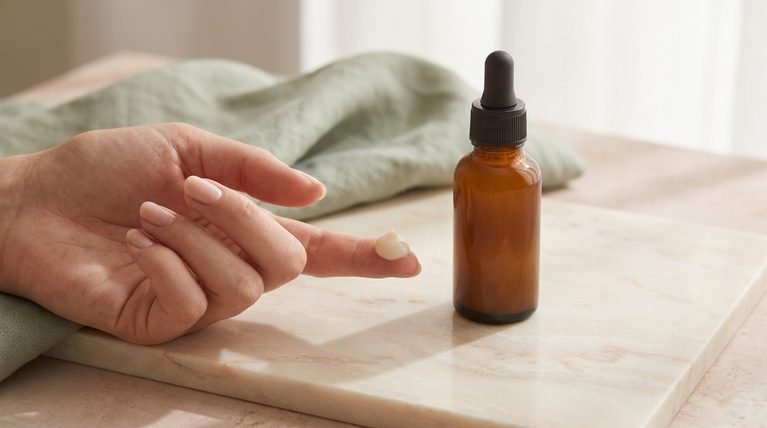
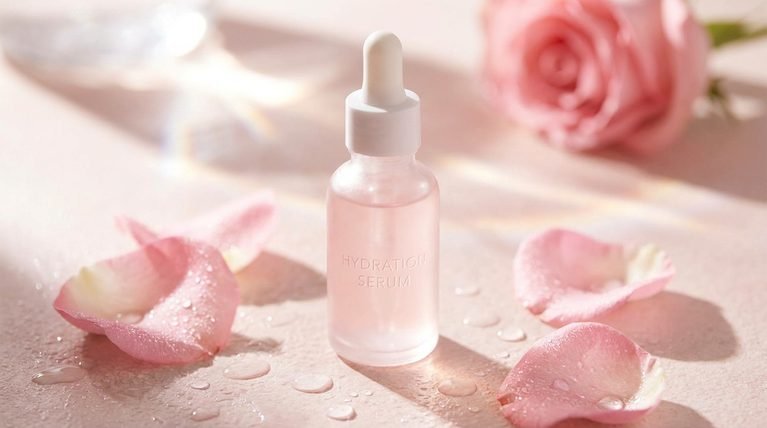
Serums are not off-limits for sensitive skin, provided you choose formulas built for barrier repair. Apply a gentle, hydrating serum containing ingredients like ceramides, panthenol (vitamin B5), ectoin, or niacinamide at low concentrations (under 5%). These compounds actively calm inflammation, accelerate tissue recovery, and replenish lost lipids. If you are learning how to introduce a new serum into your regimen, always start with a small patch test behind your ear or on your inner arm for 48 hours.
Step 3: Lock in Moisture
A well-formulated moisturizer acts as a protective shield over your serum. Look for creams rich in squalane, shea butter, or hyaluronic acid that provide long-lasting hydration without clogging pores. Applying your moisturizer while the skin is still slightly damp from your serum helps trap moisture efficiently. For deeper insights into lipid replenishment, check out our guide on ceramides explained.
Step 4: Protect Daily with Mineral Sunscreen
Sun exposure is a primary trigger for facial redness and sensitivity. Chemical sunscreen filters (like avobenzone or oxybenzone) work by absorbing UV rays and converting them into heat, which can cause stinging or flushing on reactive skin. Instead, choose a broad-spectrum mineral sunscreen powered by zinc oxide or titanium dioxide. Mineral filters sit on top of the skin surface to physically reflect UV rays without generating heat or irritating delicate tissue.
Key Ingredients: What to Seek and What to Avoid
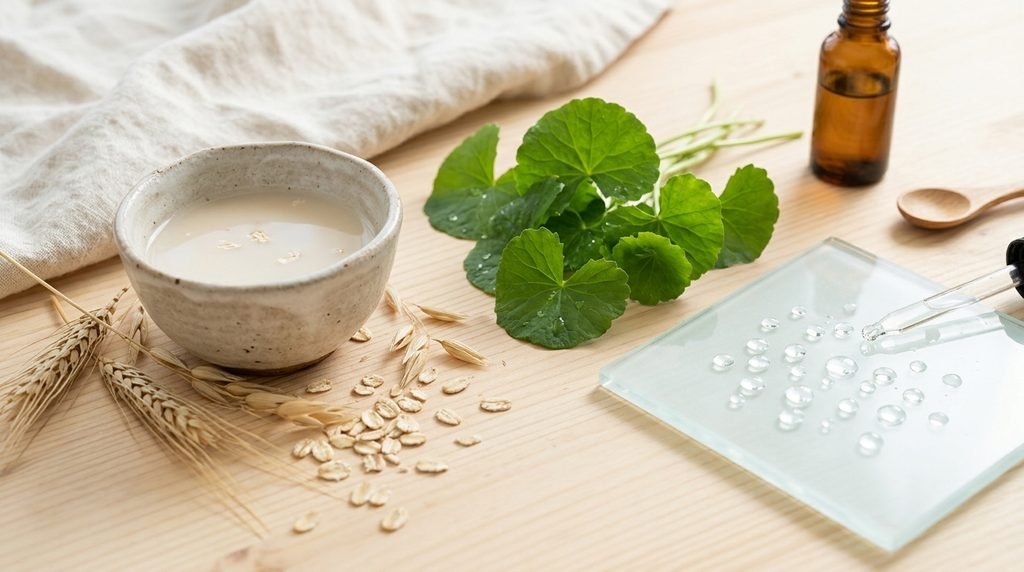
Choosing the right formulations requires reading product labels carefully. Selecting comforting ingredients while actively dodging known irritants ensures your skin stays comfortable.
+------------------------------------+------------------------------------+
|  SUPPORTIVE INGREDIENTS TO SEEK    |  POTENTIAL IRRITANTS TO AVOID      |
+------------------------------------+------------------------------------+
| • Ceramides (Barrier Repair)       | • Synthetic Fragrances & Perfumes  |
| • Panthenol / Pro-Vitamin B5       | • Essential Oils (Lavender, Citrus)|
| • Centella Asiatica (Cica)         | • Denatured Alcohol / SD Alcohol   |
| • Squalane & Glycerin              | • Harsh Physical Walnut Scrubs     |
| • Zinc Oxide (Soothing Protection) | • High-Strength Glycolic Acid      |
+------------------------------------+------------------------------------+
According to ingredient safety resources published by the Cosmetic Ingredient Review (CIR) Expert Panel, synthetic fragrances and volatile botanical oils remain among the most frequent culprits behind contact dermatitis and localized skin irritation. Always opt for products explicitly labeled “fragrance-free” rather than “unscented,” as unscented products may contain masking fragrances to cover chemical odors.
How to Safe-Test New Skincare Products

Introducing new products into a sensitive skin routine requires patience and a systematic approach. Never apply a new formula directly across your entire face without testing it first.
- Apply a Small Patch: Place a dime-sized amount of the product on a discreet area, such as your inner forearm or behind your earlobe.
- Wait 24 to 48 Hours: Monitor the area closely for any signs of itching, redness, burning, or swelling.
- Test Near the Target Area: If no reaction occurs, apply a small amount along your jawline for another two consecutive days.
- Introduce One Product at a Time: Space new product introductions at least two weeks apart. If a reaction occurs, you will immediately know which product caused it.
If your skin barrier is currently compromised, review our deep-dive on what causes a damaged skin barrier to help pinpoint potential environmental triggers before adding new items.
When to Consult a Dermatologist

While a minimalist skincare routine resolves mild sensitivity, persistent symptoms may signal an underlying dermatological condition such as rosacea, eczema, or contact allergy. If you experience chronic redness that does not subside, severe burning, swelling, scaling, or painful breakouts, seek guidance from a board-certified dermatologist. They can perform patch testing to identify specific contact allergens and prescribe targeted topical therapies.
A Simple Skincare Routine for Sensitive Skin
Sensitive skin often benefits from a simple routine that focuses on cleansing, hydration, and sun protection. You do not need multiple serums or strong active ingredients to get started. Choose fragrance-free products and introduce new formulas gradually.
Morning Routine
- Gentle cleanser: Wash with lukewarm water and a mild, non-abrasive cleanser. If your skin feels comfortable in the morning, a water rinse may be enough.
- Moisturizer: Apply a fragrance-free moisturizer containing ingredients such as glycerin, ceramides, or panthenol to help maintain skin hydration.
- Sunscreen: Finish with a broad-spectrum sunscreen of SPF 30 or higher. If your current sunscreen stings, consider trying a fragrance-free mineral formula containing zinc oxide or titanium dioxide.
Evening Routine
- Cleanse gently: Remove sunscreen, makeup, and daily buildup without scrubbing or using hot water.
- Moisturize: Apply a suitable moisturizer to help reduce dryness and support the skin barrier.
- Optional serum: If your skin is comfortable with the basic routine, you may introduce a gentle hydrating serum. Avoid adding several new products at once.
Ingredients to Consider for Sensitive Skin
Look for formulas containing glycerin, ceramides, panthenol, or squalane. These ingredients can help support hydration and skin-barrier care. Fragrance, essential oils, exfoliating acids, and retinoids may irritate some people, so introduce potentially irritating products cautiously rather than assuming every ingredient will suit every skin type.
How to Introduce a New Product
Test a new product on a small area of skin according to dermatology guidance and the product instructions. Introduce one product at a time so you can identify possible reactions. Stop using a product if it causes persistent burning, itching, swelling, or significant redness.
When to Seek Professional Advice
If sensitivity continues despite simplifying your routine, or you experience persistent redness, painful irritation, swelling, or a rash, consult a dermatologist. Conditions such as rosacea, eczema, and contact dermatitis may need specific treatment.
Remember: A simple routine is a starting point, not a guarantee that every product will suit your skin. Consistency, gentle care, and choosing products you tolerate are more important than using many skincare steps.
FAQ Section
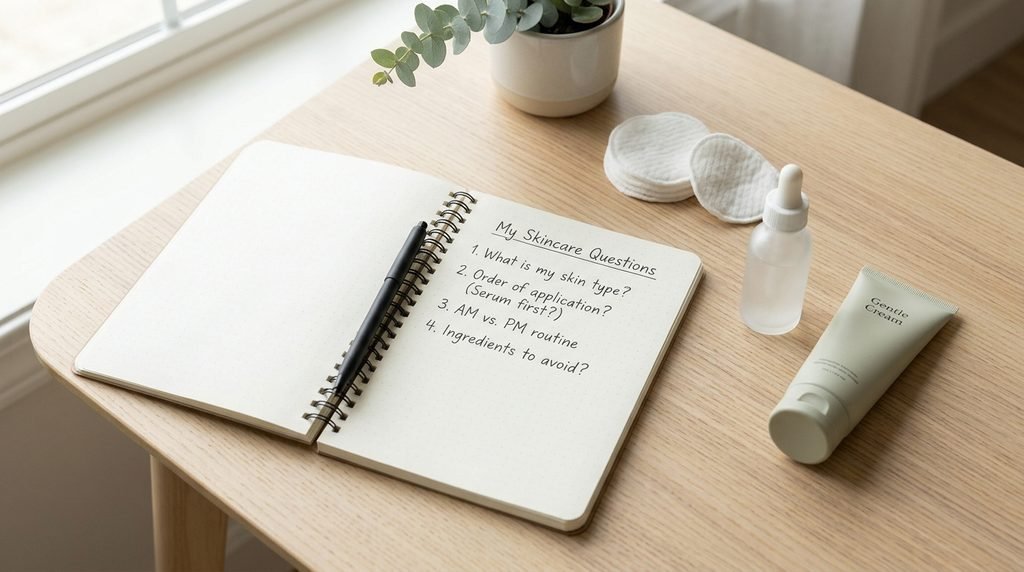
Q: What is a simple skincare routine for sensitive skin?
A: A simple routine consists of four core steps: a gentle non-foaming cleanser, a hydrating barrier serum, a fragrance-free moisturizer, and a mineral sunscreen. Keeping steps minimal minimizes potential exposure to irritants while maintaining skin hydration and barrier protection.
Q: Is sensitive skin considered a distinct skin type?
A: Sensitivity is generally considered a skin condition or state rather than an independent skin type. Any skin type—dry, oily, or combination—can become sensitive when the natural skin barrier is compromised or exposed to harsh irritants.
Q: Can sensitive skin safely use face serums?
A: Yes, sensitive skin can benefit greatly from face serums that prioritize hydration and barrier repair. Look for calm formulas containing ceramides, panthenol, hyaluronic acid, or ectoin, and avoid high concentrations of exfoliating acids or synthetic fragrances.
Q: Why does my skin suddenly feel sensitive and stinging?
A: Sudden sensitivity usually indicates a damaged moisture barrier. Common causes include over-exfoliation, aggressive physical scrubs, harsh weather, sudden temperature changes, or introducing too many active ingredients at once.
Q: What ingredients should I avoid if I have sensitive skin?
A: Avoid synthetic fragrances, essential oils (like tea tree or citrus), denatured alcohol, harsh physical scrubs, and high percentages of direct acids. These ingredients frequently cause contact dermatitis, burning, and increased facial redness.
Q: When should I see a dermatologist for skin redness?
A: You should consult a dermatologist if your skin experiences persistent stinging, swelling, severe cracking, or chronic redness that does not improve after simplifying your routine. These symptoms may point to conditions like rosacea or eczema.
Conclusion

Caring for sensitive skin does not need to be complicated, stressful, or expensive. By stripping back your regimen to a gentle four-step routine—cleansing softly, soothing with barrier serums, l



2 Comments