
Executive Summary
Managing oily skin isn’t about stripping away every trace of oil; it’s about balancing your skin’s natural moisture barrier while controlling excess shine and congestion. Oil production is largely determined by genetics and hormones, meaning no skincare routine can permanently alter your skin type. However, a targeted routine using key ingredients like salicylic acid, niacinamide, and lightweight hydration can dramatically reduce surface shine, refine pore appearance, and prevent breakouts. This guide delivers a research-backed AM/PM routine, debunks common oily skin myths (such as skipping moisturizer), and addresses the common paradox of oily-yet-dehydrated skin. Follow this balanced approach to achieve a healthy, clear complexion without over-stripping.

How to Control Oily Skin Without Over-Stripping

If you struggle with midday shine, enlarged pores, or constant touch-ups, finding an effective skincare routine for oily skin can feel like an uphill battle. The most common mistake is treating oily skin as an enemy to be scrubbed away. Over-cleansing or using harsh, drying alcohol-based toners strips the skin’s surface, triggering compensatory oil production—a reaction where your sebaceous glands produce even more sebum to compensate for lost moisture.
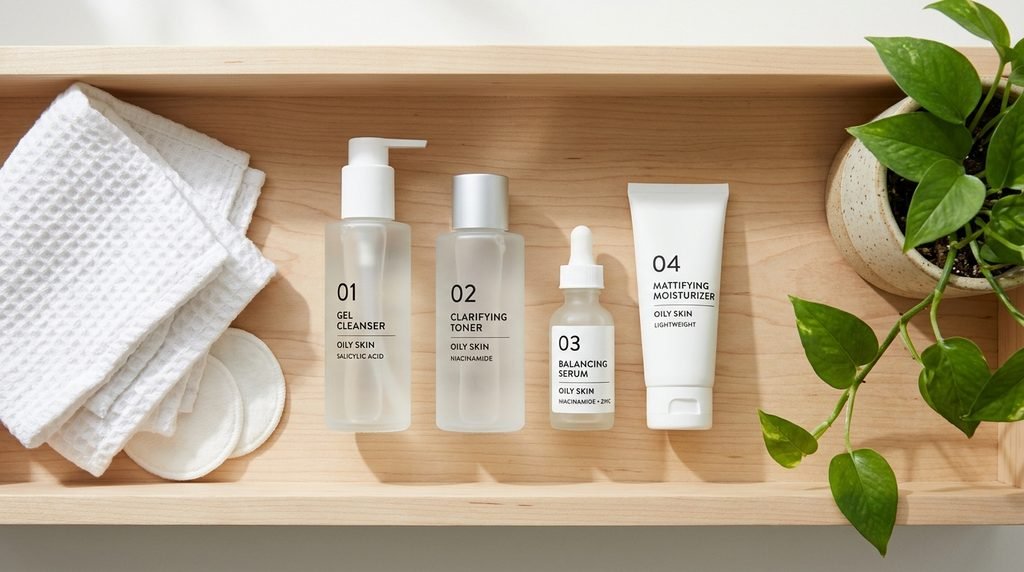
To manage oily skin effectively, you must focus on regulation rather than eradication. A well-designed routine balances active ingredients that break down oil inside pores with lightweight, water-based hydrators that maintain the skin barrier. Here is the step-by-step blueprint for controlling oil production morning and night.
Daily AM & PM Oily Skin Routine Overview

The foundation of controlling oil lies in a consistent morning and evening regimen. The morning routine focuses on removing overnight sebum build-up and protecting skin from UV rays, while the night routine targets deep pore cleansing and skin repair.
| Step | Time | Product Type | Key Ingredients | Primary Purpose |
| 1 | AM & PM | Gel or Foaming Cleanser | Salicylic Acid or Zinc PCA | Removes excess surface oil and cleanses pores without stripping |
| 2 | AM & PM | Lightweight Serum | Niacinamide or Hyaluronic Acid | Regulates sebum output and provides weightless moisture |
| 3 | AM & PM | Oil-Free Gel Moisturizer | Glycerin, Ceramides, Squalane | Hydrates skin barrier to prevent compensatory oil spiking |
| 4 | AM Only | Lightweight Fluid SPF 30+ | Organic UV filters, Niacinamide | Shields skin from UV damage with a matte or non-greasy finish |
| 5 | PM Only | Exfoliating Treatment (2-3x/wk) | Salicylic Acid (BHA) | Penetrates pore walls to dissolve trapped oil and dead skin |
The Morning Routine: Shine Control & Defense

Your morning skincare routine sets the stage for how your skin behaves throughout the day. The goal is to clear away oil secreted while you sleep and apply lightweight protection that resists humidity and oil build-up.
Step 1: Gently Cleanse
Start your morning with a mild gel-based cleanser. Avoid heavy cream cleansers, but skip anything that leaves your skin feeling tight or “squeaky clean.” Look for formulas containing low concentrations of salicylic acid or zinc, which help clear surface sebum while respecting your moisture barrier.
Step 2: Apply a Sebum-Regulating Serum
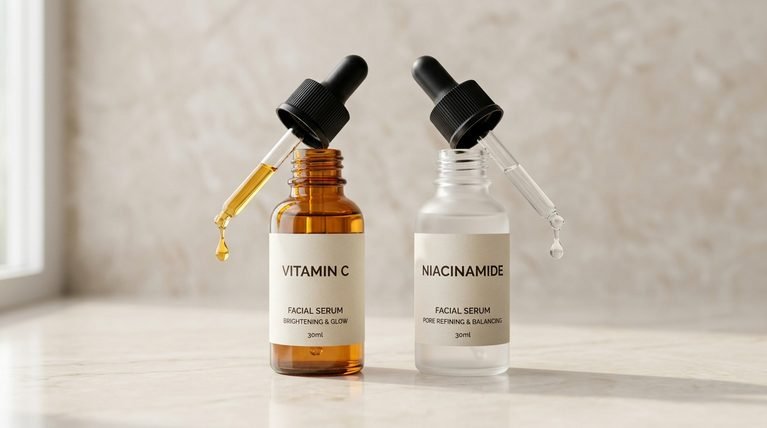
After patting your face dry, apply a few drops of a niacinamide serum. Niacinamide (Vitamin B3) helps regulate sebum production, reduces the appearance of enlarged pores, and strengthens the skin barrier. For details on how this ingredient works, check out our guide on What Is Niacinamide.
Step 3: Hydrate with an Oil-Free Gel
Never skip moisturizer in the morning. Opt for an oil-free gel or gel-cream moisturizer rich in humectants like glycerin or hyaluronic acid. Humectants draw water into the skin without adding heavy oils. For a breakdown on selecting the right textures, read our analysis on Water-Based vs. Oil-Based Serums.
Step 4: Finish with Sunscreen
Sunscreen is non-negotiable. Choose a fluid or gel-based sunscreen with SPF 30 or higher that offers a dry-touch or mattifying finish. According to research from the American Academy of Dermatology, consistent daily sunscreen use protects skin cells from oxidative stress without congesting pores when formulated correctly.
The Evening Routine: Deep Cleansing & Repair

Your evening routine focuses on clearing away sunscreen, environmental debris, and excess oil accumulated during the day, followed by targeted actives to support nighttime skin renewal.
Step 1: Double Cleanse (If Wearing Makeup or Water-Resistant SPF)
If you wear makeup or heavy sunscreen, start with a lightweight cleansing oil or micellar water. Follow up with your gentle water-based gel cleanser. This ensures all surface impurities are thoroughly removed.
Step 2: Apply Targeted Active Treatments
Evening is the best time for chemical exfoliants. Salicylic acid (a beta-hydroxy acid, or BHA) is oil-soluble, meaning it can penetrate deep into pores to dissolve trapped sebum and dead skin cells. Limit exfoliating actives to 2–3 times per week to prevent irritation. For a complete comparison of chemical exfoliants, see our breakdown on AHA vs. BHA vs. PHA.
Step 3: Seal with a Barrier Repair Gel Moisturizer
Conclude your PM routine with your oil-free gel moisturizer. If you use actives like BHA or retinoids, a supportive moisturizer prevents trans-epidermal water loss and maintains barrier resilience. If your oily skin is also prone to breakouts, you can tailor your routine further by viewing How to Build a Skincare Routine for Acne-Prone Skin.
Busting the 2 Biggest Oily Skin Myths

Many popular skincare trends do more harm than good when applied to oily skin types. Correcting these common missteps can rapidly stabilize your oil production.
+-----------------------------------------------------------------------+
|                        OILY SKIN MYTH BUSTING                         |
+----------------------------------------------------+------------------+
| MYTH 1: Skipping Moisturizer                       | REALITY:         |
| "Moisturizer makes oily skin grease up."          | Causes dehydration|
|                                                    | & triggers MORE  |
|                                                    | oil production.  |
+----------------------------------------------------+------------------+
| MYTH 2: Washing Face Frequently                    | REALITY:         |
| "Washing 3-4x a day removes excess oil."           | Strips the barrier|
|                                                    | leading to       |
|                                                    | rebound shine.   |
+----------------------------------------------------+------------------+
Myth 1: Oily Skin Doesn’t Need Moisturizer
The belief that oily skin doesn’t require moisturizer is perhaps the most widespread skincare fallacy. Oil (sebum) and water (hydration) are completely different components of the skin. Skipping moisturizer starves your skin of water, causing it to overcompensate by producing more oil to seal in whatever moisture remains. Using a light, gel-based hydrator maintains optimal barrier function and keeps oil levels balanced.
Myth 2: Over-Cleansing Reduces Shine
Washing your face multiple times a day or using harsh, abrasive scrubs strips away necessary lipids. When the barrier is compromised, skin becomes inflamed and susceptible to bacteria, prompting an surge in oil output to repair the breach. Stick to cleansing twice daily—morning and night—or after heavy sweating.
Oily vs. Dehydrated Skin: Understanding the Difference

It is entirely possible to have skin that is both oily and dehydrated. While oily skin refers to a skin type that produces excess sebum, dehydrated skin is a temporary skin condition caused by a lack of water content in the stratum corneum.
Signs of oily-but-dehydrated skin include:
- Surface shine accompanied by a tight, uncomfortable feeling.
- Flaking or rough patches on top of greasy areas (like the forehead or nose).
- Accentuated fine lines that disappear after applying a hydration product.
If your skin feels tight under a layer of shine, shift your focus toward hydrating ingredients like hyaluronic acid and glycerin while dialing back harsh exfoliants. For a deep dive into diagnosing this condition, refer to our detailed comparison post on Dehydrated vs. Dry Skin. Addressing dehydration often leads to a noticeable reduction in pore size appearance; learn more in our guide on How to Reduce Enlarged Pores.
How to Control Oily Skin Without Damaging Your Skin Barrier
Oily skin produces excess sebum, which can contribute to shine and clogged pores. The goal is to manage excess oil while keeping your skin comfortable and hydrated. Harsh cleansers and too many exfoliating products may irritate your skin, so a simple, consistent routine is often the best starting point.
1. Cleanse Gently
Use a gentle foaming cleanser in the morning and evening, and after heavy sweating. Avoid scrubbing your face or washing repeatedly throughout the day. If your skin feels tight or irritated after cleansing, consider switching to a milder formula.
2. Choose Ingredients Based on Your Concerns
- Niacinamide: May help improve the appearance of excess oil and support the skin barrier.
- Salicylic acid: Can help unclog pores and improve blackheads. Introduce it gradually, as it may cause dryness or irritation.
- Hyaluronic acid: Helps attract water and support skin hydration.
- Ceramides: Help maintain the skin’s natural moisture barrier.
You do not need every ingredient in your routine. Choose products based on your main concern and introduce new products one at a time.
3. Moisturize Every Day
Oily skin still needs moisture. Consider a lightweight, non-comedogenic moisturizer that feels comfortable on your skin. If you experience dryness from acne treatments or exfoliants, adjust your moisturizer rather than automatically adding more active ingredients.
4. Use Sunscreen Every Morning
Apply a broad-spectrum sunscreen with SPF 30 or higher. If you dislike a greasy finish, try a lightweight fluid or gel formula. Reapply according to the label, especially during outdoor activities.
5. Avoid Over-Exfoliating
Salicylic acid and other exfoliating ingredients may help with clogged pores, but more frequent use does not guarantee better results. Follow product instructions and reduce use if you develop persistent dryness, burning, redness, or peeling.
Can Oily Skin Also Be Dehydrated?
Yes. Oily skin describes higher sebum production, while dehydration refers to a lack of water in the outer skin layer. A person can experience shine and still have tightness, flaking, or discomfort.
If your skin feels oily but tight, consider reducing harsh cleansers and exfoliants and using a gentle moisturizer. Persistent irritation or acne may need assessment by a dermatologist.
Frequently Asked Questions
Should I wash oily skin more than twice a day?
Usually, cleansing twice daily and after heavy sweating is a reasonable starting point. Repeated washing and scrubbing may irritate the skin.
Does oily skin need moisturizer?
Yes. Choose a moisturizer that suits your skin and does not feel excessively greasy or cause breakouts.
Is salicylic acid good for oily skin?
It can help with clogged pores and blackheads. However, it is optional, and some people experience dryness or irritation.
Can oily skin use niacinamide and salicylic acid together?
Some people can use both, but introducing them at the same time may make it harder to identify the cause of irritation. Start with one new active ingredient at a time and follow product instructions.
Bottom line: Manage shine with gentle cleansing, a suitable moisturizer, optional targeted treatments, and daily sunscreen. Aim for balanced, comfortable skin rather than trying to remove all natural oil.
Frequently Asked Questions (FAQ)

Q: What routine is best for oily skin?
A: The best routine for oily skin consists of a gentle gel cleanser, a lightweight regulating serum (like niacinamide), an oil-free gel moisturizer, and a fluid SPF 30+ in the morning. At night, incorporate a BHA (salicylic acid) exfoliant 2–3 times a week to keep pores clear.
Q: Should oily skin use moisturizer every day?
A: Yes, oily skin needs daily moisturizer. Skipping moisturizer deprives the skin of water, causing sebaceous glands to produce excess oil to compensate. Choose oil-free, non-comedogenic gel formulas containing glycerin or hyaluronic acid to hydrate without clogging pores.
Q: Why is my skin so oily even though I wash it often?
A: Over-cleansing strips away your skin’s natural lipid barrier. When the barrier is disrupted, your skin triggers compensatory oil production to protect itself, resulting in even more surface shine. Limit cleansing to twice daily with a mild, non-stripping cleanser.
Q: Can oily skin also be dehydrated?
A: Yes. Oiliness relates to sebum production, while dehydration refers to water content in the skin. Skin can produce excess oil while lacking sufficient water, leading to a complexion that looks shiny on top but feels tight and flaky underneath.
Q: How long does it take to control oily skin with a new routine?
A: You can expect to see reduced surface shine within 2 to 4 weeks of starting a consistent routine. However, because oil production is genetically and hormonally driven, skincare manages shine and prevents congestion rather than permanently stopping sebum production.
Q: Does oily skin age slower than dry skin?
A: Oily skin often shows fine lines and surface wrinkles later than dry skin because natural sebum keeps the outermost layer supple. However, deeper structural aging caused by collagen loss and sun damage occurs at the same rate across all skin types.
Conclusion




2 Comments