Executive Summary

Combination skin features an oilier T-zone (forehead, nose, and chin) alongside normal-to-dry cheeks, stemming from varying sebaceous gland densities across the face. Balancing these contrasting needs without causing irritation or congestion requires a targeted, streamlined approach. This comprehensive guide details a complete morning and evening skincare framework specifically designed for combination skin. Readers will learn how to choose gentle, water-based cleansers, leverage multi-tasking ingredients like niacinamide and hyaluronic acid, master targeted zone application, and make effortless adjustments for seasonal climate changes. By focusing on skin barrier support and light hydration, you can comfortably maintain a clear T-zone while nourishing dry areas.
If your face feels like a tug-of-war between midday shine on your forehead and tight, flaky skin across your cheeks, you’re dealing with combination skin. It’s one of the most common skin types, yet finding a routine that addresses oily areas without stripping drier patches often feels unnecessarily complicated. Many people end up piling on rich creams that clog pores or over-using harsh mattifying cleansers that leave cheeks raw and dehydrated.
The secret isn’t buying two completely separate lines of skincare products—it’s understanding how to balance hydration and sebum control using lightweight, multi-purpose formulas and zone-specific care. In this guide, we’ll break down the exact morning and evening steps, core ingredients, and practical techniques to keep your entire face feeling comfortable, smooth, and clear year-round.
What Is Combination Skin and Why Does It Happen?

Combination skin is defined by having distinct regions of oiliness and dryness on the face simultaneously. Typically, excess shine and enlarged pores appear across the T-zone—comprising the forehead, nose, and chin—while the cheeks, jawline, and eye area remain normal, dry, or prone to tightness.
+--------------------------------------------------------------------------+
|                        COMBINATION SKIN MAP                              |
|                                                                          |
|                   [ FOREHEAD: Oily / Shine ]                             |
|                           |      |                                       |
|     [ DRY CHEEK ]    [ NOSE: Oily ]     [ DRY CHEEK ]                    |
|                           |      |                                       |
|                    [ CHIN: Oily / Congestion ]                           |
+--------------------------------------------------------------------------+
This dual behavior occurs primarily due to the natural distribution of sebaceous (oil) glands. The T-zone inherently contains a significantly higher concentration of active oil glands compared to the rest of the face. Environmental factors, hormonal fluctuations, harsh weather, and using overly aggressive alcohol-based toners can amplify this contrast. When you strip the skin of its natural moisture barrier, your T-zone overcompensates by producing even more oil, while your cheeks become increasingly dehydrated. Balancing combination skin requires treating the skin’s surface gently while respecting these distinct structural differences.
The Core Principle: Balancing Hydration and Oil Control
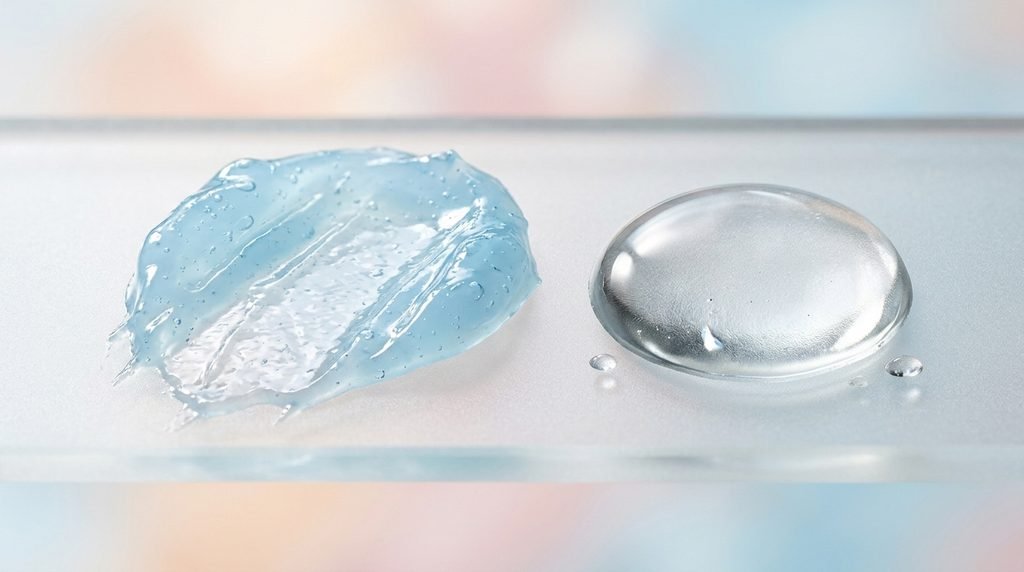
Taking care of combination skin relies on one central philosophy: hydration without heaviness. A common misstep is treating the whole face with heavy, occlusive ointments intended for severely dry skin, or applying intense drying agents everywhere to kill shine. Both extreme measures throw off the skin’s natural balance.
Instead, base your routine on lightweight, water-based, and gel-textured formulations. These provide necessary moisture to drier zones without clogging pores or leaving a greasy residue on the forehead and nose. To visualize how to address each zone without overcomplicating your vanity shelf, reference this breakdown:
| Face Zone | Primary Characteristic | Key Goal | Recommended Ingredient Focus |
| T-Zone (Forehead, Nose, Chin) | Excess sebum, visible pores, congestion | Regulate oil, clarify pores | Salicylic Acid (BHA), Niacinamide |
| Cheeks & Perimeter | Dryness, tightness, mild flaking | Restore barrier, lock in hydration | Hyaluronic Acid, Glycerin, Ceramides |
| Entire Face | Mixed texture, environmental stress | Light hydration, soothe barrier | Water-gel moisturizers, Fluid SPF |
When selecting products, look for non-comedogenic labels and soothing, barrier-supportive ingredients. If you’d like to explore focused oil control methods for particularly slick days, check out our guide on the Best Skincare Routine for Oily Skin.
Essential Ingredients for Combination Skin

Building an effective routine starts with choosing ingredients that multi-task. Rather than stocking a dozen bottles, look for formulas containing ingredients proven to soothe, hydrate, and balance the skin barrier concurrently.
                  +-----------------------------------+
                  |   HERO INGREDIENT TRIO            |
                  +-----------------------------------+
                                    |
         +--------------------------+--------------------------+
         |                          |                          |
         v                          v                          v
  [ NIACINAMIDE ]           [ HYALURONIC ACID ]         [ SALICYLIC ACID ]
  - Sebum balance           - Weightless moisture       - Deep pore clarify
  - Pore appearance         - Plumps dry cheeks         - Targeted T-zone
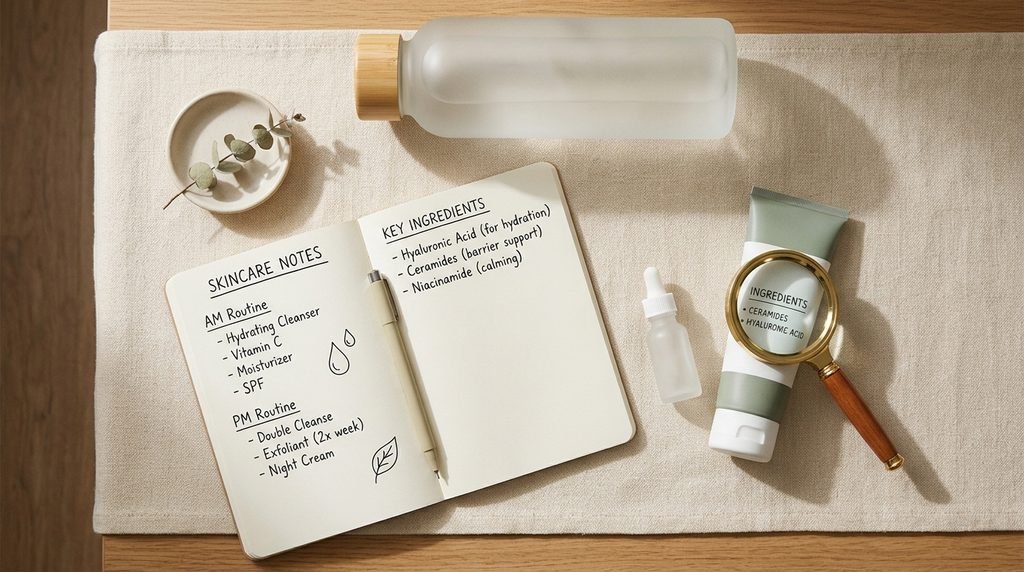
- Niacinamide (Vitamin B3): A stellar all-rounder for combination skin. Niacinamide helps regulate sebum production in oilier areas while strengthening the moisture barrier on drier cheeks. It also reduces redness and visibly tightens the look of stretched pores. Learn more about this versatile ingredient in our article What Is Niacinamide.
- Hyaluronic Acid: A humectant capable of holding up to 1,000 times its weight in water. It delivers deep, weightless hydration directly into the upper skin layers without adding grease or oil. For a deeper breakdown of humectants vs. emollients, read Understanding Hyaluronic Acid.
- Salicylic Acid (BHA): An oil-soluble beta hydroxy acid that penetrates deeply into pores to dissolve trapped sebum and dead skin cells. It’s ideal for targeted use on the T-zone to keep blackheads at bay.
- Ceramides: Fatty molecules essential for maintaining a strong skin barrier, ensuring cheeks stay supple and resistant to moisture loss.
Step-by-Step Morning Skincare Routine

Your morning routine should focus on gentle cleansing, light hydration, and robust broad-spectrum sun protection to shield skin from UV damage.
- Gentle Cleanser: Start with a mild, sulfate-free gel or foaming cleanser. Wash with lukewarm water to clear away overnight oil build-up without leaving your cheeks feeling tight or squeaky.
- Hydrating Toner or Mist: Pat a lightweight, alcohol-free toner containing glycerin or green tea extract onto slightly damp skin to prep it for serum absorption.
- Balancing Serum: Apply a few drops of a water-based serum containing 2% to 5% niacinamide or hyaluronic acid across the entire face. For guidance on picking formulas that won’t feel heavy, check out our comparison on Water-Based vs. Oil-Based Serums.
- Lightweight Moisturizer: Smooth an oil-free, gel-cream moisturizer over your face. If your cheeks need a little extra love, pat a tiny extra dab onto those areas.
- Broad-Spectrum Sunscreen (SPF 30+): Finish with a fluid, fluid-gel, or chemical SPF that dries down to a natural or semi-matte finish. Sunscreen is non-negotiable for preserving skin health and preventing uneven tone.
Step-by-Step Evening Skincare Routine
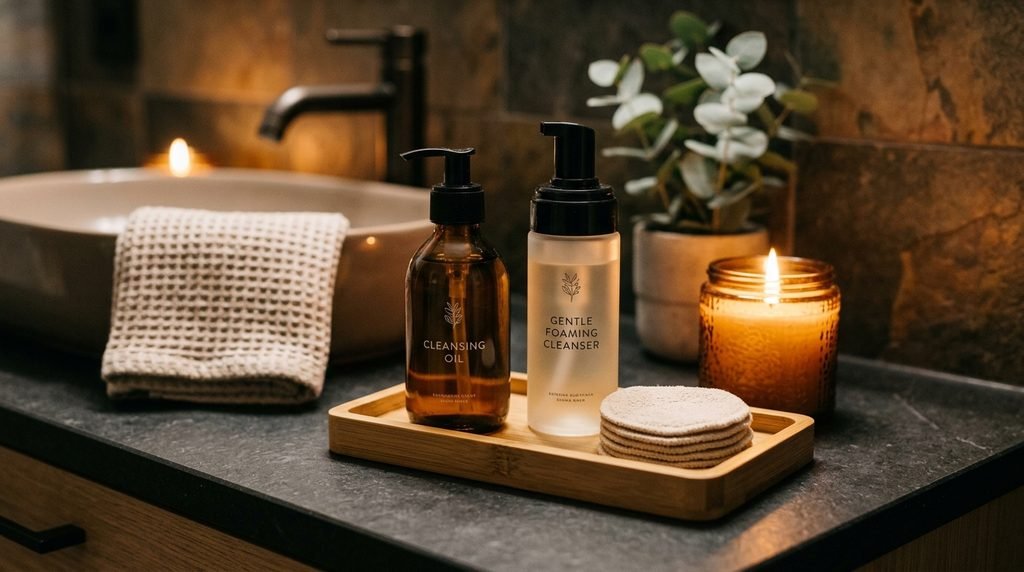
Nighttime is when skin repairs itself. Your evening steps center on thoroughly clearing away pollution, sunscreen, and excess oil while delivering deeper moisture where needed.
- First Cleanse (Double Cleansing): If you wear makeup or water-resistant sunscreen, start with a light cleansing oil or micellar water to break down surface grime without friction.
- Water-Based Cleanse: Follow with your regular gentle cleanser to clear away residual impurities.
- Targeted Exfoliation (2–3 Times Weekly): Swipe a liquid BHA (salicylic acid) treatment strictly across your T-zone. Avoid daily scrubbing, which damages the moisture barrier and increases flakiness on cheeks.
- Nourishing Serum: Apply a hydrating serum or a gentle retinoid derivative (if adapted) to encourage cell turnover and smooth overall skin texture.
- Restorative Night Moisturizer: Lock in moisture with a creamier gel or ceramide lotion. If your cheeks are particularly dry, patting a richer moisturizer over them while keeping a lighter gel on your T-zone works wonders. If you have loved ones dealing with severe cheek dryness, sharing our guide on the Best Skincare Routine for Dry Skin offers helpful insights.
Multi-Masking and Targeted Application Techniques
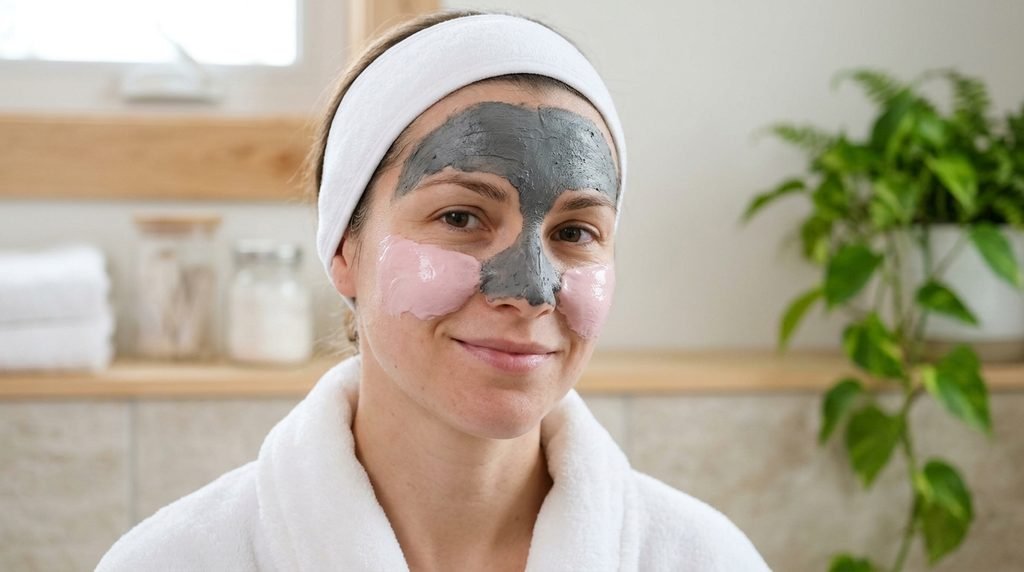
You don’t always need to apply every product to every square inch of your face. Two useful techniques for combination skin are targeted application and multi-masking.
                      +-----------------------------+
                      |   MULTI-MASKING STRATEGY    |
                      +-----------------------------+
                                     |
               +---------------------+---------------------+
               |                                           |
               v                                           v
      [ T-ZONE APPLICATION ]                    [ CHEEK APPLICATION ]
      - Clay or Charcoal Mask                   - Hydrating Cream Mask
      - Absorbs excess sebum                    - Restores moisture
      - Clarifies congested pores               - Soothes dryness & redness
Targeted application simply means placing active ingredients exactly where they are needed. For example, apply your BHA exfoliant or oil-absorbing primer solely to your nose and forehead, while dabbing a richer hydrating cream strictly onto your cheeks and neck.
Multi-masking takes this concept to your weekly self-care routine:
- On the T-Zone: Smooth a kaolin clay or charcoal mask across your forehead and nose to absorb excess shine and clarify pores.
- On the Cheeks: Simultaneously smooth a soothing gel or cream mask rich in aloe, honey, or hyaluronic acid across dry cheeks.
Rinse after 10–15 minutes, and your whole face feels evenly refreshed without dry tight spots.
Adjusting Your Routine for Seasonal Shifts

Combination skin is notoriously dynamic. It frequently shifts skewing oilier in warm, humid months and drier during cold, windy winters. Adapting your products seasonally prevents unexpected breakouts or severe flaking.
+--------------------------------------------------------------------------+
|                        SEASONAL ROUTINE SHIFTS                           |
|                                                                          |
|   SUMMER / HUMID CLIMATE                  WINTER / COLD CLIMATE          |
|   - Foaming gel cleansers                 - Hydrating lotion cleansers    |
|   - Ultra-light gel moisturizers          - Richer ceramide creams       |
|   - Mattifying fluid sunscreen            - Dewy, barrier-repair SPF     |
+--------------------------------------------------------------------------+
Spring & Summer Adjustments
Higher ambient humidity and temperature increase sebum production. Switch to sheer gel moisturizers, light fluid sunscreens, and increase your T-zone BHA application to three times a week if congestion rises.
Autumn & Winter Adjustments
Indoor heating and cold winds pull moisture from the skin, often turning normal cheeks dry and flaky. Transition to a creamier lotion cleanser, swap your gel moisturizer for a ceramide-rich lotion, and dial back exfoliation to once or twice a week to protect your skin barrier.
Conclusion

Caring for combination skin doesn’t require an overwhelming ten-step routine or two entirely different product drawers. By focusing on lightweight hydration, multi-tasking ingredients like niacinamide and hyaluronic acid, and applying targeted care only where needed, you can easily maintain balance across both oilier and drier zones. Listen to how your skin responds as seasons change, keep your daily routine consistent, and protect your skin barrier every single morning with a fluid sunscreen. Start refining your steps today to enjoy soft, comfortable, and clear skin.
Frequently Asked Questions
Q: How do I know if I actually have combination skin?
A: Perform a simple wash test. Cleanse your face with a mild cleanser, pat dry, and leave it free of products for 30–45 minutes. If your forehead, nose, and chin start showing shine or oil while your cheeks feel tight or normal, you have combination skin.
Q: Can I use the same moisturizer on my entire face?
A: Yes, provided you choose an oil-free, lightweight gel-cream or lotion. These formulas deliver hydration to dry cheeks without clogging T-zone pores. If your cheeks feel extra dry in winter, you can dab a small extra layer of cream just on those areas.
Q: How often should I exfoliate combination skin?
A: Two to three times per week is generally optimal. Focus chemical exfoliants like salicylic acid (BHA) primarily on the oilier T-zone to clear clogged pores, while avoiding over-exfoliating drier areas like the cheeks to prevent irritation and tightness.
Q: Why does my combination skin feel oilier in summer and drier in winter?
A: Humidity and high temperatures stimulate sebaceous glands to produce more oil during summer. In winter, cold air and indoor heating strip surface moisture, causing cheeks to dry out while the T-zone continues producing sebum, making skin imbalances more noticeable.
Q: Is double cleansing necessary for combination skin?
A: Double cleansing is helpful in the evening if you wear makeup or water-resistant sunscreen. Using a gentle oil or micellar cleanser first breaks down surface oil and product buildup, allowing your second water-based cleanser to clean effectively without harsh scrubbing.
Q: What ingredients should people with combination skin avoid?
A: Avoid heavy occlusives like mineral oil or coconut oil on the T-zone, as they can clog pores. Steer clear of harsh drying alcohols, synthetic fragrances, and aggressive physical scrubs that strip the moisture barrier and trigger excess oil production.





2 Comments