Executive Summary

Clogged pores happen when dead skin cells, natural oils (sebum), and daily grime pool inside hair follicles, forming small blockages across the face. Left unmanaged, these blockages lead to bumpy texture, blackheads, and visible congestion, particularly around the nose, chin, and forehead. Preventing clogged pores relies on balancing skin turnover and oil flow through consistent daily habits rather than harsh temporary fixes. This comprehensive guide covers the core causes of pore congestion, the exact mechanism behind non-comedogenic formulations, key active ingredients like salicylic acid and niacinamide, and a practical daily routine designed to keep skin smooth and clear over time.
Hook-Up Paragraph

If you constantly battle rough texture, stubborn blackheads, or tiny bumps along your T-zone, learning how to prevent clogged pores can feel like chasing a moving target. You might splash out on expensive creams or try aggressive scrubbing, only to find your pores congested again a few days later. Pore blockages aren’t a sign of unhygienic skin; they are the natural result of sebum mixing with shedding skin cells and daily environmental debris. The good news is that preventing them doesn’t require drastic treatments or stripping your skin barrier. With a strategic combination of mild chemical exfoliation, proper cleansing techniques, and smart product selection, you can maintain clear, refined skin without irritation.
What Causes Clogged Pores on the Face?

Pores are small openings in the skin that release sweat and sebum to keep your skin naturally lubricated and protected. Congestion occurs when this normal physiological process gets disrupted. Under typical conditions, dead skin cells shed smoothly from the lining of the pore, while sebum flows freely to the surface.
When sebum production increases—often due to genetics, humidity, friction, or hormonal fluctuations—excess oil acts like glue. It traps dead skin cells inside the follicle instead of allowing them to slough away. Environmental factors such as sweat, pollution particles, and residue from heavy makeup or thick SPF formulations further compact this mixture.
As the follicle fills up, it creates a plug. If the plug remains closed under the surface, it forms a whitehead or a small closed comedone. If the top of the plug stays open to the air, exposure to oxygen turns the trapped oil dark, producing a blackhead. Understanding this cause-and-to-prevention logic is essential: keeping pores clear requires controlling excess oil while ensuring old skin cells shed on schedule.
Clogged Pores vs. Enlarged Pores: What’s the Difference?
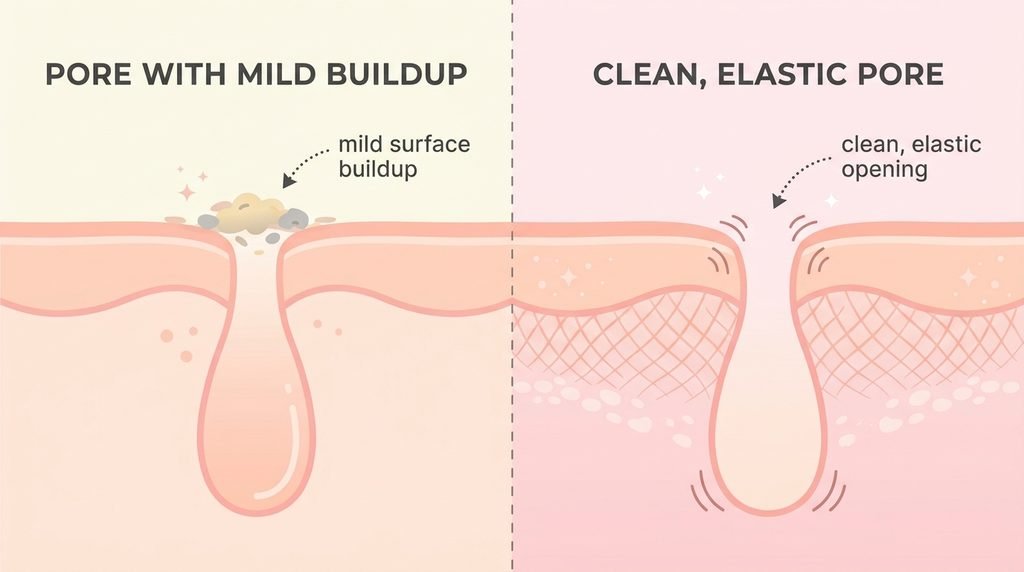
It is very common to mistake clogged pores for enlarged pores, but they represent two distinct skin characteristics.
- Clogged Pores: These are active blockages inside the pore canal composed of debris, dead cells, and oil. They present as tangible texture, blackheads, or raised bumps. Because clogged pores are fluid collections of trapped material, targeted skincare can clear them out.
- Enlarged Pores: These refer to the structural size and elasticity of the pore opening itself. Pore size is largely determined by genetics, natural aging, and collagen loss from sun exposure. When elastic fibers surrounding the pore stretch, the opening looks larger regardless of whether it contains debris.
Clear, healthy skin often still has visible pores. While clearing out active congestion can make a pore appear smaller temporarily by removing the internal pressure that stretches it, you cannot permanently close or eliminate pores. For a dedicated guide on managing structural pore size, see our detailed overview on Skincare for Enlarged Pores (internal reference).
Essential Daily Habits to Stop Pore Blockages

Managing pore clarity starts with daily habits. Even the most advanced active ingredients won’t yield lasting results if routine habits introduce excess oil or trap bacteria against the skin.
The Double Cleansing Method
Nightly cleansing is non-negotiable for preventing pore congestion. Throughout the day, water-resistant sunscreen, long-wear makeup, and airborne pollutants settle on the face. Standard water-based cleansers don’t always fully dissolve oil-soluble compounds.
Double cleansing uses two distinct steps:
- An Oil-Based Cleanser or Micellar Water: Formulated to attract and break down lipids, dissolving sebum, oil-based makeup, and chemical SPF filters without stripping the skin barrier.
- A Gentle Water-Based Cleanser: Follows up to wash away residual water-soluble impurities, sweat, and surface dust.
Using this technique every evening ensures that surface buildup doesn’t settle into pores overnight.
The Habit-to-Fix Routine Checklist
Small daily choices can either encourage clear skin or trigger persistent congestion. Use this quick reference guide to adjust everyday behaviors:
| Habit | Why It Clogs Pores | What to Do Instead |
| Skipping Night Cleansing | Traps daily oil, sunscreen, and pollution on the skin surface overnight. | Practice a thorough double-cleansing routine every evening. |
| Using Heavy Occlusives | Thick, dense oils can seal in dead cells and sebum on congestion-prone skin. | Switch to lightweight, water-based, or fluid moisturizers. |
| Touching Your Face | Transfers friction, surface bacteria, and hand oils directly to sensitive facial pores. | Keep hands away from the face and sanitize phones regularly. |
| Infrequent Pillowcase Changes | Accumulates hair products, sweat, and dead cells that transfer back to skin. | Swap silk or cotton pillowcases every 2–3 days. |
| Over-Washing the Face | Strips moisture, causing the skin to produce rebound oil to compensate. | Stick to cleansing twice daily with lukewarm water. |
Deciphering “Non-Comedogenic” Skincare

When shopping for creams, foundations, or sunscreens, you will frequently spot the term “non-comedogenic.” Understanding what this label means—and what it doesn’t—helps in making informed decisions for your skincare routine.
In cosmetic science, a non-comedogenic ingredient is one tested to show a low likelihood of blocking pores or triggering comedones. Products bearing this label are typically formulated with lighter oils, fluids, or silicones that spread evenly across the skin without trapping sebum.
However, “non-comedogenic” is a helpful guide rather than a regulated guarantee. No universal standard test exists across the cosmetic industry to define the term, and individual skin chemistry varies. An ingredient that works smoothly for one person might cause mild congestion in another due to differences in natural oil production and pore structure. When evaluating new products, look for terms like “oil-free,” “gel-based,” or “lightweight fluid,” especially if your skin trends toward excess oiliness.
For broader routine structure ideas, refer to our comprehensive recommendations in the Best Skincare Routine for Oily Skin (internal reference).
Key Ingredients That Keep Pores Clean

To actively clear out trapped material and prevent new plugs from forming, specific topical actives work at the cellular level to manage cell turnover and oil consistency.
| Salicylic Acid (BHA) | Oil-soluble; penetrates deep into pores |
| Niacinamide (Vitamin B3) | Regulates sebum production & calms skin |
| Retinoids (Vitamin A) | Accelerates cell turnover rate |
Salicylic Acid (BHA)
Salicylic acid is a Beta Hydroxy Acid and remains a gold standard for pore care. Unlike Alpha Hydroxy Acids (AHAs), which are water-soluble and act mainly on the skin’s surface, salicylic acid is lipophilic (oil-soluble). This property allows it to penetrate deeply into the lipid-filled pore environment. Once inside, it gently breaks down the cellular debris holding the clog together.
Niacinamide
Niacinamide (Vitamin B3) works by balancing sebum secretion. By moderating how much oil flows onto the skin’s surface, it reduces the chance that excess oil will mix with dead skin cells. Niacinamide also strengthens the epidermal moisture barrier and reduces visible redness. Learn more about its versatile benefits in our guide What Is Niacinamide (internal reference).
Topical Retinoids
Retinoids support pore health by normalizing keratanization—the process by which skin cells mature and shed. Slow cell turnover allows dead cells to stick together inside hair follicles. By encouraging faster, more uniform cell shedding, retinoids keep debris moving out of the pore before a plug can form.
For deeper context on choosing between various exfoliants, consult our detailed comparative analysis AHA vs. BHA vs. PHA (internal reference).
Common Myths: Do Pore Strips and Extractions Work?

When faced with visible congestion on the nose or chin, quick physical fixes can seem tempting. However, understanding their limitations helps protect your skin barrier over time.
- Pore Strips: Nose strips use a strong adhesive to grab top-level debris. While satisfying to look at after removal, they only remove the top portion of a plug, leaving the deeper root inside the follicle intact. Furthermore, aggressive adhesive pulling can cause surface redness, broken capillaries, and localized irritation.
- Manual Extractions: Squeezing pores with nails or extraction tools carries significant risk. Squeezing applies inward force that can rupture the pore wall under the surface, driving inflammation deeper into the tissue. Professional extractions by a qualified aesthetician are performed under controlled, sterile conditions, but home extractions frequently lead to scarring or post-inflammatory hyperpigmentation.
Rather than relying on mechanical force, consistent topical care using BHA formulations delivers safer, long-term clarity without damaging delicate skin structures. Independent safety evaluations and clinical guidance from authoritative bodies like the Cosmetic Ingredient Review (CIR) Expert Panel (external reference) support using properly formulated chemical exfoliants within established safety limits over physical force.
Conclusion

Preventing clogged pores requires maintaining balance rather than applying aggressive treatments. By establishing a double-cleansing habit every evening, choosing lightweight, non-comedogenic formulations, and introducing oil-soluble exfoliants like salicylic acid into your routine, you directly address the core causes of pore congestion. Focus on consistent care over quick physical fixes, allow your skin time to adapt to new active ingredients, and prioritize skin barrier integrity above all else. Apply these evidence-based principles consistently to enjoy smoother, clearer skin over the long term.
FAQ Section

Q: How do you prevent clogged pores?
A: Prevent clogged pores by double cleansing nightly to clear oil and impurities, exfoliating regularly with a BHA like salicylic acid, and applying non-comedogenic moisturizers. Avoid heavy, occlusive creams and refrain from touching your face or picking at congestion.
Q: What causes clogged pores on the face?
A: Clogged pores occur when natural sebum mixes with un-shed dead skin cells, makeup, sweat, and environmental pollutants inside hair follicles. Hormonal shifts, friction, and dense cosmetics can accelerate this buildup, creating visible whiteheads and blackheads.
Q: What’s the difference between clogged pores and enlarged pores?
A: Clogged pores are active blockages of oil and dead skin cells that create texture or dark spots. Enlarged pores are structural openings influenced by genetics and collagen loss. Clearing clogs reduces internal pressure, making pores look temporarily smaller.
Q: What does non-comedogenic mean in skincare?
A: Non-comedogenic describes products formulated with ingredients unlikely to block pores or trigger comedones. While not a strict governmentally regulated standard, choosing non-comedogenic items reduces the risk of congesting oily or breakout-prone skin types.
Q: What ingredients help prevent clogged pores?
A: Salicylic acid (BHA) penetrates oil to dissolve internal pore debris. Niacinamide helps regulate sebum production, while topical retinoids promote efficient cell turnover to keep dead skin cells from sticking together inside hair follicles.
Q: How often should you exfoliate to prevent clogged pores?
A: Most people benefit from using a BHA chemical exfoliant 2 to 3 times per week. Increase or decrease frequency based on skin tolerance, taking care to avoid over-exfoliation, which can damage the skin barrier and cause excess oil.