Executive Summary

Picking a face serum often feels like guesswork, especially when aisles are packed with technical ingredient names and competing claims. The simplest way to get it right is a two-step approach: let your skin type guide the formula texture, and let your primary skin concern decide the active ingredient. In this guide, you’ll learn how to match lightweight gels, hydrating fluids, and lipid-rich formulas to oily, dry, combination, and sensitive skin. We also break down which actives target common goals like uneven tone, dullness, dehydration, and fine lines, plus how to introduce a new formula safely and track real progress without irritating your moisture barrier.
Standing in front of a wall of dropper bottles can make anyone second-guess what their skin actually needs. One label promises glass-skin radiance, another talks about cellular turnover, and suddenly you’re holding three different bottles wondering if they’ll clash. Learning how to choose the right face serum doesn’t require a chemistry degree—just a clear framework.
Most frustration comes from picking an ingredient for a skin concern without checking whether the base formula suits your skin type. A rich, oil-heavy antioxidant blend might brighten dark spots on dry cheeks, yet leave oily skin congested within days. Below, we’ll walk through matching textures to your baseline skin type, pairing specific actives to your goals, and knowing when a bottle is genuinely working.
The Two-Factor Framework: Skin Type vs. Skin Concern
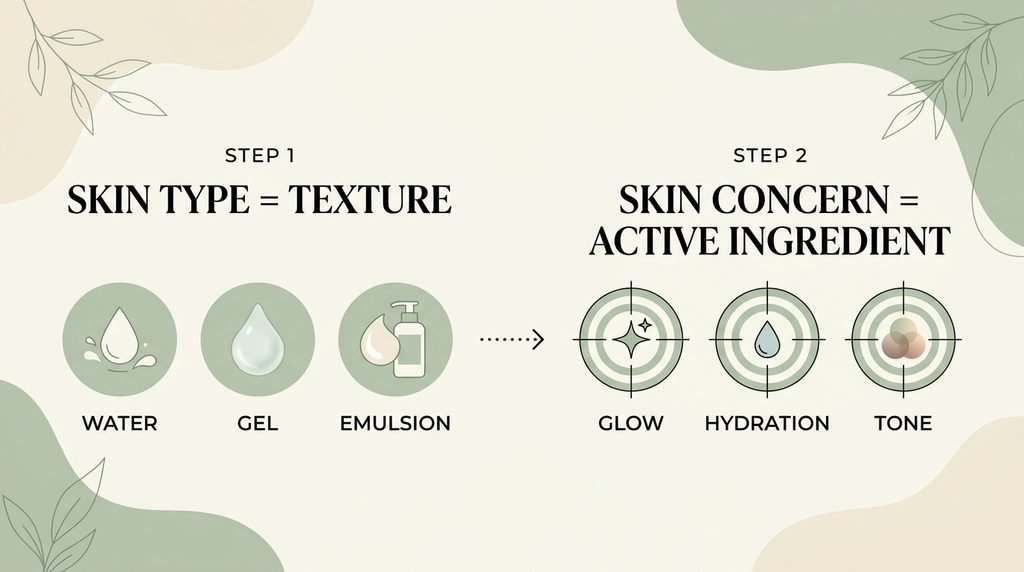
Before looking at individual bottles, separate two ideas that often get lumped together: your baseline skin type and your current skin concern. Getting this distinction right prevents 90% of mismatched purchases.
Your skin type determines the texture and base formulation. Whether your skin produces excess sebum, feels tight after washing, or reacts easily to fragrance dictates how a serum is suspended. Water-based, oil-free gels absorb cleanly on oily skin, while emulsion or squalane-based drops cushion dry skin.
Your skin concern determines the active ingredient. Dark spots, surface dehydration, rough texture, and fine lines each respond to different molecular pathways. Once you know what base texture your skin tolerates comfortably, you can select the targeted active inside that vehicle.
Think of it like buying running shoes. Your foot width decides the fit, while the terrain decides the tread. You need both to match before stepping out the door.
Matching Serum Textures and Ingredients to Your Skin Type

Every skin type behaves differently throughout the day, which means a serum that feels weightless on one person can feel sticky or stinging on another. Use the breakdown below to match your baseline skin behavior with compatible textures and starter ingredients.
| Skin Type | Ideal Texture | Best Ingredients | What to Avoid |
| Oily | Water-light gel, oil-free fluid | Niacinamide, salicylic acid (BHA), green tea | Heavy plant oils, thick silicones, coconut derivatives |
| Dry | Milky emulsion, humectant-rich liquid, facial oil-serum | Hyaluronic acid, panthenol, ceramides, squalane | High-alcohol bases, strong unbuffered acids |
| Combination | Fast-absorbing fluid, lightweight gel-cream | Hyaluronic acid, low-strength niacinamide, azelaic acid | Overly occlusive balms on the T-zone |
| Sensitive | Fragrance-free, minimal-ingredient aqueous fluid | Centella asiatica, panthenol, ectoin, polyglutamic acid | Essential oils, synthetic fragrance, high-dose L-ascorbic acid |
Oily and Blemish-Prone Skin

If your forehead and nose develop shine by midday, look for water-based serums that sink in within seconds. Niacinamide (around 4% to 5%) helps balance visible surface oil while keeping pores looking refined. If congestion is your main issue, a leave-on beta hydroxy acid (salicylic acid) fluid clears buildup inside pores without leaving a greasy film. For a complete daily step-by-step, check our Oily Skin Routine Guide.
Dry and Dehydrated Skin
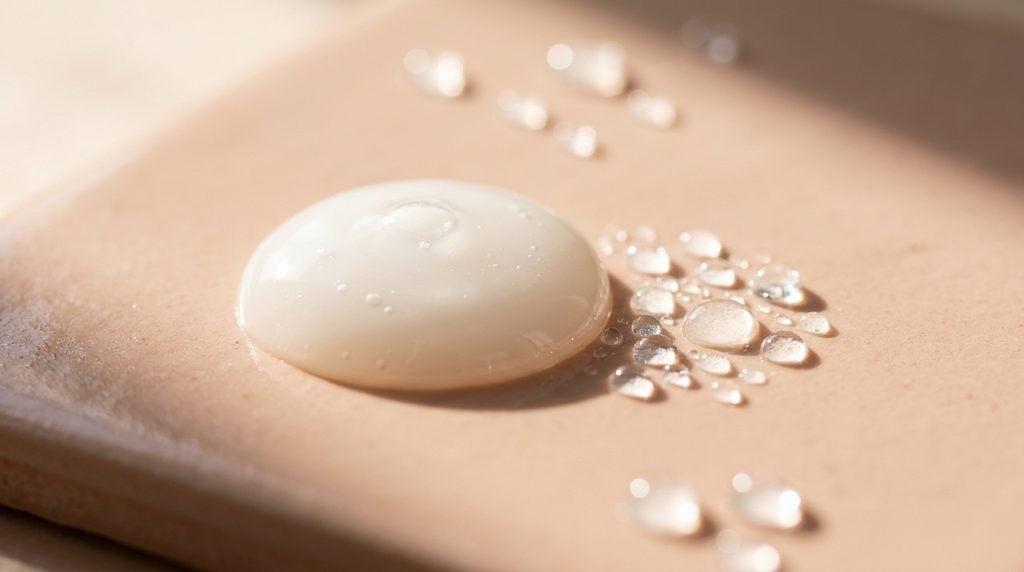
Dry skin lacks lipids, while dehydrated skin lacks water—and many people experience both at once. Humectant-rich formulas featuring multi-weight hyaluronic acid, glycerin, or polyglutamic acid draw water into the upper layers of skin. Look for milky serums bolstered with ceramides or squalane so that moisture stays locked in rather than evaporating in dry air. Explore how to layer moisture properly in our Dry Skin Routine Guide.
Combination Skin
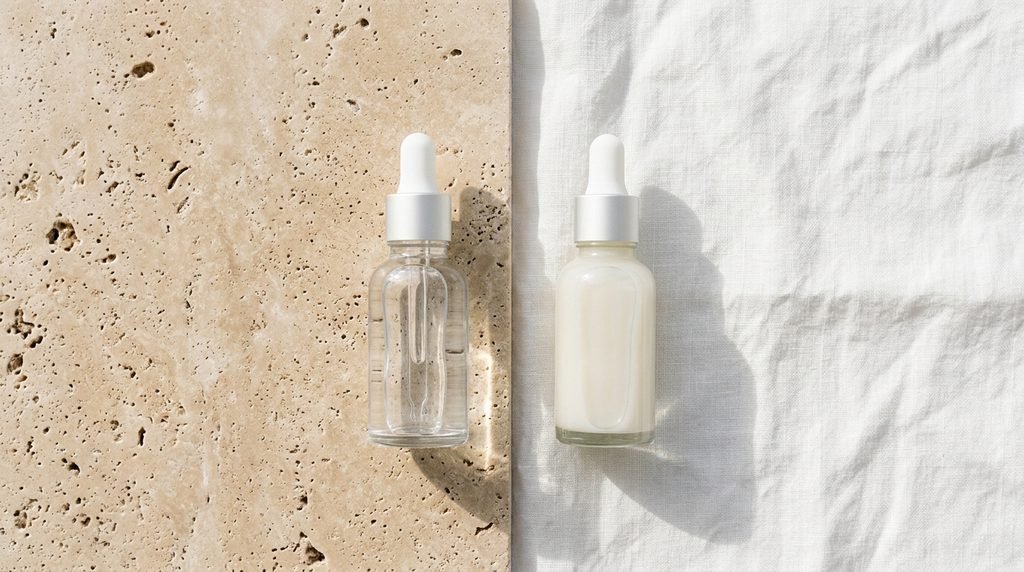
Combination skin usually pairs an oily T-zone with normal or dry cheeks. Lightweight, non-comedogenic hydrating fluids work well across the whole face without weighing down the center. You can also try targeted application—applying a niacinamide fluid down the nose and forehead while pressing a peptide or ceramide serum onto drier cheek areas. See more tailored layering tips in our Combination Skin Routine Guide.
Sensitive or Reactive Skin

When skin stings, flushes, or flakes easily, barrier comfort comes first. Skip complex formulas packed with twenty botanical extracts and stick to short ingredient lists. Soothing humectants like panthenol (vitamin B5) and centella asiatica support calm, resilient skin while minimizing the risk of redness. Read our Sensitive Skin Routine Guide before adding any active step.
Matching Active Ingredients to Your Primary Skin Concern

Once you know what base texture feels comfortable on your face, match your top skin goal to an ingredient with solid real-world track records. Stick to one primary concern per serum rather than chasing “all-in-one” bottles that pack too many actives at irritating concentrations.
| Primary Skin Concern | Key Active Ingredients | How It Helps Appearance |
| Uneven Tone & Two-Tone Skin | Vitamin C, tranexamic acid, alpha arbutin, azelaic acid | Helps visibly fade sun spots and post-blemish marks for a more uniform complexion |
| Dullness & Lack of Glow | L-ascorbic acid, ferulic acid, gentle lactic acid (AHA) | Supports smoother surface reflection and defends against daily environmental dulling |
| Tightness & Dehydration | Hyaluronic acid, glycerin, beta-glucan, panthenol | Binds water to the epidermis, plumping the look of fine dehydration lines |
| Fine Lines & Loss of Firmness | Retinoids (retinol, retinal), copper peptides, bakuchiol | Encourages smoother surface texture and supports long-term skin elasticity |
| Rough Texture & Clogged Pores | Salicylic acid (BHA), mandelic acid, niacinamide | Loosens dead surface buildup and refines the appearance of congested pores |
If uneven tone or “two-tone” patches around the mouth and forehead are your biggest frustration, patience matters more than strength. Ingredients like azelaic acid, tranexamic acid, and stabilized vitamin C work gradually to promote an even, radiant appearance without bleaching or harming your natural skin tone. For deeper breakdowns, visit our Ingredient Guides Hub.
Beginner-Friendly Ingredients vs. Advanced Actives
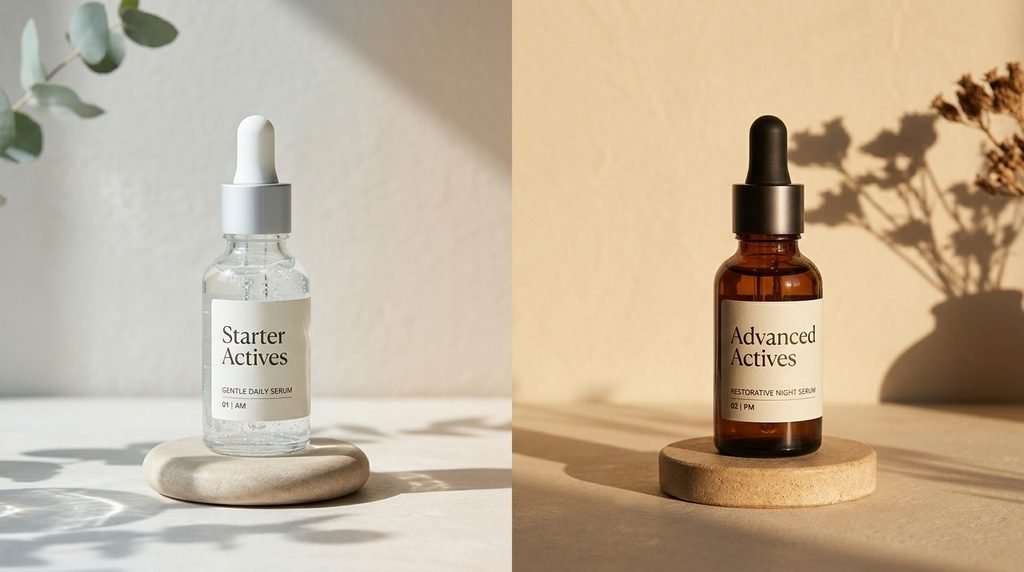
Starting out with skincare doesn’t mean jumping straight into the strongest bottle on the shelf. Beginners get the best, most consistent results from forgiving ingredients that play nicely with basic cleansers and moisturizers.
Approachable starter ingredients include:
- Hyaluronic acid or glycerin: Virtually zero adjustment period; works in both morning and night routines.
- Niacinamide (2% to 5%): Supports barrier lipids, softens redness, and balances oil without photosensitivity.
- Gentle vitamin C derivatives: Forms like sodium ascorbyl phosphate or ascorbyl glucoside brighten dullness without the sting of low-pH pure ascorbic acid.
Advanced actives that require slow introduction:
- Retinoids (retinol, retinaldehyde): Potent evening ingredients that speed up surface cell turnover; start twice weekly to avoid dryness.
- Pure L-ascorbic acid (15%+): Effective for radiance, yet acidic enough to tingle on compromised barriers.
- Exfoliating acids (glycolic or salicylic acid): Best limited to two or three evenings a week rather than layered daily under other actives.
According to general skincare guidance from the American Academy of Dermatology, introducing one new active product at a time makes it far easier to pinpoint what helps your skin and what triggers irritation.
How to Introduce a New Serum and Tell If It’s Working

Even a well-matched serum can backfire if you apply it twice a day right out of the box. Patch testing on your jawline or behind your ear for two to three days checks for immediate sensitivity before full-face use. Start by applying your new serum three times a week, then build up to daily use over two weeks if your skin feels calm.
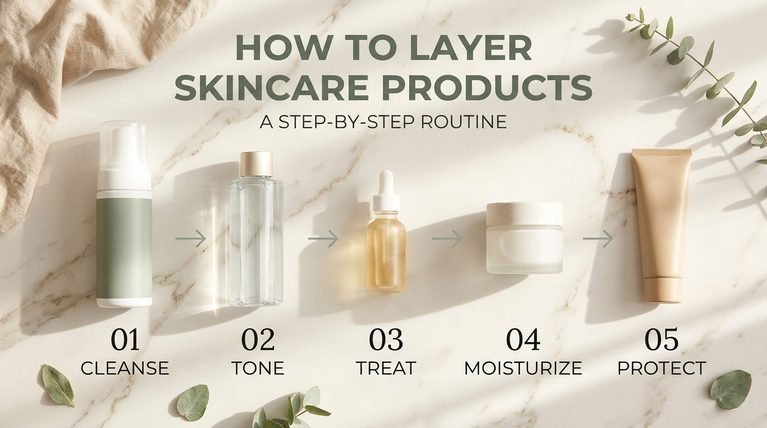
Remember that serums deliver concentrated actives, which is why they sit right after cleansing and before cream—learn more in our Serum vs. Moisturizer Comparison. Always apply thinner, water-based serums before thicker, oil-based ones so nothing blocks absorption.
Signs your serum is working well:
- Week 1–2: Skin feels comfortable, hydrated, and balanced with no persistent tightness, itching, or new breakouts.
- Week 4–6: Surface texture feels smoother, makeup sits more evenly, and general radiance starts looking more consistent.
- Week 8–12: Stubborn dark spots, post-blemish marks, and fine lines begin showing gradual, visible softening.
If you experience ongoing burning, flaking, or angry red bumps past the first few days, pause the product and return to a plain cleanser, moisturizer, and sunscreen until your barrier settles. For more step-by-step troubleshooting, read How to Introduce a New Serum and How Long Before a Serum Shows Results.
Seasonal Adjustments: Should You Switch Serums Year-Round?

Your skin doesn’t live in a vacuum—humidity, indoor heating, and UV intensity shift throughout the year, and your serum lineup can shift with them. You rarely need to overhaul your entire routine, but small seasonal swaps keep your skin balanced.
During hot, humid summer months, skin naturally produces more sebum and sweat. Swapping a heavy, creamy serum for a featherlight niacinamide or antioxidant fluid keeps pores clear and reinforces your daily sunscreen defense.
In dry winter weather or air-conditioned environments, transepidermal water loss increases. Layering a humectant serum containing hyaluronic acid or beta-glucan underneath your usual moisturizer prevents tight, flaky patches without forcing you to abandon your favorite targeted actives.
FAQ Section
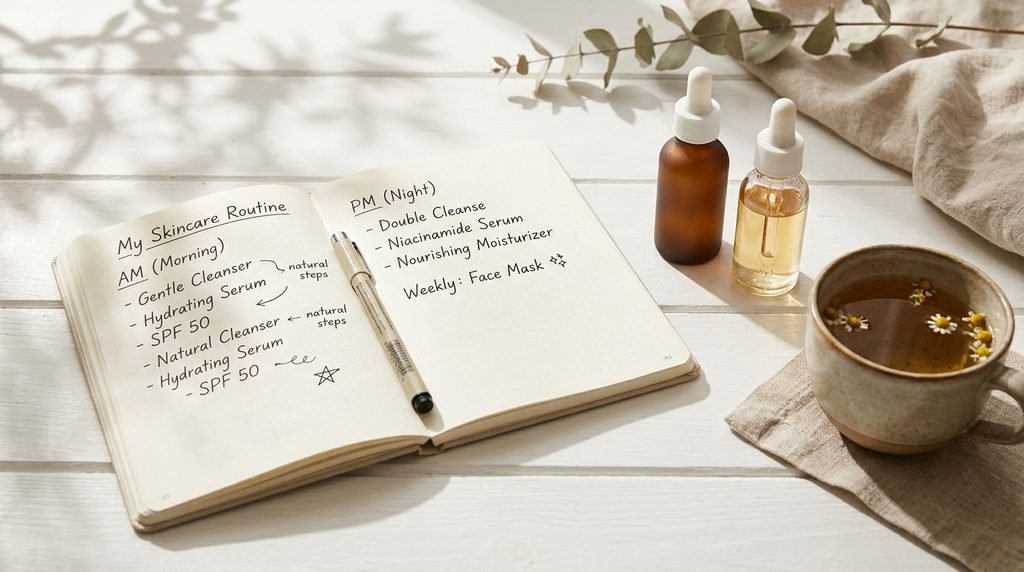
Q: How do I know which serum is best for my skin?
A: Start by identifying your skin type to choose the right texture—water-light gels for oily skin, hydrating emulsions for dry skin, and fragrance-free fluids for sensitive skin. Next, pick one active ingredient matched to your main goal, such as niacinamide for pores, hyaluronic acid for dehydration, or vitamin C for uneven tone.
Q: What goes first, retinol or niacinamide or hyaluronic acid?
A: Apply serums from thinnest to thickest consistency on clean skin. In an evening routine, apply water-based hyaluronic acid first, follow with niacinamide once absorbed, and finish with retinol before your moisturizer. If your skin is sensitive, use hyaluronic acid and niacinamide in the morning and keep retinol for night.
Q: Which two serums should not be mixed in the same routine?
A: Avoid layering strong exfoliating acids (like glycolic or salicylic acid) directly with retinoids or high-strength pure L-ascorbic acid in the same application. Combining multiple potent low-pH actives at once increases dryness, stinging, and barrier disruption. Space them out between morning and evening routines instead.
Q: Is niacinamide or vitamin C serum better for glowing skin?
A: Both support a brighter, healthier-looking complexion through different pathways. Vitamin C acts as a strong daytime antioxidant that visibly fades sun spots and boosts radiance, while niacinamide strengthens the moisture barrier, calms redness, and refines uneven texture. Beginners with sensitive skin often find niacinamide gentler to start with.
Q: Do you still need a serum if you already use a moisturizer?
A: A serum isn’t strictly mandatory, as a good moisturizer and sunscreen cover basic skin health. However, serums contain smaller molecules and higher concentrations of targeted actives than standard creams, making them far more effective for addressing specific goals like dark spots, dehydration, or fine lines.
Q: Can you use the same face serum year-round?
A: Yes, if your skin stays comfortable and balanced across seasons, you can stick with the same serum all year. However, many people prefer switching to lighter, oil-free fluids during humid summer months and adding a hydrating hyaluronic acid or ceramide serum during dry winter weather.
Conclusion

Choosing the right face serum comes down to matching two simple pieces: a texture that respects your baseline skin type and an active ingredient tailored to your main concern. Oily and combination skin thrive with fast-absorbing, water-light fluids, while dry and sensitive complexions respond best to cushiony, barrier-supportive formulas. Start with one well-chosen serum, introduce it gradually, and give your skin a full eight to twelve weeks to show steady, healthy progress.
Take a quick look at your current bathroom shelf today—identify your single top skin goal, check that your formula texture matches your skin type, and build a consistent daily routine around what your skin actually needs.