Executive Summary

Wondering if red light therapy for acne actually lives up to the hype? Current dermatology research suggests that red light therapy can offer modest support—primarily by calming visible redness and supporting surface skin recovery—yet overall clinical evidence remains mixed, making it a helpful complement rather than a standalone cure. Unlike blue light, which targets surface acne-causing bacteria, red wavelengths penetrate slightly deeper to soothe inflamed-looking skin. In this balanced, research-backed guide, you’ll learn how red and blue light wavelengths differ, what realistic timelines look like for at-home LED masks versus clinical devices, who should exercise caution, and how to fit light sessions safely alongside serums and retinoids.
Scrolling through skincare feeds, you’ve probably seen futuristic glowing LED masks promising clear, calm skin in just ten minutes a day. When stubborn breakouts leave your face feeling sore and frustrated, shining a gentle red light on your cheeks sounds far more appealing than another drying spot treatment.
Yet when you ask, “does red light therapy work for acne?” the honest answer sits right in the middle of the hype: some studies suggest modest benefits for calming inflammation, but overall evidence is mixed, and it isn’t a replacement for proven acne care. Below, we’ll look at what dermatology research actually shows, compare red and blue wavelengths side by side, and explain how to use LED light safely alongside your daily skincare routine.
Does Red Light Therapy Actually Help Acne? (The Honest Verdict)
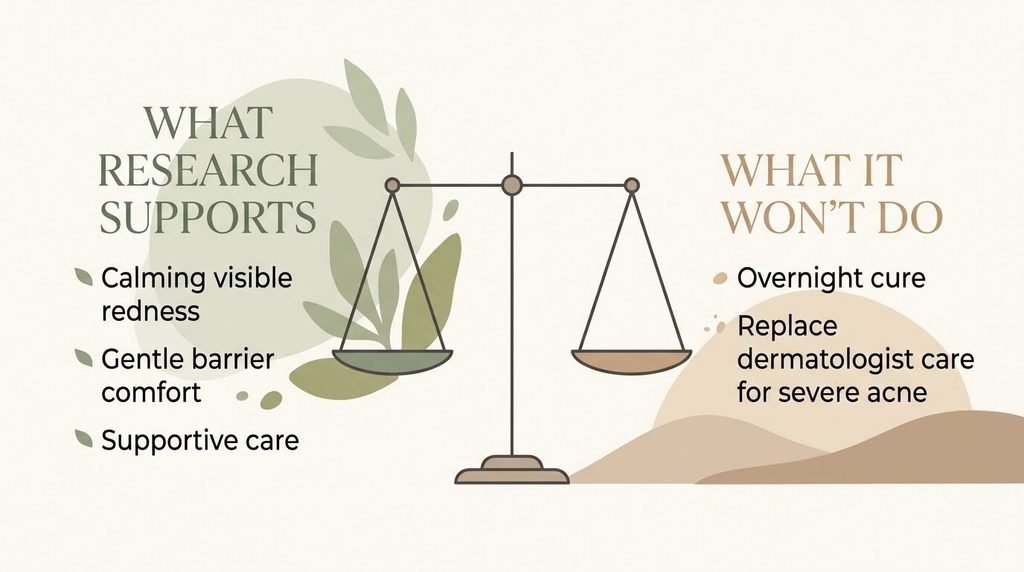
If you’re expecting red light therapy to wipe out deep breakouts overnight, you’ll likely feel disappointed. However, if you view it as a supportive addition to a gentle skincare routine, clinical findings are cautiously encouraging.
Several small clinical trials and dermatology reviews—including systematic evaluations published in journals such as The Journal of Clinical and Aesthetic Dermatology and guidance summarized by the American Academy of Dermatology—note that light-based therapies can help reduce the appearance of mild-to-moderate inflammatory breakouts over multiple weeks. Still, researchers emphasize that study sizes are often small, device protocols vary widely, and results aren’t guaranteed for everyone.
Crucially, red light therapy does not replace established dermatological treatments for persistent, painful, or cystic acne. Think of it as an extra calming tool that supports your skin barrier while your core routine does the heavy lifting. For foundational daily steps, see How to Build a Skincare Routine for Acne-Prone Skin.
How Red Light Works on Blemish-Prone Skin
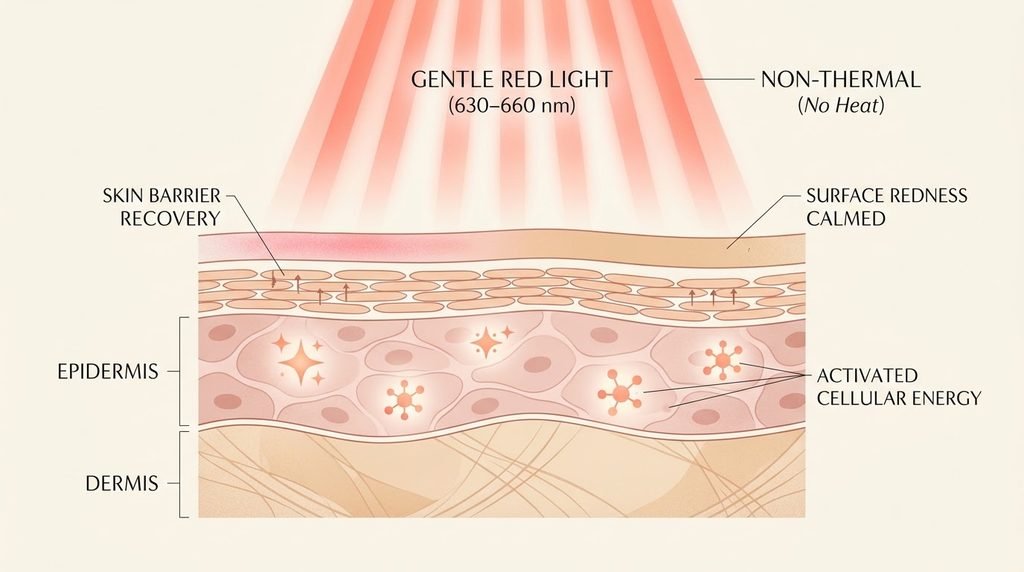
Red light therapy uses specific low-level wavelengths of visible red light—typically between 630 and 660 nanometers (nm)—that pass gently into the upper layers of skin without generating damaging heat or UV radiation.
Inside skin cells, light-sensitive structures in the mitochondria (often called the cell’s energy centers) absorb these red wavelengths. Research suggests this process encourages calmer cellular signaling and supports local circulation, which translates on the surface into:
- Visibly calmer redness: Red wavelengths help soothe the angry, flushed appearance surrounding active blemishes.
- Support for surface recovery: Encouraging healthy cellular energy may help irritated skin bounce back more comfortably after a breakout settles.
- Gentler barrier tolerance: Unlike harsh scrubs or high-percentage acids, red light doesn’t strip surface lipids or cause peeling.
It’s also worth distinguishing active breakouts from look-alike bumps; if your skin reacts differently to standard blemish care, check Acne vs. Fungal Acne.
Red Light vs. Blue Light for Acne: What Is the Difference?
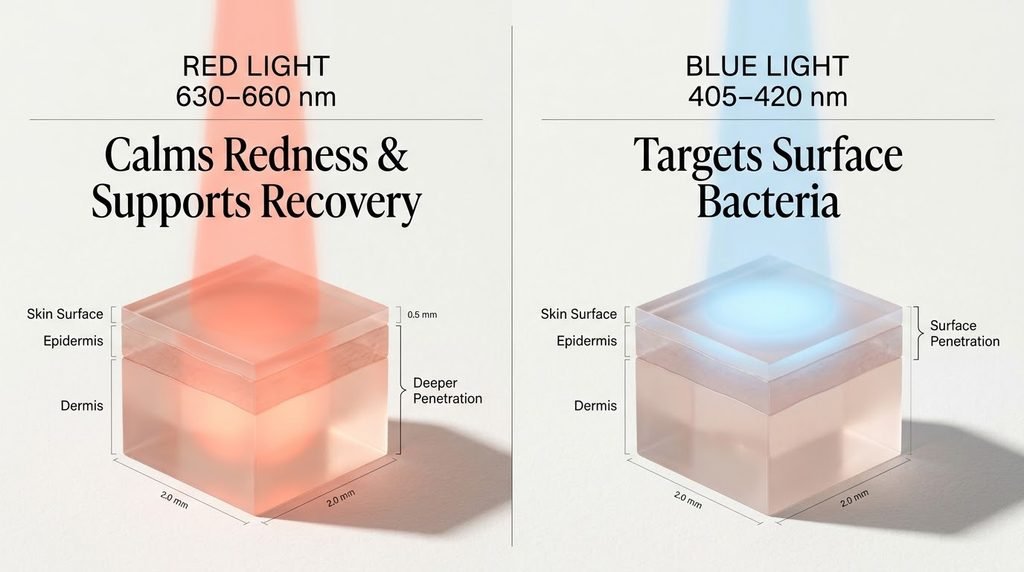
Many at-home LED face masks include both red and blue settings—or purple settings that combine the two—because each wavelength interacts with blemish-prone skin differently.
| Feature | Red Light Therapy (630–660 nm) | Blue Light Therapy (405–420 nm) | Combined Red + Blue Light |
| Primary Target | Visible redness, surface inflammation, skin recovery | Surface acne-causing bacteria (Cutibacterium acnes) | Both surface bacteria and surrounding redness |
| Penetration Depth | Reaches slightly deeper into the upper dermis | Stays shallow within the upper epidermis and pores | Dual-depth surface and upper-dermal support |
| Evidence Level | Modest, supportive clinical evidence for calming inflammation | Moderate clinical evidence for mild-to-moderate inflammatory spots | Often shows slightly stronger results than single light alone |
| Best Suited For | Red, irritated, sensitive, or post-blemish recovery skin | Mild surface breakouts and excess surface congestion | Mixed inflammatory breakouts needing calm + surface support |
Blue light works by exciting naturally occurring compounds called porphyrins inside C. acnes bacteria, which helps reduce bacterial activity near the skin’s surface. However, blue light penetrates very shallowly and can occasionally feel drying or trigger temporary pigment darkening on deeper skin tones. Combining red and blue wavelengths—or sticking to red light if your skin is sensitive or prone to dark marks—offers a more balanced approach.
At-Home LED Masks vs. In-Office Light Treatments
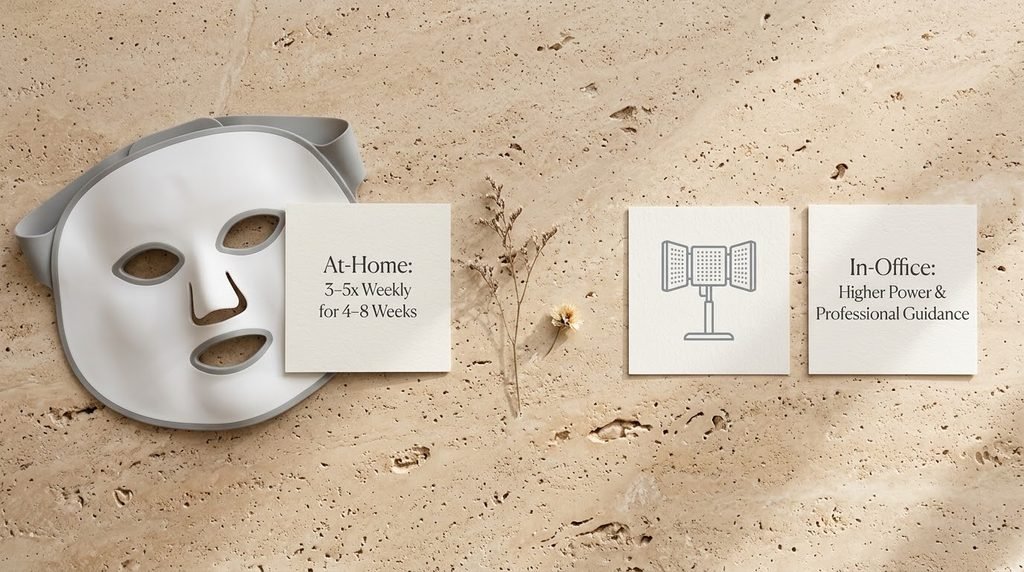
Not all glowing red devices deliver the same energy. Understanding the gap between clinic equipment and consumer masks helps keep expectations realistic.
In-office LED panels used in dermatology clinics operate at higher, precisely calibrated power densities (irradiance) under professional supervision. At-home LED masks and handheld wands are intentionally built at lower power outputs so consumers can use them safely at home without thermal injury.
Because at-home devices are gentler, they require far more consistency. In clinical studies and typical manufacturer protocols, noticeable changes in surface redness or blemish frequency usually take 4 to 8 weeks of regular sessions—often three to five times a week for 10 to 20 minutes per session—rather than a few days.
What about post-blemish marks? While calming active inflammation early can reduce the severity of lingering discoloration, red light alone won’t erase deep textural marks; explore targeted options in How to Reduce the Appearance of Acne Scars.
How to Use Red Light Therapy with Serums and Retinol
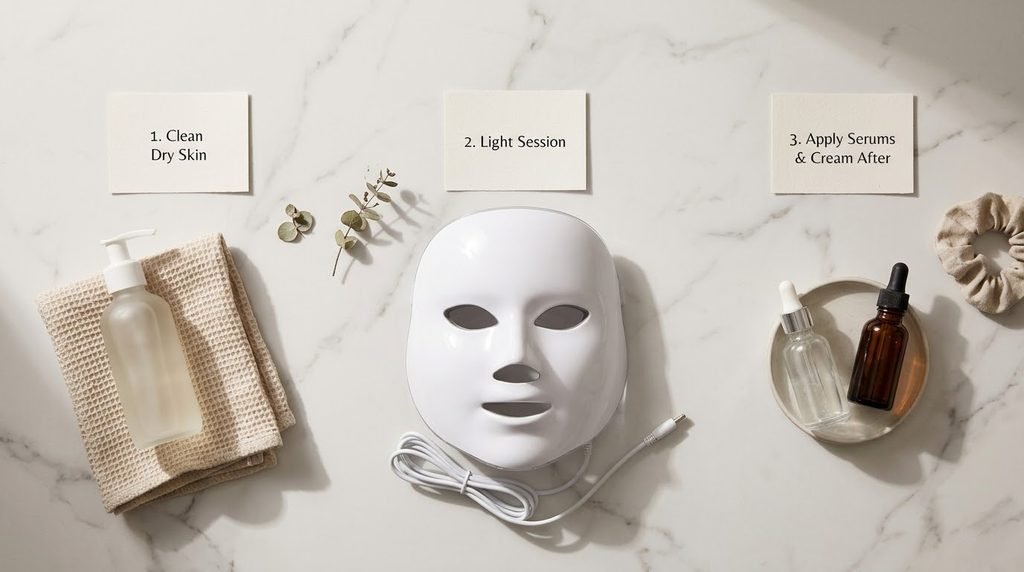
Adding an LED mask to your bathroom routine brings up an immediate layering question: do your serums go on before or after the light?
For best results, use red light therapy on clean, freshly washed, dry skin before applying thick creams or opaque sunscreens, which can block light wavelengths from reaching your skin evenly.
- Before your LED session: Wash your face with a gentle cleanser and pat completely dry. If your skin feels tight, a thin layer of plain, clear hyaluronic acid serum is generally fine, as transparent water-based gels let light pass through easily.
- After your LED session: Once your session finishes, apply your regular evening moisturizer or targeted treatment serums.
- Using retinol with red light: Many people use retinol on the same nights as red light therapy, applying the LED mask first on clean skin and smoothing retinol on afterward. However, because retinoids can increase skin sensitivity, introduce them slowly and check with a dermatologist if you use prescription topicals or strong exfoliating acids. Read Retinol Basics Explained for safe pacing tips.
Limitations, Side Effects, and Who Should Be Cautious

While red light therapy is widely considered low-risk and non-invasive compared to UV light or strong chemical peels, it isn’t completely free of caveats.
Mild, temporary side effects can include brief warmth, slight tightness, or eye strain if protective goggles aren’t worn properly. Some users also notice an initial “purging” misconception when breakouts fluctuate naturally during the first couple of weeks.
Exercise extra caution and consult a doctor before using LED devices if you:
- Take medications or use topicals that increase light sensitivity (photosensitizing drugs).
- Have an underlying light-triggered skin condition or a history of melasma, as heat or certain visible wavelengths (especially blue light) can sometimes aggravate uneven pigmentation.
- Are pregnant or nursing, as formal safety data on consumer LED masks during pregnancy remains limited.
- Experience deep, painful, or persistent breakouts—a board-certified dermatologist can evaluate underlying causes and recommend proven care.
FAQ Section

Q: Does red light therapy really help acne?
A: Red light therapy can offer modest support for mild-to-moderate acne, primarily by calming visible redness and soothing irritated skin. However, clinical evidence is mixed and studies are generally small, so dermatologists view it as a complementary tool alongside a consistent skincare routine rather than a standalone cure for breakouts.
Q: Which is better for acne, red light or blue light?
A: Red light and blue light target different aspects of breakouts. Blue light (around 415 nm) stays near the surface to help reduce acne-causing bacteria, while red light (around 630–660 nm) penetrates slightly deeper to calm visible redness and support skin recovery. Many devices combine both wavelengths for balanced support.
Q: How often should I use red light therapy for acne?
A: Most at-home LED masks and dermatology protocols suggest using red light therapy three to five times per week for about 10 to 20 minutes per session. Consistency matters more than session length—noticeable improvements in surface calm and breakout appearance typically take four to eight weeks of regular use.
Q: Can red light therapy cause acne or purging?
A: Red light therapy does not clog pores or trigger true skin purging because it doesn’t accelerate surface cell shedding the way retinoids or exfoliating acids do. If you notice new bumps after starting an LED mask, check that you’re wiping the mask clean after every use so bacteria and oil don’t transfer back onto your skin.
Q: Can you use retinol with red light therapy?
A: Yes, many people use both in an evening routine, typically using the red light mask first on clean, dry skin and applying retinol afterward. However, because combining multiple active steps can increase dryness or irritation for sensitive skin, introduce them gradually and consult a dermatologist if you use prescription treatments.
Q: Does red light therapy help with acne scars?
A: Red light therapy may help fade the appearance of fresh red post-blemish marks by calming lingering surface inflammation and supporting natural skin recovery. However, at-home LED devices generally cannot remodel deep, indented textural scars, which typically require professional in-office procedures evaluated by a dermatologist.
Conclusion
So, does red light therapy work for acne? Current science points to a realistic, grounded answer: it can help calm visible redness and support skin recovery over several weeks of steady use, especially when paired with blue light, yet it works best as a gentle teammate rather than a standalone cure.
If you decide to try an at-home LED device, use it consistently on clean, dry skin three to five times a week, keep your topical routine simple, and consult a dermatologist if stubborn breakouts persist.