Executive Summary
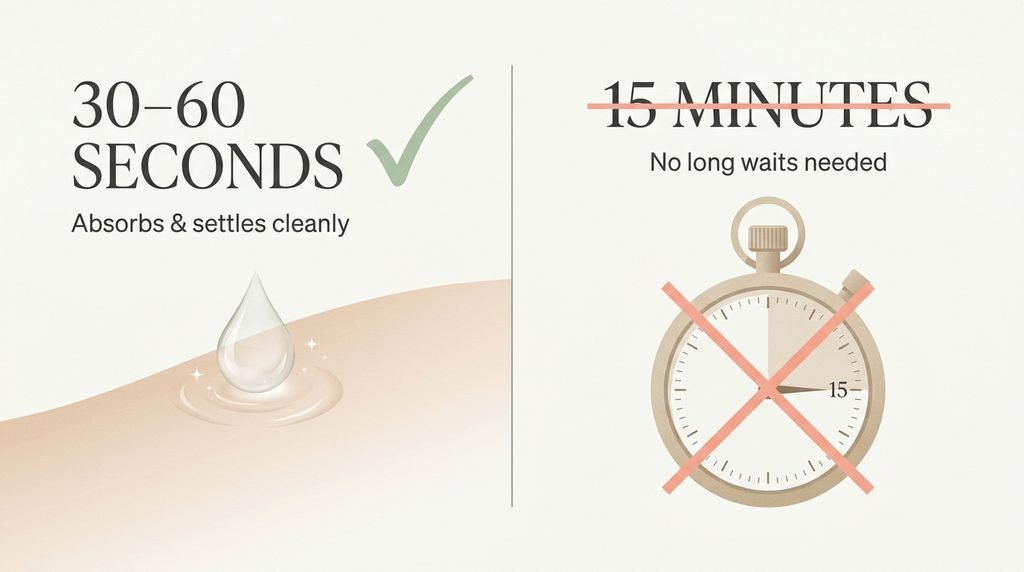
Most skincare layers only need about 30 to 60 seconds to settle before you apply the next step—just long enough for the surface to feel lightly tacky rather than wet. While strict ten-minute timers are rarely backed by clinical evidence, giving potent actives like retinoids or exfoliating acids a brief pause helps reduce irritation and prevents messy product pilling. In this practical timing guide, you’ll find a clear ingredient-by-ingredient wait chart, learn when applying products to damp skin actually works better, see why rushing layers causes pilling under sunscreen or makeup, and get simple tips for nighttime routines before bed.
Standing in front of the bathroom mirror watching the clock tick while a watery serum dries feels tedious when you’re trying to get out the door or get to sleep. Some routines suggest waiting fifteen minutes between every single bottle, while others say you can slap everything on in ten seconds flat.
If you’ve ever wondered how long should you wait between skincare products, the honest answer is much simpler than most ten-step routines make it sound: roughly 30 to 60 seconds is plenty for most layers, though exact timing depends on the specific product on your shelf. Below, we’ll break down practical wait times by ingredient type, explain when waiting actually improves comfort, and share quick fixes if your layers keep rolling up into tiny balls.
The General Rule: 30 to 60 Seconds (And Why Long Waits Aren’t Necessary)

In everyday skincare, wait times are practical conventions rather than strict, heavily studied medical rules. There’s limited scientific evidence proving that waiting twenty minutes between a serum and a moisturizer makes your ingredients work dramatically better.
What a brief pause does accomplish is physical separation. Giving a liquid serum 30 to 60 seconds to absorb lets the water or solvent base settle into the upper epidermis so you aren’t simply diluting your next layer or sliding product around with your fingertips.
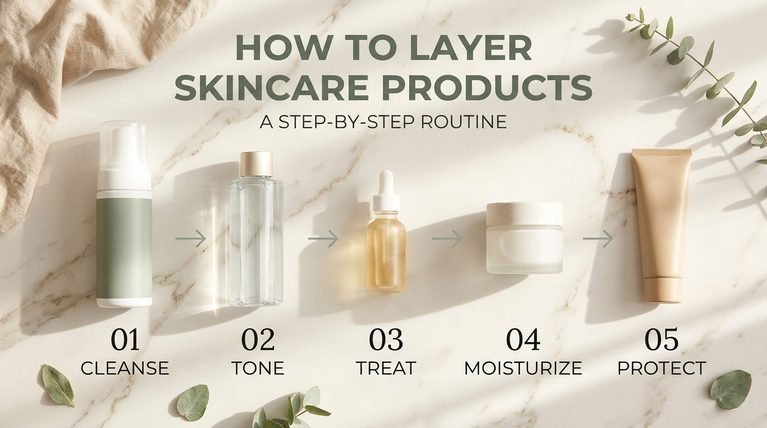
Instead of staring at a stopwatch, use the touch test: once your skin feels lightly tacky or smooth rather than visibly wet, you’re ready for the next bottle. Always check your specific product label first, since manufacturer directions override general timing habits. For full sequencing rules, see our How to Layer Skincare guide.
Skincare Wait Time Chart: Timing by Product Type

Different formulas behave differently once they touch your face. Use this cheat sheet as a practical baseline for morning and evening routines.
| Product Type | Commonly Suggested Wait Time | Why This Timing Helps |
| Hydrating Toner / Essence | 0–15 seconds (apply next step while damp) | Humectants absorb better when skin still holds light surface moisture |
| Hyaluronic Acid / Glycerin Serum | 0–30 seconds (seal immediately with cream) | Prevents moisture from evaporating into dry room air before you lock it in |
| Niacinamide / Peptide Serum | 30–60 seconds | Lets water-based fluids settle cleanly so subsequent layers don’t dilute them |
| Vitamin C (L-Ascorbic Acid) | About 60 seconds | Gives low-pH formulas a brief moment to settle before neutral moisturizers go on |
| Exfoliating Acids (AHA / BHA) | 1–3 minutes (or per label directions) | Allows mild acid formulas to sit undisturbed before buffering with moisturizer |
| Retinol / Retinoids | Wait 5–10 minutes after washing; 1–2 minutes after applying | Applying to fully dry skin helps reduce stinging; a brief pause prevents spreading into eyes |
| Moisturizer (Before Sunscreen or Makeup) | 1–2 minutes | Creates an even, settled surface so SPF and foundation glide on without streaking |
For step-by-step guidance on drop counts and pressing techniques, read How to Apply Face Serum Correctly.
When You Should Apply Products Immediately (No Waiting Required)

Waiting isn’t always better—in fact, letting certain ingredients dry completely on bare skin can actually make your face feel tighter.
Humectant-heavy formulas like hyaluronic acid, glycerin, beta-glucan, and polyglutamic acid work by attracting water. If you apply a hyaluronic acid serum to damp skin and then wait five full minutes before putting on moisturizer, dry indoor air can pull moisture back out of your skin, leaving your cheeks feeling papery.
Instead, press your hydrating serum onto slightly damp skin after cleansing, wait just ten to fifteen seconds until it stops dripping, and smooth your moisturizer straight over it to trap that hydration inside. You can see how these two formulas complement each other in Serum Before or After Moisturizer?.
Special Timing Rules for Retinol, Acids, and Vitamin C
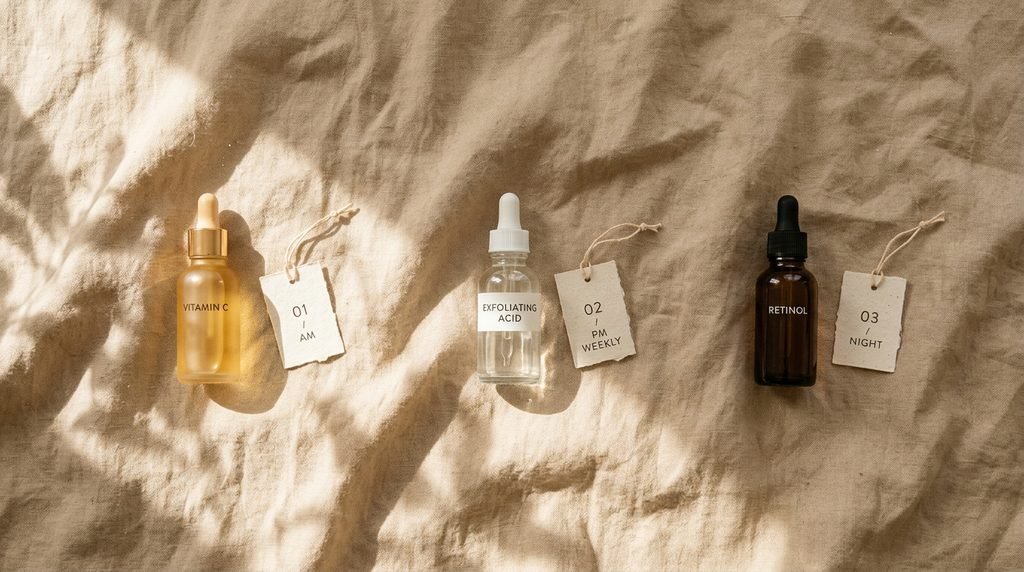
Stronger active ingredients earn a slightly more mindful pause—not because they stop working without a timer, but because rushing them raises the odds of surface irritation.
Retinol and Retinoids

Retinoids penetrate much faster on damp skin, which sounds great until you wake up with red, flaking cheeks. After washing your face at night, pat dry and wait 5 to 10 minutes until your skin feels completely dry before applying retinol. Once applied, wait another 1 to 2 minutes before smoothing on your night cream so you don’t accidentally drag the retinoid around your nostrils or eyelids. Learn more in Retinol Basics Explained.
Exfoliating Acids (AHAs and BHAs)
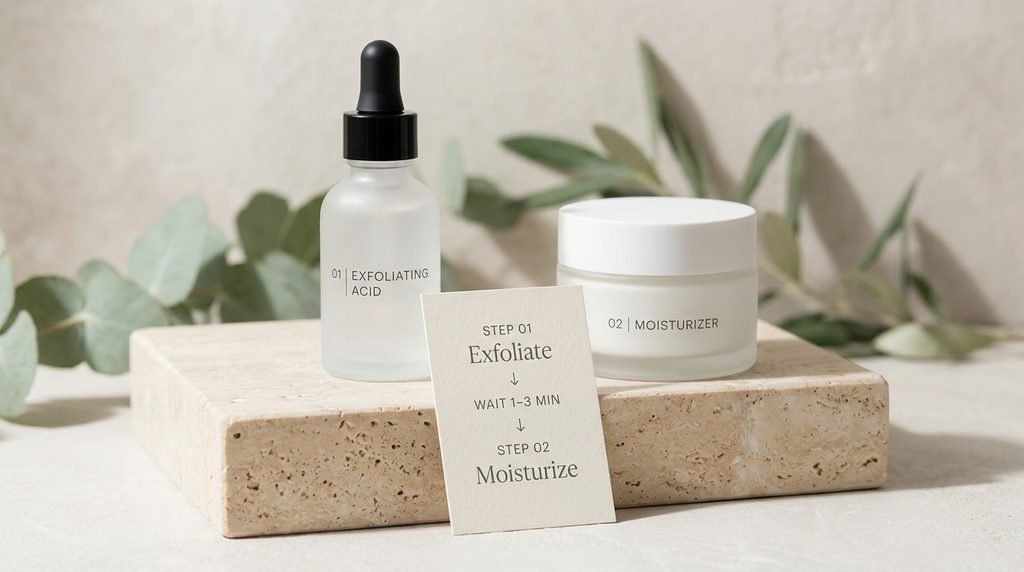
If you use a leave-on glycolic, lactic, or salicylic acid serum, waiting 1 to 3 minutes before applying moisturizer lets the formula settle comfortably on your skin. If your skin feels sensitive or tingles, you don’t need to wait at all—applying moisturizer right away gently buffers the acid.
Vitamin C Serum
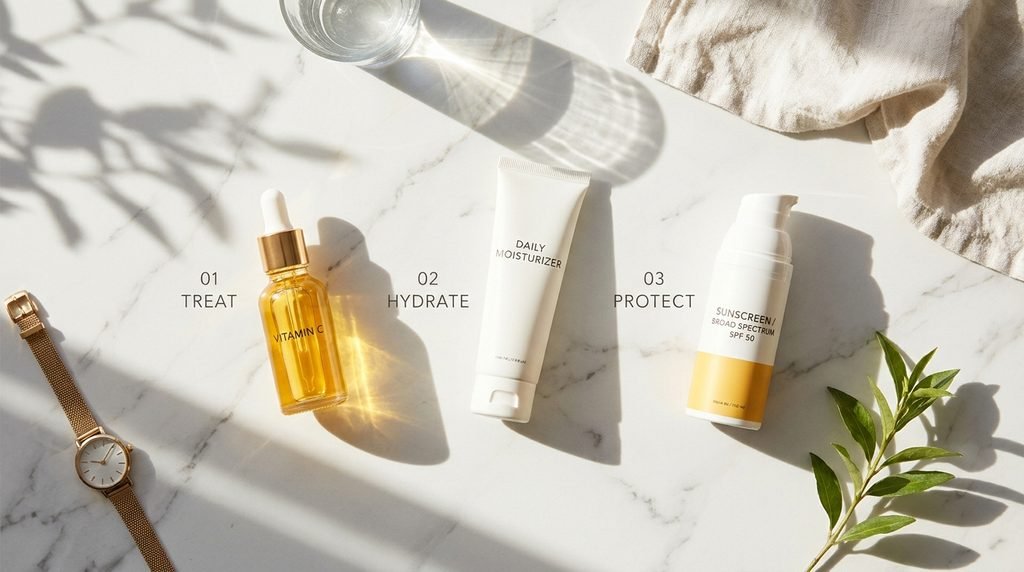
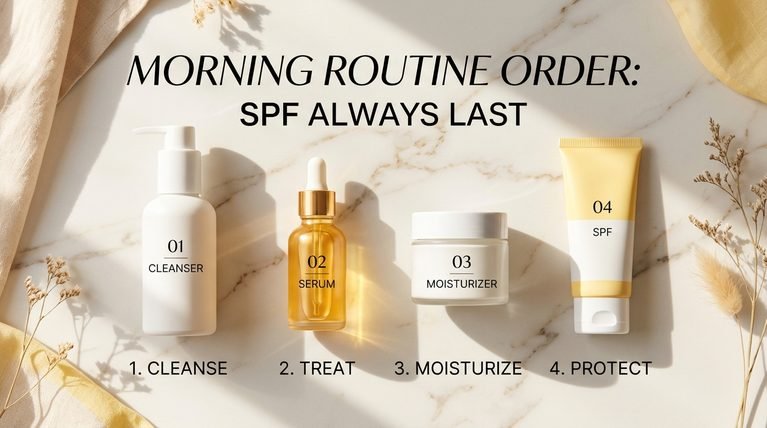
Morning routines move fast, so waiting about 60 seconds after applying vitamin C is plenty before moving on to moisturizer and SPF. Let your final moisturizer settle for 1 to 2 minutes before applying sunscreen so your UV shield spreads into a smooth, uninterrupted coat. Check Serum Before or After Sunscreen? for the exact daytime order.
Skincare Pilling: Why Rushing Layers Makes Products Roll Up

If you’ve ever rubbed in your moisturizer or sunscreen only to watch tiny white or grey flakes ball up along your jawline, you’ve experienced skincare pilling. Rushing layers without giving them thirty to sixty seconds to set is one of the top triggers.
Pilling happens when film-forming polymers, silicones, or heavy thickeners in one product haven’t finished settling before you rub another texture over top. Instead of absorbing, the two formulas bind together and roll off your skin.
Quick ways to stop pilling:
- Use less product: Two to three drops of serum is plenty for your whole face; excess liquid sits on the surface and balls up.
- Press instead of rub: Gently patting layers onto your skin disturbs underlying films far less than vigorous circular rubbing.
- Give thick creams 2 minutes: Let rich moisturizers absorb before applying sunscreen or makeup.
According to general skincare layering guidance from the American Academy of Dermatology, applying products in thin layers and giving each step a brief moment to settle helps prevent product buildup and keeps routines comfortable.
How Long to Wait Before Sleeping or Applying Makeup
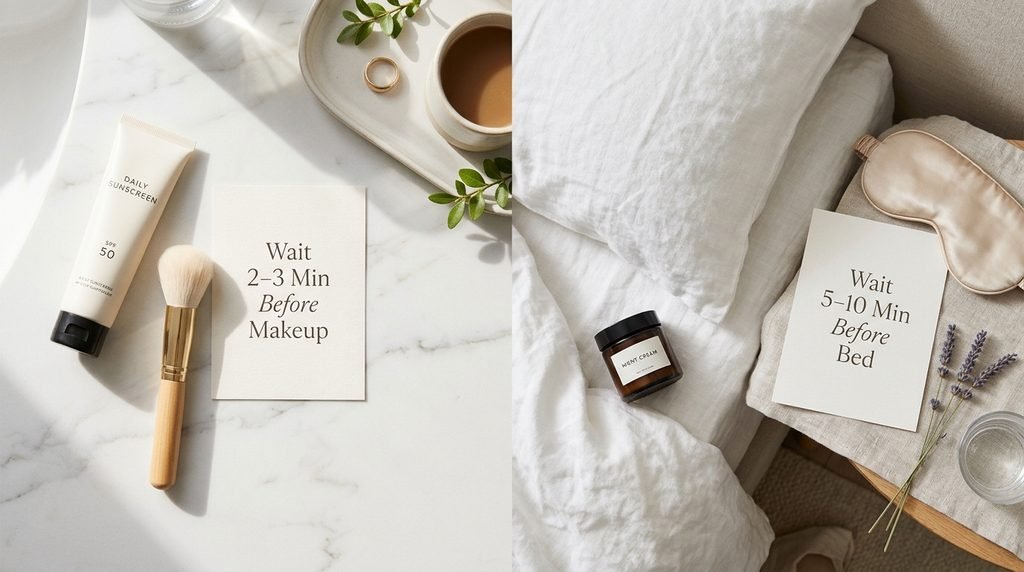
Timing doesn’t stop once your final jar is closed—what you do right after your routine matters too.
Before applying makeup: Wait 2 to 3 minutes after applying your sunscreen so the protective film sets properly. Rushing straight in with foundation or concealer can disturb your sun protection and cause uneven patches.
Before going to sleep: Give your evening moisturizer or facial oil 5 to 10 minutes to sink in before your head hits the pillow. Lying down ten seconds after applying heavy night cream transfers half your skincare onto your pillowcase instead of keeping it on your skin.
(Note: If you’re wondering how long to wait before introducing a brand-new product into your routine, patch test first and add only one new active every one to two weeks so you can spot any sensitivity easily.)
FAQ Section

Q: How long should you wait between skincare products?
A: For most skincare products, waiting about 30 to 60 seconds between layers is enough. You don’t need a strict timer—simply wait until your serum or treatment feels lightly tacky or absorbed rather than wet on your skin before applying your moisturizer or sunscreen.
Q: Do you really need to wait between skincare steps?
A: You don’t need long waits between most skincare steps, as there’s limited evidence that waiting ten or fifteen minutes improves ingredient results. However, a short 30-to-60-second pause prevents layers from mixing together, reduces product pilling, and helps strong actives settle comfortably.
Q: How long should you wait between serum and moisturizer?
A: Wait about 30 to 60 seconds after applying most serums before smoothing on moisturizer. The main exception is a hydrating hyaluronic acid serum—apply your moisturizer right away while your skin still feels slightly damp so the cream locks surface moisture in before it evaporates.
Q: Should you wait for skin to dry before applying retinol?
A: Yes, waiting 5 to 10 minutes after washing your face so your skin is completely dry before applying retinol is commonly suggested. Damp skin absorbs retinoids more quickly, which can increase stinging, redness, and flaking, especially if you’re new to retinoids.
Q: Why is my skincare pilling when I layer products?
A: Skincare pilling usually happens when you apply too much product, layer formulas too quickly before the previous step sets, or rub incompatible silicone and water-based textures together. Using smaller amounts, pressing gently instead of rubbing, and waiting 60 seconds between layers stops most pilling.
Q: How long should you wait before applying sunscreen after skincare?
A: Wait about one to two minutes after applying your serum and moisturizer before putting on broad-spectrum sunscreen. Giving your underlying skincare a brief moment to settle keeps the sunscreen from diluting or streaking, helping it form an even protective film across your skin.
Conclusion

Knowing how long should you wait between skincare products takes the stress out of morning and night routines. For almost every step, 30 to 60 seconds is plenty of time for lightweight serums to settle, while hydrating formulas work best when sealed immediately with moisturizer on damp skin. Save longer five-minute pauses strictly for letting skin dry before retinol or letting night creams absorb before bed.
Tonight, ditch the stopwatch and try the simple touch test—wait until each layer feels lightly tacky rather than wet, and enjoy smoother, pill-free routines every day.