Executive Summary
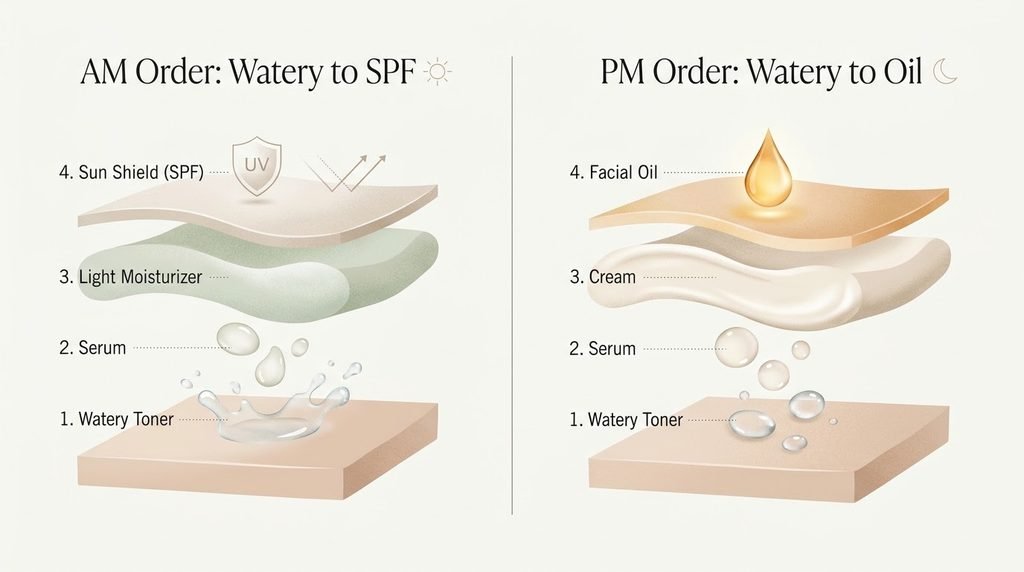
Learning how to layer skincare products comes down to one reliable rule: apply formulas from thinnest consistency to thickest consistency, finishing with broad-spectrum sunscreen every morning. Putting watery toners and serums onto clean skin first lets active ingredients reach the upper epidermis before rich creams seal hydration in. In this complete step-by-step guide, you’ll find the exact numbered order for morning and evening routines, a full product-by-product reference chart, key exceptions like oil-based serums and retinol buffering, and a simplified three-step option if you prefer a minimal shelf.
Standing in front of a bathroom mirror lined with toners, essences, serums, creams, and oils can turn a relaxing routine into a guessing game. Apply things in the wrong sequence, and your expensive active ingredients either sit uselessly on top of a heavy cream or roll up into tiny white flakes under your sunscreen.
Figuring out how to layer skincare products doesn’t require memorizing complex chemistry—it simply means putting each texture where it works best. Whether you use three everyday staples or six targeted treatments, order determines how comfortably your skin absorbs what you apply. Below, we’ll walk through the exact morning and night sequences, explain the physical rule behind them, and cover the few smart exceptions that keep sensitive skin calm.
The Correct Order to Apply Skincare Products (AM & PM)
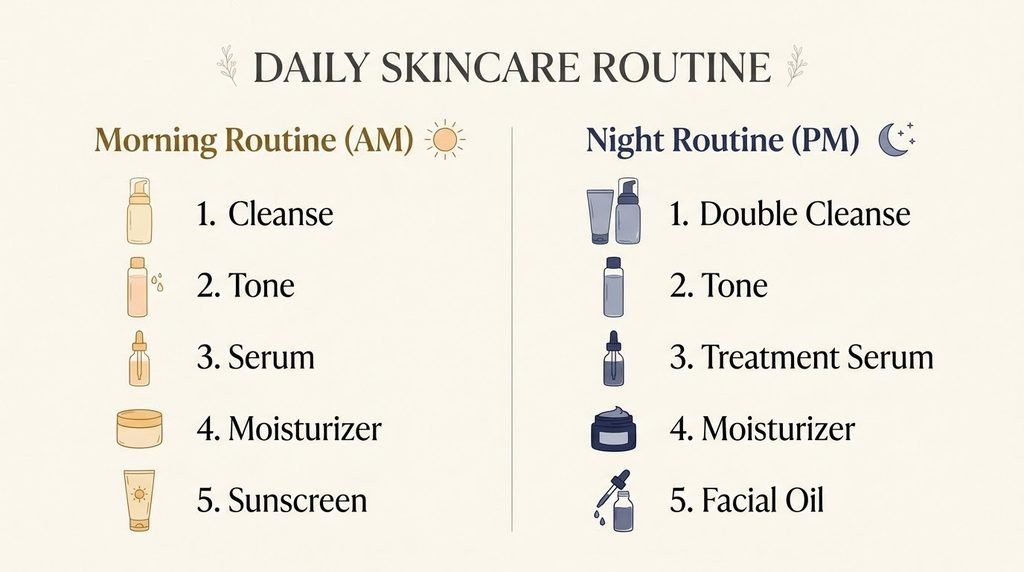
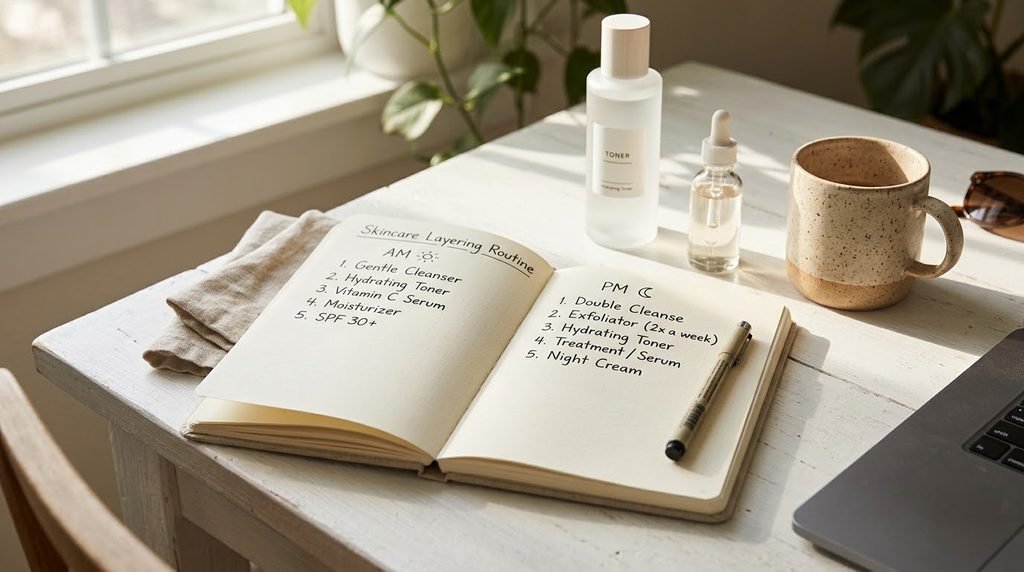
If you want the quick answer right away, here is the standard sequence for both ends of your day. Morning routines focus on hydration and daytime sun defense, while evening routines shift toward cleansing away daily buildup and supporting overnight barrier recovery.
Morning Skincare Order (AM):
- Cleanser: Gentle wash (or plain lukewarm water rinse) to clear overnight sweat and excess oil.
- Toner or Essence: Lightweight watery fluid to prep damp skin and add initial hydration.
- Serum(s): Concentrated water-based treatments like vitamin C, hyaluronic acid, or niacinamide.
- Eye Cream (Optional): Lightweight gel or cream tapped gently along the orbital bone.
- Moisturizer: Lotion or cream to lock in serum hydration and cushion your moisture barrier.
- Sunscreen (SPF 30+): Broad-spectrum sun protection as your final, undisturbed daytime shield.
Night Skincare Order (PM):
- First Cleanse (Optional): Cleansing balm or micellar water to dissolve sunscreen and makeup.
- Second Cleanse: Gentle water-based facial cleanser to leave skin clean without stripping.
- Toner or Essence: Hydrating mist or watery fluid applied to lightly damp skin.
- Treatment Serum(s): Targeted evening actives such as retinoids, peptides, or mild exfoliating acids.
- Eye Cream (Optional): Nourishing eye formula applied before heavier face creams.
- Moisturizer or Night Cream: Richer emollient cream to prevent overnight water loss.
- Facial Oil (Optional): A few drops pressed on last to seal everything in.
Why Skincare Order Matters: The Thinnest-to-Thickest Rule
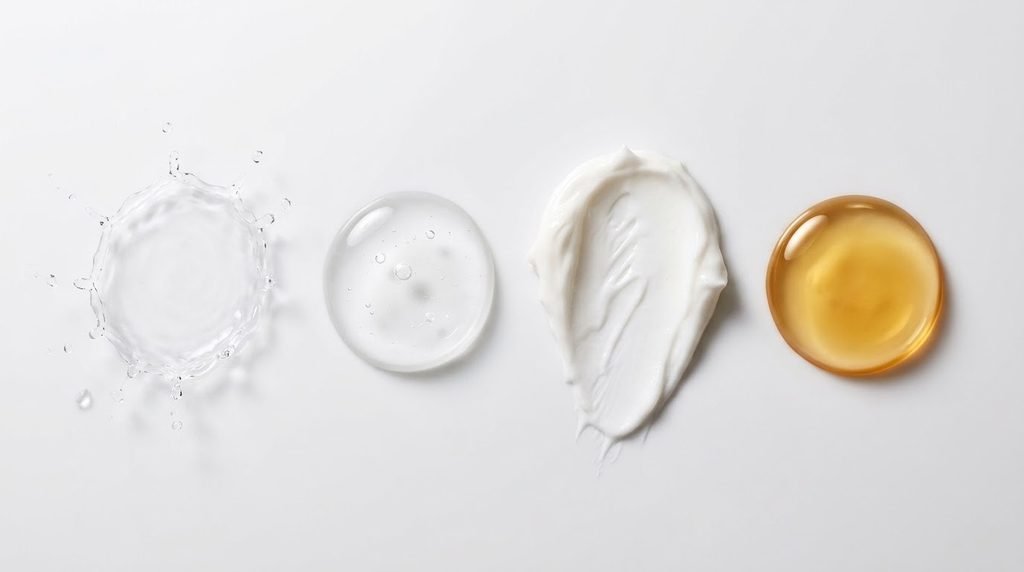
The golden rule of skincare layering—applying products from thinnest consistency to thickest consistency—isn’t just a trendy catchphrase. It’s basic formulation physics.
Water-based products like essences and hydrating serums contain smaller molecules and lightweight solvents designed to sink quickly into the upper layers of your epidermis. Moisturizers, balms, and facial oils contain heavier emollients and occlusives—like ceramides, shea butter, and squalane—built to sit near the surface and slow down moisture evaporation.
If you spread a thick cream over your face first, you create a protective seal. Applying a watery serum on top of that seal blocks active ingredients from reaching your skin efficiently. Does order matter equally for every single routine? Honestly, if you only use a gentle cleanser and a basic moisturizer, sequence is effortless—order matters most when you’re pairing lightweight active serums with heavier creams or daytime sunscreen. For a closer look at how formulas move into skin, read How Serums Penetrate Skin.
Complete Skincare Layering Order Chart

Use this reference table whenever you add a new bottle to your shelf and aren’t sure where it fits.
| Step | Product Type | Primary Purpose | Layering Notes |
| 1. Cleanse | Gel, cream, or balm cleanser | Removes dirt, oil, sweat, and SPF | Double cleanse at night if wearing water-resistant sunscreen or makeup |
| 2. Tone / Essence | Watery toner or hydrating essence | Balances skin comfort and adds light moisture | Apply next step while skin still feels slightly damp |
| 3. Treat | Water-based serums | Delivers concentrated actives (vitamin C, niacinamide, retinol) | Layer thinnest liquid serum before slightly thicker gel serums |
| 4. Moisturize | Lotion, gel-cream, or rich cream | Hydrates and reinforces the outer moisture barrier | Always apply after water-based serums; check Serum Before or After Moisturizer? |
| 5. Seal (PM) | Facial oil or oil-based serum | Locks in moisture and softens dry patches | Press 2–3 drops over moisturizer at night rather than underneath |
| 6. Protect (AM) | Broad-spectrum sunscreen | Shields skin from UV rays | Always the final morning step; see Serum Before or After Sunscreen? |
Not sure how watery essences differ from concentrated serums? Compare their roles in What Is an Essence?.
Four Exceptions to the Standard Layering Order

While thinnest-to-thickest handles ninety percent of everyday products, smart routines leave room for four practical exceptions.
1. Oil-Based Serums

Not every dropper bottle is water-based. Serums made primarily with squalane, rosehip oil, or jojoba oil act as occlusives. Apply your water-based moisturizer first, then press your oil serum on top so the oil seals hydration in without blocking your cream.
2. Buffering Retinoids for Sensitive Skin

Retinoids like retinol and retinaldehyde normally go on clean, dry skin before moisturizer. However, if you’re prone to redness or flaking, apply a thin layer of plain moisturizer first, let it settle, and layer your retinoid on top. This “buffering” technique slows absorption slightly to keep your barrier comfortable.
3. Prescription Topicals
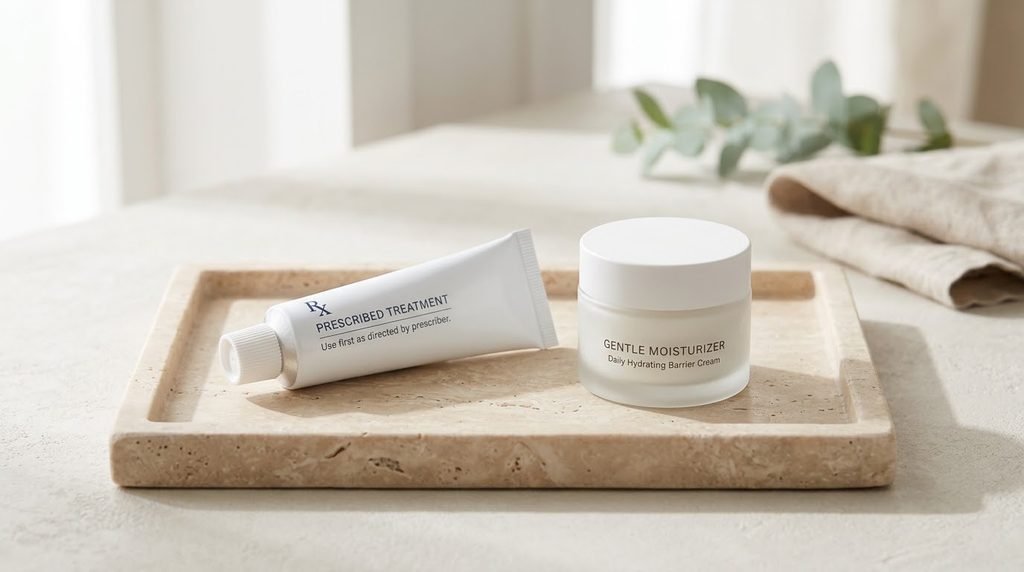
Medicated creams or gels prescribed by a dermatologist sometimes require application directly onto clean, bare skin before anything else—even if their texture feels thicker than your hydrating serum. Always follow your prescriber’s exact instructions over general layering rules.
4. Product Label Directions
Occasionally, a specialized cosmetic treatment is formulated specifically to be layered over moisturizer. When manufacturer directions contradict general rules, trust the instructions printed on the bottle.
How to Layer Skincare Without Pilling (Plus Timing Tips)

Even when you put products in the right order, rushing through your routine can cause skincare pilling—those frustrating little white or grey balls that roll off your cheeks when you rub in cream or sunscreen.
Pilling happens when film-forming ingredients haven’t finished settling before you apply the next texture, or when you simply use too much product at once.
- Use smaller amounts: Two to three drops of serum is plenty for your entire face; extra liquid sits on top and balls up.
- Pause briefly between layers: Wait 30 to 60 seconds after applying a serum before smoothing on moisturizer, and give moisturizer 1 to 2 minutes to set before applying sunscreen. See our full timing breakdown in How Long to Wait Between Skincare Products.
- Pat instead of rubbing: Pressing layers gently into your skin disturbs underlying formulas far less than vigorous circular rubbing.
According to general skincare guidance from the American Academy of Dermatology, applying products in thin, even layers and avoiding overlapping irritating actives keeps routines gentle and prevents unnecessary buildup.
The Simplified Routine: When Fewer Steps Work Better
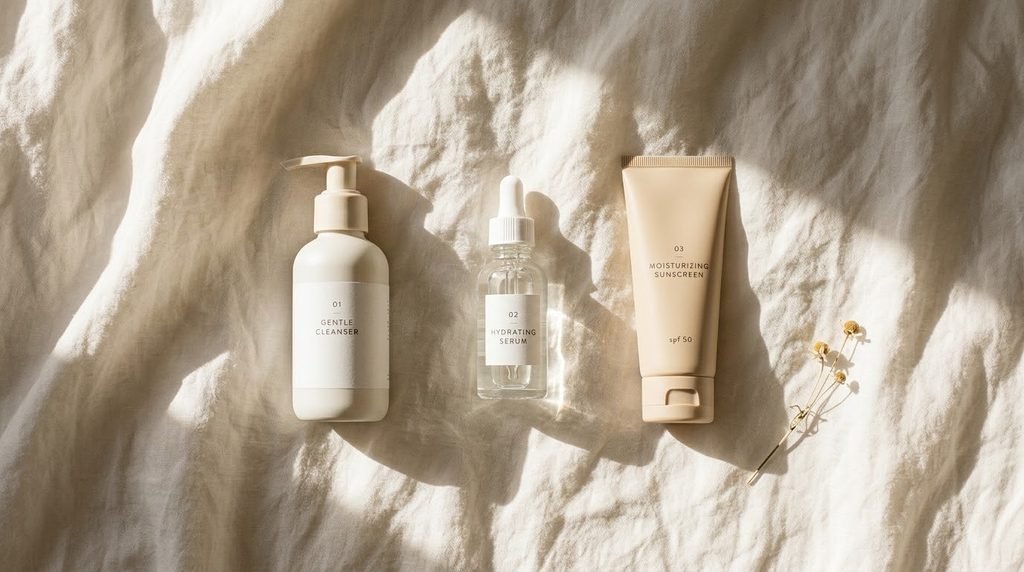
Seeing a seven-step chart doesn’t mean you need seven bottles on your bathroom counter. In fact, overloaded routines are one of the top triggers of barrier irritation and wasted money.
If you prefer a minimal approach—or your skin feels easily overwhelmed—stick to a streamlined core routine:
- Morning (3 steps): Gentle cleanser + one targeted serum (such as vitamin C or niacinamide) + broad-spectrum sunscreen (choose a moisturizing SPF formula to combine hydration and sun protection).
- Night (3 steps): Gentle cleanser + one evening serum (such as hyaluronic acid or retinol) + barrier-supporting moisturizer.
You can explore how to pace daytime and evening actives without doubling up in Morning vs. Night Serum Routines and How to Apply Face Serum Correctly.
FAQ Section
Q: What is the correct order to apply skincare products?
A: Apply skincare products from thinnest to thickest consistency. Start with a facial cleanser, follow with watery toners or essences, apply lightweight serums, smooth on eye cream and moisturizer, and finish with broad-spectrum sunscreen in the morning (or facial oil at night).
Q: Does the order of skincare really matter?
A: Yes, skincare order matters most when combining different textures and active ingredients. Thicker creams and oils form an occlusive barrier that can prevent lightweight, water-based serums from reaching your skin effectively, while applying anything over morning sunscreen dilutes your UV protection.
Q: Where does toner or essence go in a skincare routine?
A: Toner and essence go immediately after cleansing and before serums or moisturizers. Because they have thin, watery textures, applying them first hydrates freshly washed skin and creates a lightly damp surface that helps subsequent water-based serums spread smoothly.
Q: What goes first, retinol or niacinamide or hyaluronic acid?
A: Apply them from thinnest to thickest consistency. In an evening routine, apply water-based hyaluronic acid first on damp skin, follow with niacinamide once absorbed, and apply retinol last before your moisturizer. Beginners can also use hyaluronic acid and niacinamide in the morning and keep retinol for night.
Q: Can I layer vitamin C and retinol together?
A: It’s generally best to use vitamin C in the morning and retinol at night rather than layering them together. Both are potent active ingredients that perform best at different pH levels, and applying them in the same sitting increases the risk of dryness, redness, and irritation.
Q: How do you layer skincare without pilling?
A: To prevent skincare pilling, apply thin layers using just two to three drops of serum, gently press products into your skin instead of rubbing aggressively, and wait 30 to 60 seconds between layers so each formula settles before applying moisturizer or sunscreen.
Conclusion

Mastering how to layer skincare products comes down to a simple, repeatable habit: work from thinnest watery fluids to richest creams, keep oils for sealing at night, and leave broad-spectrum sunscreen as your untouched final shield every morning. Giving each layer just thirty to sixty seconds to settle prevents pilling and lets your active ingredients absorb cleanly without overwhelming your skin barrier.
Tonight, take two minutes to arrange your bathroom shelf in exact order from left to right—cleanser, toner, serum, moisturizer, and daytime SPF—so every routine runs effortlessly.