Executive Summary

Always apply your face serum before sunscreen, because sunscreen must sit as the final skincare step on the very surface of your skin to form an even, protective UV barrier. Layering liquid serums over sunscreen dilutes the formula and breaks up that film, leaving gaps in your sun protection. In this focused morning guide, you’ll learn why SPF always comes last, the exact four-step daytime order including moisturizer, how long to wait between layers so nothing pills, and how to handle common exceptions like vitamin C pairings, serums that contain SPF, and midday sunscreen reapplication.
Morning routines move fast, and it’s easy to second-guess whether your antioxidant drops go underneath your SPF or on top for an extra glow. Getting that order backwards doesn’t just cause messy pilling—it compromises the single most important step in your daytime routine.
If you’ve ever wondered whether to apply serum before or after sunscreen, the rule has zero wiggle room: serum goes before sunscreen, and sunscreen is always the final skincare step in the morning. (For multi-step evening lineups or full multi-product breakdowns, check out our complete How to Layer Skincare guide.) Below, we’ll explain why SPF stays on top, share a simple four-step morning cheat sheet, and clarify real-world edge cases like SPF-infused serums and afternoon reapplication.
Why Sunscreen Always Goes Last in a Morning Routine

Think of sunscreen differently from every other bottle on your bathroom counter. Serums and moisturizers are designed to sink into the upper layers of your skin to hydrate, soothe, or deliver antioxidants. Sunscreen isn’t meant to penetrate deeply—it’s engineered to sit on the surface of your skin and form an uninterrupted, uniform film that absorbs or reflects ultraviolet rays.
When you apply a water-based or oil-based serum over sunscreen, your fingertips physically rub away that protective layer while the serum’s solvents dilute the UV filters. Even a thin liquid mist or spray serum applied on top can cause sunscreen to streak, ball up, or leave unprotected patches.
Putting your serum on freshly cleansed skin first lets active ingredients reach where they belong, while finishing with sunscreen keeps your UV shield intact.
The Exact Morning Skincare Order: Cleanser to SPF

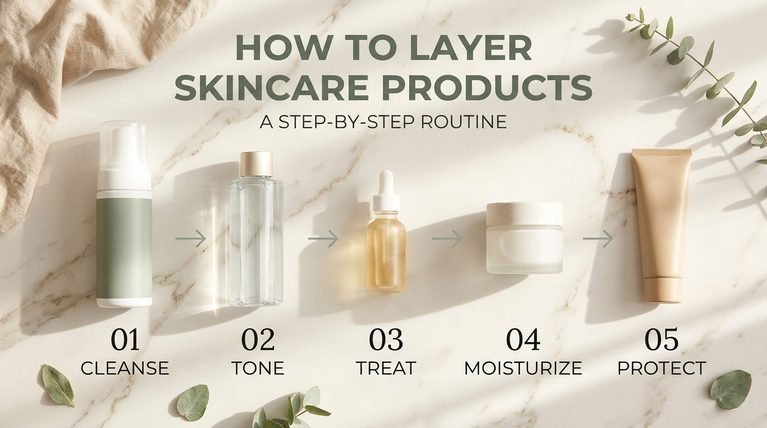
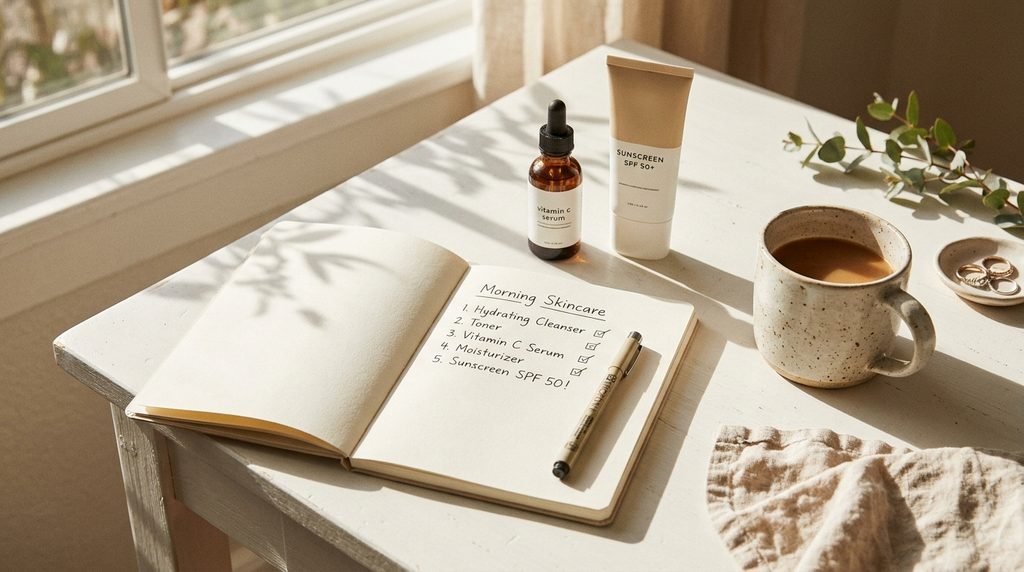
You don’t need seven complicated steps to get morning layering right. Whether you have oily, dry, or sensitive skin, following this simple four-step order keeps your actives effective and your sun protection undisturbed.
| Step | Product Type | Why It Goes Here |
| 1. Cleanse | Gentle facial cleanser (or plain water rinse) | Clears overnight sweat and excess sebum so serums contact clean skin |
| 2. Treat | Face serum (vitamin C, hyaluronic acid, niacinamide) | Delivers concentrated antioxidants and hydration directly into the upper epidermis |
| 3. Moisturize | Lightweight lotion or cream | Locks in serum hydration and creates a smooth base (optional if your SPF is hydrating enough) |
| 4. Protect | Broad-spectrum sunscreen (SPF 30 or higher) | Forms the final, undisturbed UV-blocking film over your entire skincare routine |
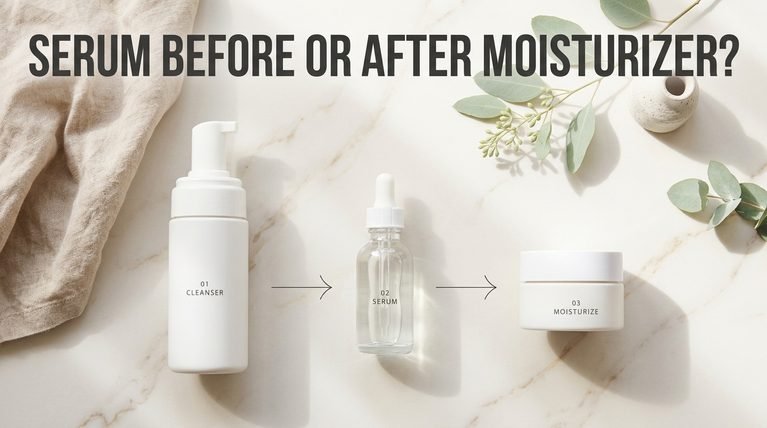
Not sure where your moisturizer sits relative to your drops? Read our dedicated breakdown on Serum Before or After Moisturizer? for full details on textures and buffering.
How Vitamin C, Niacinamide, and Retinol Fit Under Sunscreen

Different serum ingredients support your daytime routine in distinct ways, yet every single one belongs underneath your sunscreen—never over it.
- Vitamin C serum: Morning is the prime window for vitamin C. Applying an antioxidant serum underneath broad-spectrum SPF helps defend skin against free radicals generated by daytime UV light and pollution. However, vitamin C never replaces sunscreen—antioxidants complement sun protection, they don’t block UV rays on their own. Learn more in What Is Vitamin C Serum? and Understanding Hyperpigmentation.
- Niacinamide and hyaluronic acid: Both fit effortlessly under moisturizer and sunscreen, helping keep your moisture barrier calm and comfortable under heavy summer sun or dry office air conditioning.
- Retinol serum: Keep retinol out of your morning lineup altogether. Most traditional retinoids degrade in sunlight and can make skin more sensitive to UV exposure—save them strictly for your evening routine and wear broad-spectrum sunscreen the next morning. Compare schedules in Morning vs. Night Serum Routines.
How Long Should You Wait Between Serum and Sunscreen?

Rushing straight from a wet face of serum into thick sunscreen is the fastest way to trigger white streaks and product pilling. Fortunately, you don’t need a ten-minute timer.
Give your serum about 60 seconds to settle and feel tacky rather than wet before applying your moisturizer. Then wait one to two minutes for your moisturizer to absorb before smoothing on your sunscreen. Letting each layer set briefly prevents formulas from mixing together on your fingertips and ensures your SPF spreads into an even coat.
According to general sun-protection guidance from the American Academy of Dermatology, applying a generous, even layer of broad-spectrum sunscreen (SPF 30 or higher) as the final step of your morning skincare routine—about 15 minutes before heading outdoors—gives the film time to set properly.
Three Common Exceptions: SPF Serums, Mixing, and Reapplication

Even simple rules bring up practical real-world questions once you step outside your bathroom.
1. Can You Use a Serum with SPF Instead of Regular Sunscreen?

Many brands now sell “SPF serums” or tinted antioxidant drops with sun protection ratings. While convenient as an extra layer, they rarely provide reliable standalone protection. Most people apply only three to five drops of serum—nowhere near the generous two-finger length (roughly a quarter teaspoon for the face) needed to achieve the SPF rating printed on the label. Treat SPF serums as a bonus step underneath a dedicated broad-spectrum sunscreen.
2. Can You Mix Serum Directly Into Your Sunscreen?
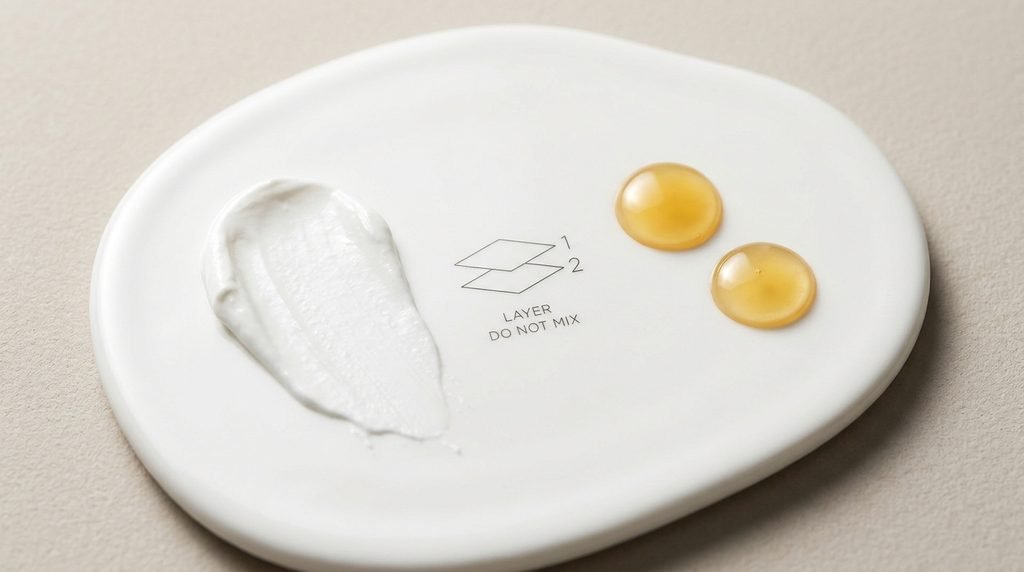
Never mix serum drops into your sunscreen in your palm. Diluting sunscreen with watery serums or facial oils disrupts the formula’s emulsion and unevenly disperses UV filters, dropping your actual sun protection far below the labeled SPF. Always apply them in separate layers.
3. How Do You Reapply Sunscreen Over Serum and Makeup Midday?
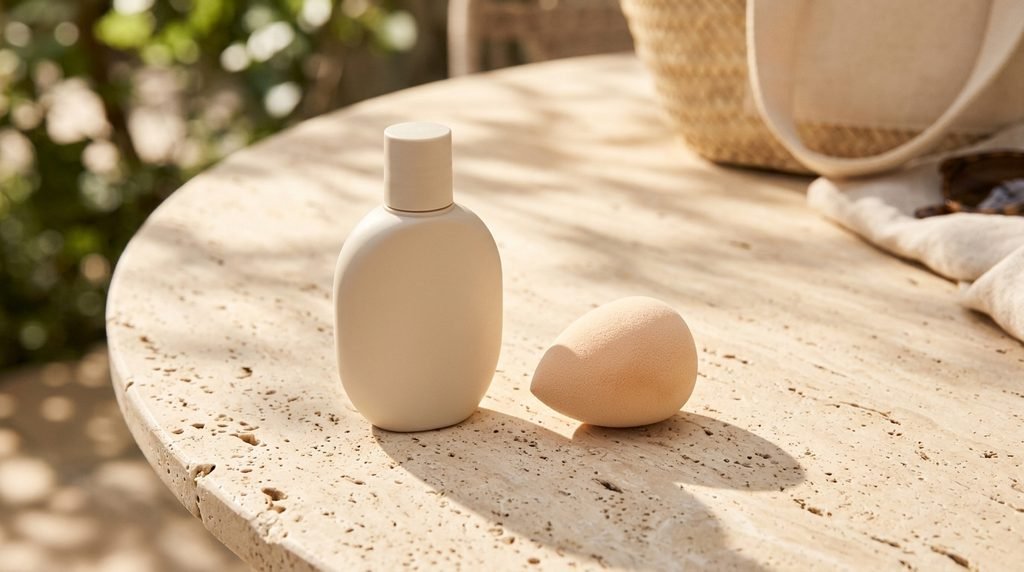
When reapplying sunscreen every two hours outdoors, you don’t need to wash your face and start your serum routine over. Simply apply fresh sunscreen directly over your existing morning layers. If you’re wearing makeup or want a lightweight touch-up, gently tap a fluid sunscreen over your skin with clean fingers or a makeup sponge rather than rubbing aggressively.
FAQ Section
Q: Do you apply serum before or after sunscreen?
A: Always apply serum before sunscreen. Water-based serums need direct contact with clean skin to absorb properly, while sunscreen must sit as the final skincare step on the surface of your skin to form an even, uninterrupted UV-blocking film.
Q: Can you apply serum over sunscreen?
A: No, applying serum over sunscreen isn’t recommended. Rubbing liquid or oil-based serums on top of sunscreen dilutes the UV filters and breaks up the protective film, leaving gaps in your sun protection and often causing product pilling.
Q: Should vitamin C serum go before sunscreen?
A: Yes, vitamin C serum should go before sunscreen every morning. Applying vitamin C onto clean skin underneath moisturizer and broad-spectrum SPF provides complementary antioxidant defense against daytime environmental stress, though it never replaces actual sunscreen.
Q: How long should I wait to apply sunscreen after serum?
A: Wait about one to two minutes after applying your serum and moisturizer before putting on sunscreen. Giving lightweight layers a brief moment to absorb and feel dry to the touch prevents formulas from mixing together and helps your sunscreen spread evenly.
Q: Can I use a serum with SPF instead of sunscreen?
A: Relying solely on a serum with SPF usually isn’t enough for full sun protection. Because people apply only a few drops of serum rather than the generous amount required to meet labeled SPF ratings, it’s best to layer a dedicated broad-spectrum sunscreen on top.
Q: Can you mix serum with sunscreen in your hand?
A: Never mix serum directly into your sunscreen before applying. Combining sunscreen with other liquids dilutes its active UV filters and disrupts the formula’s stability, significantly reducing how evenly and effectively it protects your skin from sun exposure.
Conclusion

Keeping your morning skincare order straight comes down to one golden rule: apply your serum before sunscreen, and always leave sunscreen for last. Putting lightweight serums like vitamin C, hyaluronic acid, or niacinamide onto clean skin lets active ingredients absorb properly, while finishing with a dedicated broad-spectrum SPF keeps your protective UV shield intact without dilution or pilling.
Tomorrow morning, line up your bottles in order—cleanser, serum, moisturizer, and sunscreen—and give each layer sixty seconds to settle for effortless, reliable daily protection.