Executive Summary
Skincare marketing often promises that active ingredients dive deep into your dermis to work overnight miracles. However, the skin barrier is explicitly designed to keep the outside world out. This guide breaks down the true science of product absorption. You will learn how molecular weight—measured in Daltons—acts as the ultimate gatekeeper for skincare ingredients. We examine why high-molecular-weight hyaluronic acid stays on the surface while smaller molecules like retinol and select peptides travel deeper. We also clarify the critical concept of bioavailability and explain how to order your products from thinnest to thickest to optimize your routine.
The Skin’s Gatekeeper: How Product Absorption Really Works
You buy a high-performance serum, smooth it over your face, and watch it disappear. It feels like your skin just drank up every last drop, but where did those active ingredients actually go?
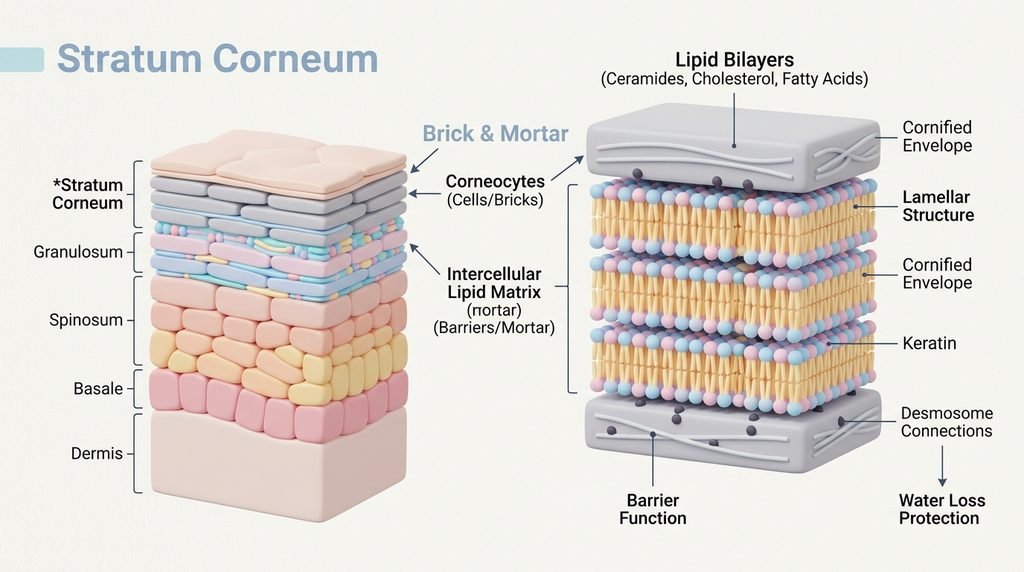
Most people assume that “absorbed” means a product has penetrated deep into the lower layers of the skin. In reality, your skin is a remarkably tough protective shield. Its outermost layer, the stratum corneum, functions like a brick wall. Skin cells (corneocytes) serve as the bricks, while a dense matrix of lipids acts as the mortar. This structure keeps essential moisture locked inside while preventing outside substances from entering your bloodstream.
For any skincare active to pass through this barrier, it must overcome specific physical and chemical hurdles. The primary factor determining whether an ingredient can cross this threshold is its molecular size. If a molecule is too large, it simply cannot fit between the tightly packed cellular gaps, no matter how much you rub or massage it in.
The 500-Dalton Rule: Molecular Size and Penetration Depth
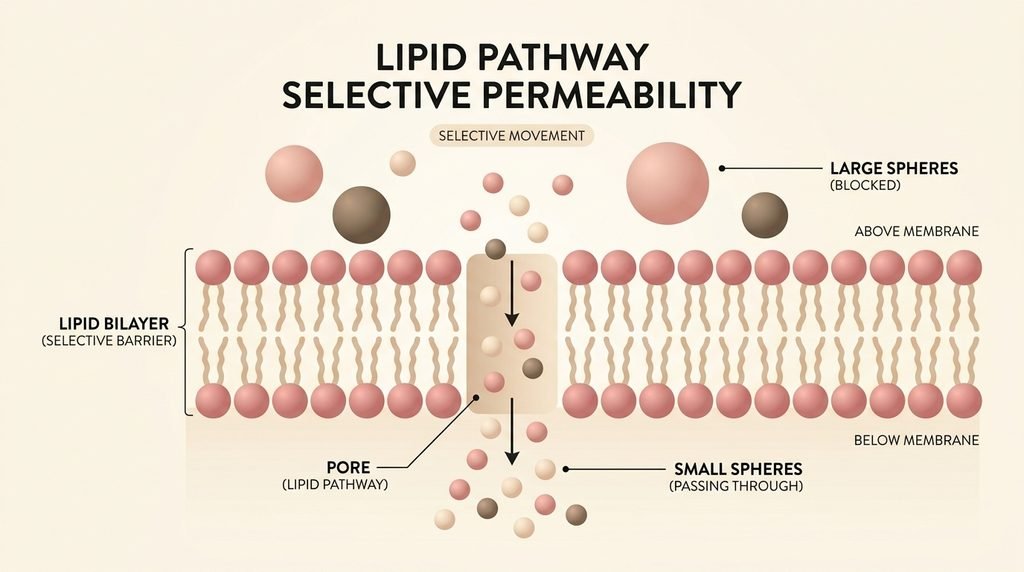
In cosmetic chemistry, molecular size is measured in Daltons ($Da$). Scientists widely recognize a benchmark known as the 500-Dalton Rule: compounds with a molecular weight under 500 Daltons can effectively pass through the stratum corneum, whereas larger molecules struggle to penetrate intact skin.
+-----------------------------------------------------------------------+
|                       EPIDERMIS (STRATUM CORNEUM)                     |
|                                                                       |
|   [ Large Molecules (> 500 Da) ]   -->  Stays on surface (Hydration)  |
|   e.g., High-MW Hyaluronic Acid                                       |
|                                                                       |
|   ~~~~~~~~~~~~~~~~~~~~~~~~~~~~~~~~~~~~~~~~~~~~~~~~~~~~~~~~~~~~~~~~~   |
|                                                                       |
|   [ Small Molecules (< 500 Da) ]   -->  Penetrates barrier            |
|   e.g., L-Ascorbic Acid, Retinol                                      |
+-----------------------------------------------------------------------+
When an active ingredient is small enough, it navigates the lipid pathways around your skin cells. Once inside, it interacts with cellular receptors to encourage processes like cell turnover or collagen support.
Small-Molecule vs. Large-Molecule Actives
Understanding where your favorite ingredients fall on the molecular scale helps set realistic expectations for your routine.
| Ingredient | Typical Molecular Weight | Penetration Depth | Primary Role |
| L-Ascorbic Acid (Vitamin C) | ~176 Da | Upper Epidermis | Antioxidant protection, brightening support |
| Niacinamide (Vitamin B3) | ~122 Da | Upper Epidermis | Barrier support, sebum regulation |
| Retinol | ~286 Da | Epidermis | Cell turnover support |
| High-MW Hyaluronic Acid | 1,000,000+ Da | Surface (Stratum Corneum) | Surface hydration, moisture retention |
| Low-MW Hyaluronic Acid | 10,000–50,000 Da | Shallow Stratum Corneum | Surface-level hydration, temporary plumping |
| Signal Peptides | 400–1,000+ Da | Varies by formulation | Cellular communication support |
Note: For a deeper breakdown of how specific hydrating molecules interact with the skin barrier, see our guide on [Understanding Hyaluronic Acid].
The Hyaluronic Acid Myth: Surface Hydration vs. Deep Delivery

Few ingredients are as misunderstood as hyaluronic acid (HA). Beauty advertisements frequently claim that HA “penetrates deeply to hydrate from within.” However, raw hyaluronic acid in its standard form is a massive polymer, often weighing over 1,000,000 Daltons.
A molecule that size cannot pass through the skin barrier. Instead, standard hyaluronic acid forms a flexible, breathable film over the surface of your skin. It draws ambient moisture to itself, delivering immediate, noticeable surface plumping. This is beneficial for dry skin, but it is entirely a surface-level phenomenon.
Formulators sometimes split hyaluronic acid into smaller fragments, creating low-molecular-weight hyaluronic acid (LMW-HA). While LMW-HA can sink slightly deeper into the uppermost layers of the stratum corneum, it still does not reach the deeper dermis.
Key Takeaway: Topical products do not directly replace structural collagen or hyaluronic acid loss deep within the dermis. Instead, effective topical actives work within the epidermis to support the skin’s natural maintenance processes.
Understanding Bioavailability in Formulations

Molecular size is the main factor in penetration, but it isn’t the only one. Another crucial concept is bioavailability—the proportion of an active ingredient that actually reaches its intended site of action in a form the skin can utilize.
An active can be small enough to cross the barrier, but if the overall formulation doesn’t support it, the ingredient remains ineffective. Key parameters affecting bioavailability include:
- pH Levels: Active ingredients like L-ascorbic acid require a low, acidic pH (below 3.5) to remain uncharged. Uncharged molecules pass through the lipid-rich barrier far more easily than charged ions.
- Solubility: The skin barrier is lipophilic (fat-loving). Ingredients soluble in oil pass through lipid pathways more readily than purely water-soluble ingredients.
- Encapsulation Systems: Modern formulations often use liposomes or lipid-nanocarriers to shield delicate small molecules, delivering them through the outer layer before releasing them.
For peer-reviewed research on lipid barrier mechanics and transdermal pathways, consult resources like the National Center for Biotechnology Information (NCBI).
Why Layering Thin to Thick Optimizes Absorption
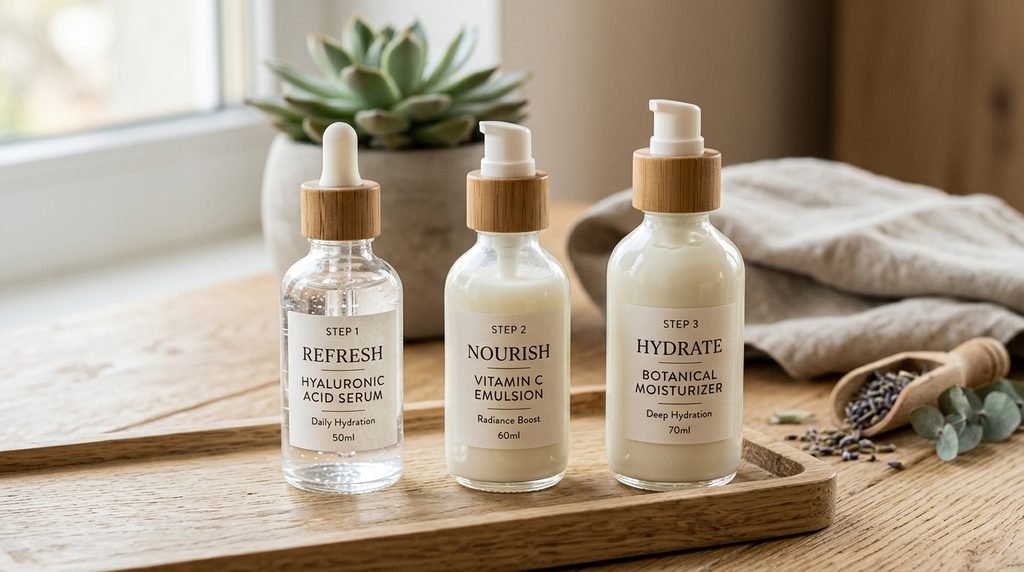
Understanding penetration science makes building an effective daily routine straightforward. The golden rule of skincare layering—applying products from thinnest to thickest consistency—is rooted directly in molecular physics.
- Water-based Serums First: Lightweight, water-based formulas contain low-viscosity vehicles that deliver small-molecule actives directly to clean skin without physical interference.
- Treatment Oils & Active Emulsions Middle: Medium-weight formulations carry lipophilic actives that align well with the lipid mortar of your skin barrier.
- Heavy Creams & Occlusives Last: Moisturizers contain large-molecule polymers, waxes, and heavy lipids designed to sit on top of the skin. They create an occlusive seal that prevents transepidermal water loss (TEWL).
If you apply a thick, occlusive moisturizer before your lightweight active serum, the large polymer film blocks the smaller actives from reaching the skin surface.
To learn how to structure your daily steps for maximum efficacy, explore our complete guide on [How to Layer Skincare]. Additionally, to see how signal molecules interact with this order, read our article on [Peptides 101].
Troubleshooting Product Absorption
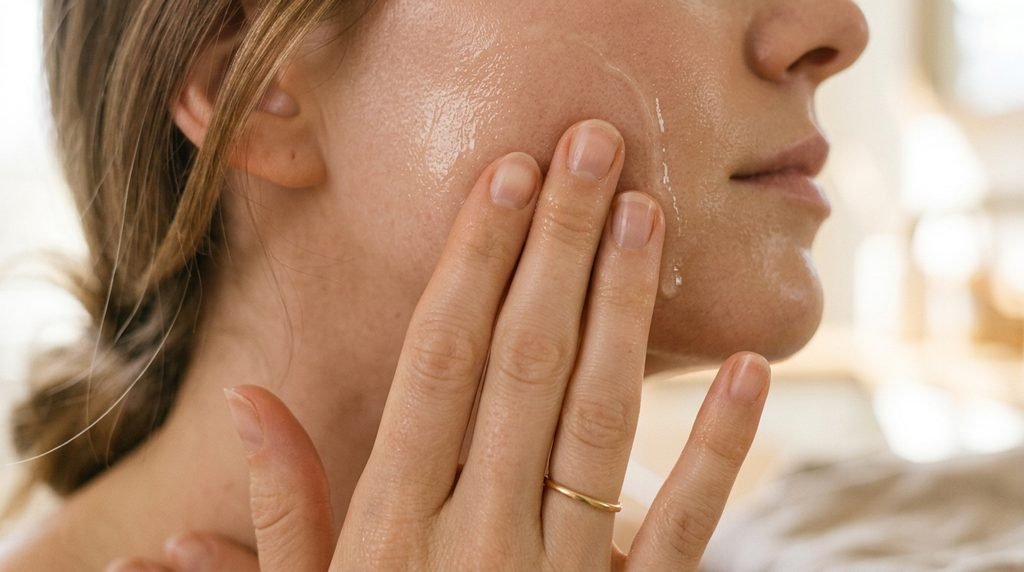
If your serums feel like they sit on top of your skin, pilling into tiny rolls or leaving a sticky film, one of three things is usually happening:
- Formulation Overload: Your serum may rely on high-molecular-weight film formers (like xanthan gum or high-MW HA) that are meant to sit on the surface.
- Saturated Stratum Corneum: Applying too many layers at once prevents fluid evaporation, leaving excess product sitting on the top layer.
- Disrupted Application Order: Applying an occlusive cream or heavy oil before a water-based serum creates an impenetrable barrier that prevents the serum from absorbing.
Focusing on well-formulated products with appropriate molecular weights ensures your skincare routine works in harmony with your skin’s natural biology.
Frequently Asked Questions

Q: Does hyaluronic acid actually penetrate deep into the skin?
A: No. Standard hyaluronic acid has a large molecular weight (over 1,000,000 Daltons) and stays on the skin’s surface to trap moisture. Low-molecular-weight versions reach the upper stratum corneum, but topical hyaluronic acid does not penetrate into the deeper dermis.
Q: What does bioavailability mean in skincare formulas?
A: Bioavailability refers to the amount of an active ingredient that successfully reaches its target location in a stable, usable form. It depends on factors like molecular size, formula pH, oil-solubility, and encapsulation technology.
Q: Why should I layer skincare products from thinnest to thickest?
A: Thin, water-based serums deliver smaller active molecules directly to clean skin without obstruction. Applying heavy creams first creates an occlusive film that blocks smaller molecules from reaching the skin barrier effectively.
Q: Can skincare products penetrate deep enough to boost collagen?
A: Topical ingredients do not directly deliver collagen into the dermis, as collagen molecules are far too large. Instead, small actives like retinol support the skin’s natural cellular processes in the epidermis to encourage collagen production.
Q: Why do some serums feel like they just sit on top of my skin?
A: This usually happens when a serum contains large-molecule film formers, when too much product is applied at once, or when applied over an occlusive product. It can also occur if the skin barrier is already fully saturated.
Q: What types of molecules pass through the skin barrier most easily?
A: Small, lipid-soluble (fat-loving) molecules with a molecular weight under 500 Daltons pass through most easily. Uncharged molecules with balanced pH levels also navigate the lipid pathways of the skin barrier more effectively.