Executive Summary

Always apply your face serum before moisturizer, because water-based serums have smaller molecules and thinner textures that need direct contact with clean skin before heavier creams seal everything in. Putting moisturizer on first creates a barrier that can block active ingredients from reaching your skin effectively. In this quick, practical guide, you’ll learn why the thinnest-to-thickest skincare order works, where sunscreen fits into your morning lineup, how long to wait between layers, and the few genuine exceptions—such as oil-based serums and retinol buffering—where applying serum after cream actually makes sense.
Standing over the bathroom sink with two bottles in hand and wondering which one goes on first is a classic skincare moment. You want your ingredients to actually work, not sit uselessly on top of your face or pill under your makeup.
If you’ve ever asked yourself whether to apply serum before or after moisturizer, the answer is straightforward: serum goes before moisturizer. (While full routines involve toners, essences, and eye creams, this guide focuses specifically on getting the serum-and-moisturizer order right—you can check our full How to Layer Skincare guide for multi-step routines.) Below, we’ll break down why order matters, the exact morning and night sequence, and the few exceptions where flipping the script helps your skin.
Why Serum Goes Before Moisturizer (The Thinnest-to-Thickest Rule)

Skincare layering follows one reliable physical principle: apply products from thinnest consistency to thickest consistency.
Most face serums are water-based fluids packed with concentrated, lightweight ingredients like hyaluronic acid, niacinamide, or vitamin C. Because they contain fewer heavy oils and waxes, they can sink into the upper layers of your epidermis quickly when applied to freshly cleansed skin.
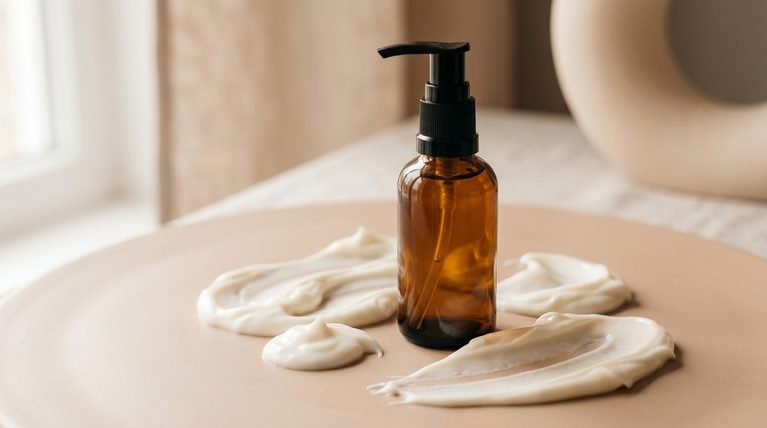
Moisturizers, on the other hand, are formulated with emollients and occlusives—ingredients like shea butter, dimethicone, and ceramides—designed to slow down water loss. If you spread a rich cream over your face first, it forms a protective seal on the surface. Applying a watery serum on top of that seal means your actives end up sitting on top of the cream rather than reaching your skin. For a closer look at how these two formulas differ, read Serum vs. Moisturizer and How Serums Penetrate Skin.
The Exact Morning and Night Order (With Sunscreen)

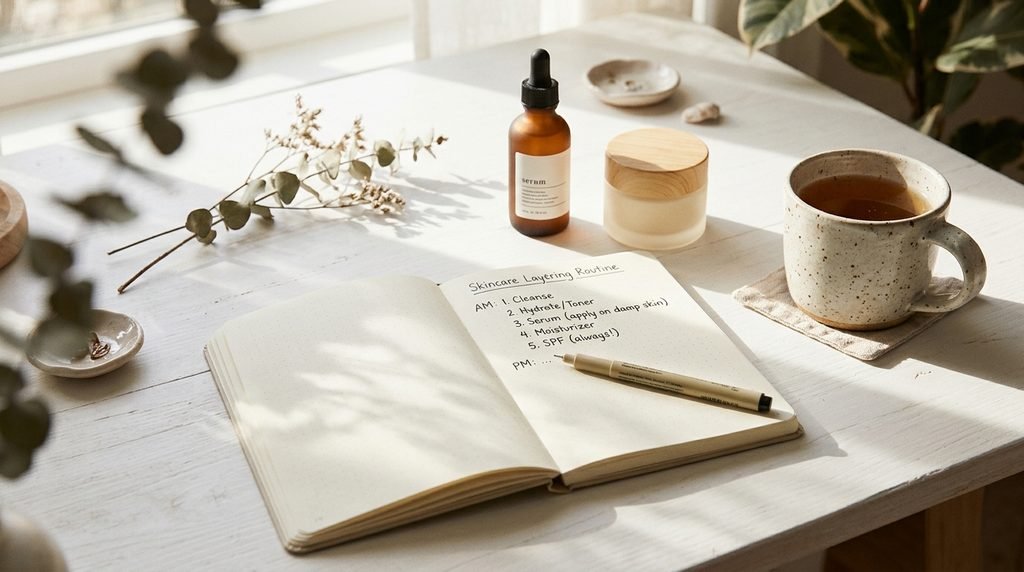
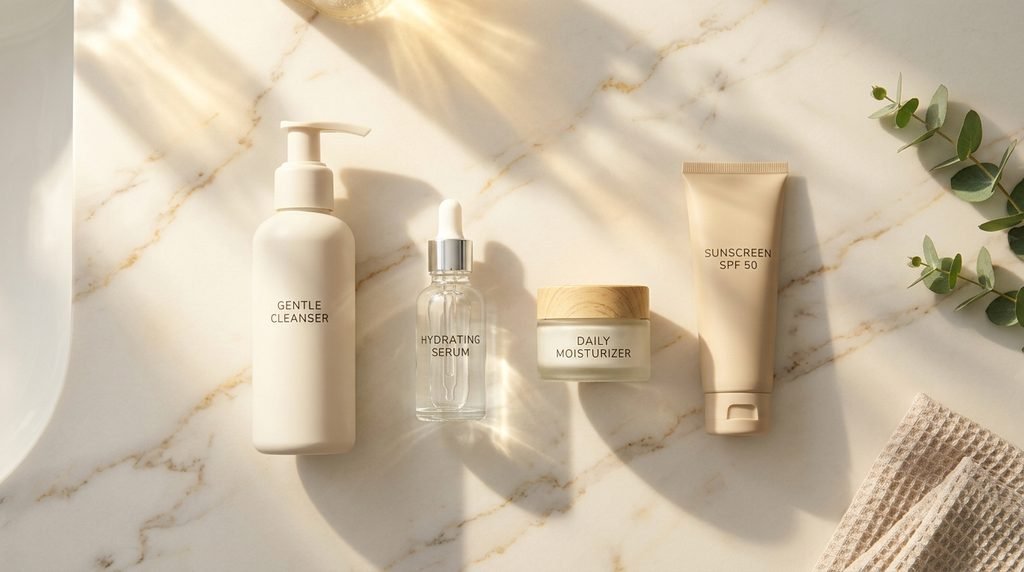
Whether you’re getting ready for work or winding down before bed, the core sequence between cleansing, serum, and cream stays identical. The only real difference is adding broad-spectrum sunscreen as your final daytime shield.
| Step | Product Type | Why It Goes Here |
| 1. Cleanse | Gentle facial cleanser | Removes oil, sweat, and debris so active ingredients meet clean skin |
| 2. Treat | Face serum (water-based) | Delivers concentrated active ingredients directly into the upper epidermis |
| 3. Hydrate & Seal | Moisturizer (lotion or cream) | Locks in the serum’s hydration and reinforces your outer moisture barrier |
| 4. Protect (AM Only) | Broad-spectrum sunscreen | Forms an even, uninterrupted UV shield over your finished routine |
Never apply serum over sunscreen. Sunscreen needs to sit as an undisturbed film on the very surface of your skin to protect you evenly from UV rays—rubbing a liquid serum over it breaks up that protective layer.
How Specific Serums Fit In (Vitamin C, Hyaluronic Acid, and Retinol)

Even though the basic rule stays the same, popular serum ingredients each have small application habits that help them perform better.
- Hyaluronic acid serum: Apply before moisturizer while your skin is still slightly damp from washing. Humectants pull water in, and following immediately with moisturizer traps that moisture so dry indoor air doesn’t draw it back out.
- Vitamin C serum: Apply right after cleansing and drying your face in the morning, followed by moisturizer and sunscreen. Putting vitamin C underneath cream lets its antioxidant properties support your skin against daytime environmental stress.
- Niacinamide serum: Smooth on before moisturizer morning or night. Its lightweight, water-based texture absorbs within seconds and pairs smoothly under almost any daily lotion.
- Retinol serum: Typically applied before moisturizer at night on dry skin—unless your skin is sensitive and needs buffering, which we’ll cover next. For proper drop counts and pressing techniques, check How to Apply Face Serum Correctly.
Three Exceptions Where Serum Can Go After Moisturizer

While water-based serums belong underneath your cream, skincare isn’t completely rigid. There are three practical situations where applying a serum after—or alongside—your moisturizer makes complete sense.
1. Oil-Based Facial Serums

Not every bottle labeled “serum” is water-based. Facial oil serums made with squalane, rosehip oil, or jojoba oil act as occlusives rather than watery treatments. Because oil repels water, putting an oil serum on first blocks a water-based moisturizer from sinking in. Apply water-based moisturizer first, then press two or three drops of oil serum on top to seal everything in. Learn how to tell them apart in Water-Based vs. Oil-Based Serums.
2. Buffering Strong Retinol for Sensitive Skin
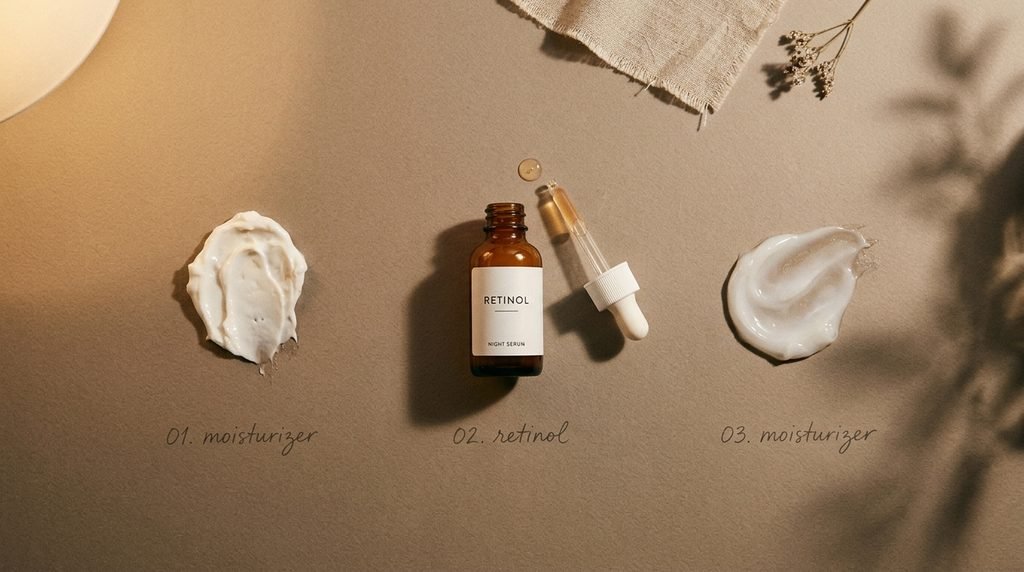
If you’re new to retinol or dealing with dryness, applying a potent retinoid directly onto bare skin can cause redness and flaking. Many dermatologists suggest the “buffering” or “sandwich” method: apply a thin layer of plain moisturizer first, wait a few minutes, apply your retinol serum, and optionally top with another light layer of cream. You trade a tiny bit of absorption speed for much better barrier comfort.
3. Specific Product Directions

Occasionally, a specialized treatment or prescription topical is formulated specifically to be layered over moisturizer to minimize irritation. Always check the back of your bottle—manufacturer usage instructions override general layering rules.
How Long Should You Wait Between Serum and Moisturizer?

You don’t need to stand around in your bathrobe for ten minutes waiting for your serum to dry. In most routines, waiting 30 to 60 seconds—just until the serum feels tacky or absorbed rather than wet—is plenty of time before smoothing on your moisturizer.
The one exception is hyaluronic acid. Because hyaluronic acid works best when binding to surface water, applying your moisturizer right away while your skin still feels dewy helps lock hydration in before it evaporates.
According to general skincare layering guidance from the American Academy of Dermatology, allowing each lightweight layer a brief moment to settle before applying thicker creams or sunscreen helps prevent product pilling and ensures even coverage.
Can You Mix Your Serum Directly Into Your Moisturizer?

Mixing two drops of serum into a dollop of moisturizer in your palm sounds like a clever time-saver, and for gentle hydrators or soothing niacinamide, it works fine when you’re in a rush. People also use this trick to dilute a strong retinol serum during their first few weeks of use.
However, avoid doing this with pure L-ascorbic acid (vitamin C) or exfoliating acids. Mixing low-pH actives into a neutral cream shifts their pH balance and spreads the active unevenly across your face. Applying your serum first in its own thin layer gives you far more consistent, predictable results.
FAQ Section
Q: Should I apply serum before or after moisturizer?
A: Apply serum before moisturizer. Most face serums are lightweight and water-based, allowing active ingredients to reach the upper layers of skin easily. Applying a thicker moisturizer first creates an occlusive seal that can block water-based serums from absorbing properly.
Q: Should I apply moisturizer after serum at night?
A: Yes, always follow your evening serum with a moisturizer. Serums deliver concentrated active ingredients, while moisturizers supply emollients and occlusives that prevent overnight water loss and keep your skin barrier comfortable while you sleep.
Q: How long after serum should I apply moisturizer?
A: Wait about 30 to 60 seconds after applying your serum—just until it feels absorbed rather than wet on your skin—before applying moisturizer. If you’re using a hydrating hyaluronic acid serum, apply moisturizer right away while skin still feels slightly damp.
Q: Should I apply vitamin C serum before or after moisturizer?
A: Apply vitamin C serum before moisturizer in your morning routine, right after cleansing and drying your face. Following with moisturizer locks in hydration, and finishing with broad-spectrum sunscreen protects your skin from daytime UV exposure.
Q: Does retinol serum go before or after moisturizer?
A: Retinol serum generally goes before moisturizer on clean, dry skin at night. However, if you have sensitive or dry skin, you can apply a thin layer of plain moisturizer first to buffer the retinol and reduce potential redness or flaking.
Q: Can I apply serum after moisturizer and sunscreen?
A: No, never apply serum over moisturizer and sunscreen. Sunscreen must remain as an undisturbed protective film on the surface of your skin to shield against UV rays effectively, and layering serum on top disrupts that coverage.
Conclusion
Getting your skincare order right doesn’t require memorizing a dozen complicated steps—just remember serum before moisturizer for almost every water-based formula. Putting your lightweight serum on clean skin lets active ingredients reach where they’re needed, while following with moisturizer seals in hydration and keeps your barrier comfortable. Save post-moisturizer application strictly for heavy oil serums or when buffering strong retinol on sensitive skin.
Tonight, line up your cleanser, serum, and moisturizer from thinnest to thickest on your counter so your routine flows effortlessly every time.