Executive Summary

Sensitive skin doesn’t mean you have to abandon active serums altogether—it just requires a smarter, barrier-first approach. This guide breaks down how to layer serums safely without triggering redness, stinging, or barrier damage. You’ll discover the core principles of sensitive skin serum order, how to introduce gentler active forms like buffered vitamin C and encapsulated retinol, and how many products your skin can actually handle at once. We’ll also cover “buffering”—a game-changing technique that lets reactive skin tolerate potent ingredients by mixing or layering them with moisturizer. Whether you’re dealing with easily irritated skin or managing crossover concerns like rosacea, this minimalist routine provides a safe, step-by-step roadmap to healthy, glowing skin.
Hook-Up Paragraph
If you’ve ever applied a new serum only to be met with immediate stinging, flush redness, or a compromised skin barrier, you’re far from alone. Navigating the world of active skincare when your skin reacts to almost everything feels like walking through a minefield. The most common mistake? Stacking too many concentrated formulas at once or following aggressive layering rules designed for resilient skin types. Learning how to layer serums for sensitive skin isn’t about avoiding effective ingredients entirely; it’s about choosing the right formulations, respecting your skin’s natural moisture barrier, and applying them in a deliberate, protective order. In this guide, you’ll learn the step-by-step rules for building a safe, effective serum routine that delivers real results without the irritation.
The Golden Rules: How Sensitive Skin Differs in Layering
Resilient skin can often handle three or four concentrated active serums stacked directly on top of each other twice a day. Sensitive skin, however, operates on a completely different set of rules. The primary goal for reactive skin is always barrier preservation. When your stratum corneum—the outermost layer of your skin—is easily disrupted, active ingredients penetrate deeper and faster than intended, causing rapid irritation, inflammation, and redness.
To prevent this overload, layering for sensitive skin relies on three fundamental adjustments:
- Minimalist Product Count: Limit yourself to a maximum of 1 to 2 serums per routine. Stacking multiple potent formulas drastically increases the chance of ingredient clashes and irritation.
- Consistency Over Concentration: Low-percentage actives used consistently twice a week yield far better long-term results than high-strength treatments that break your barrier every few days.
- Extended Patch Testing & Slow Introduction: Never introduce two new serums at the same time. Space new product introductions at least two to three weeks apart so you can immediately identify the source of any adverse reaction.
By shifting your mindset from aggressive treatment to supportive maintenance, you allow active ingredients to do their job without setting off an inflammatory cascade.
Step-by-Step Gentle Serum Routine Order
Order matters immensely when your skin is prone to reactivity. As a general rule, skincare products are applied from thinnest consistency to thickest consistency, starting with water-based treatments and ending with rich occlusives. However, for sensitive skin, ingredient function takes priority over texture. Always prioritize hydrating, barrier-supportive ingredients first to create a protective cushion before introducing any mild active.
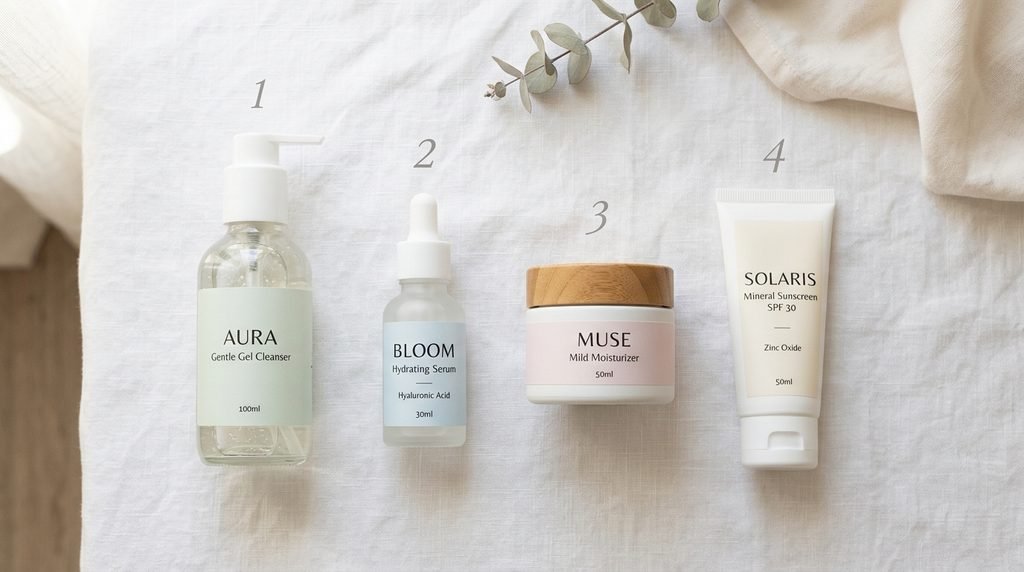
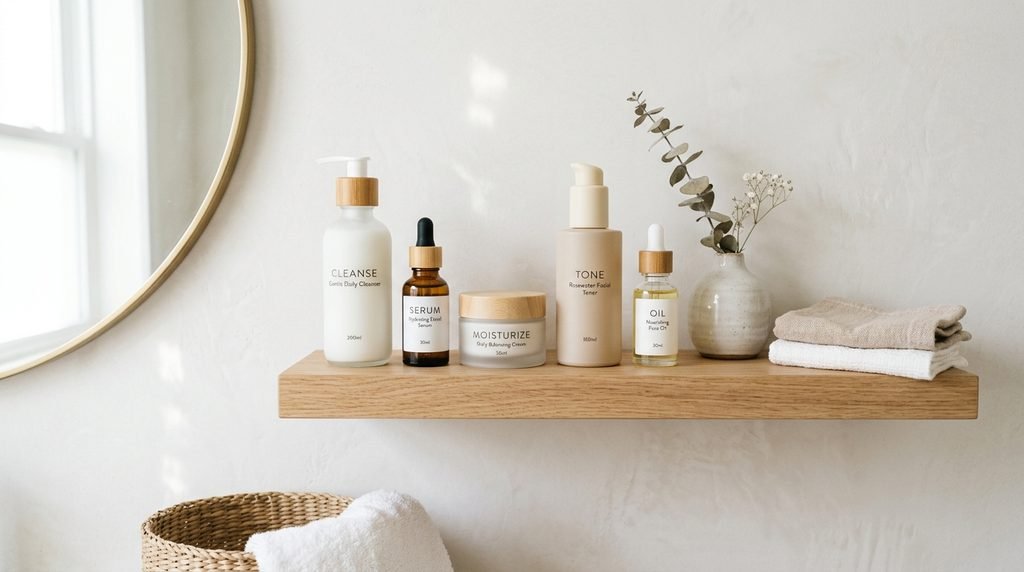
Here is the ideal daily order for a minimal, barrier-first serum routine:
| Routine Step | Product Category | Primary Function | Sensitive Skin Focus |
| Step 1 | Gentle Cleanser | Cleanse without stripping | Fragrance-free, non-foaming cream or gel |
| Step 2 | Hydration Base | Water-binding & calming | Hyaluronic acid, panthenol, or centella asiatica |
| Step 3 | Mild Active Serum | Targeted care | Buffered vitamin C (AM) or encapsulated retinol (PM) |
| Step 4 | Barrier Moisturizer | Seal in moisture & support lipids | Ceramides, fatty acids, and squalane |
| Step 5 (AM) | Mineral Sunscreen | UV Protection | Pure zinc oxide or titanium dioxide filter |
Always wait 60 to 90 seconds between applying your hydrating base and your mild active. Applying serums onto soaking wet skin speeds up absorption, which can increase the stinging sensation of active compounds.
What is “Buffering” in Skincare? (And Why Sensitive Skin Needs It)
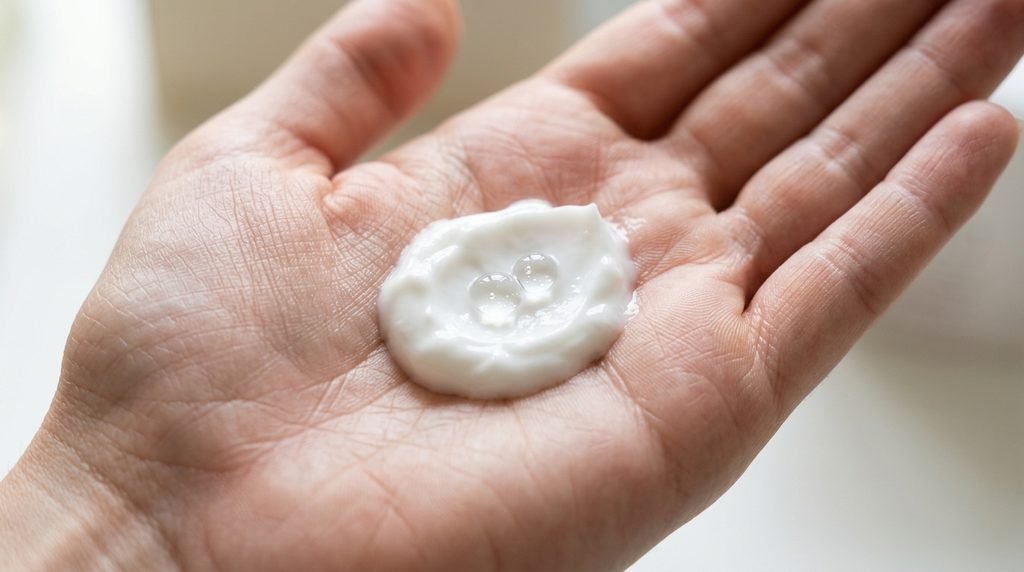
If your skin stings when applying active ingredients directly onto freshly cleansed skin, buffering is the ultimate technique to add to your routine. Buffering simply means diluting or cushioning an active serum by mixing or layering it with a plain, fragrance-free moisturizer.
There are two primary ways to buffer your serums:
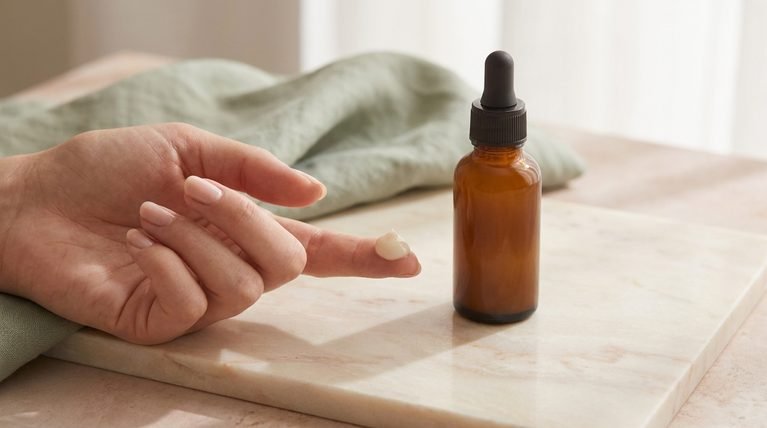
- The Mix Method: Dispense a pea-sized amount of your bland ceramide moisturizer into your palm, add 1–2 drops of your active serum, mix them together, and apply them as a single step.
- The Sandwich Method: Apply a thin layer of basic moisturizer first, let it absorb for two minutes, apply your active serum, and then seal everything in with a second light layer of moisturizer.
[Cleanse Skin] ──► [Layer 1: Basic Moisturizer] ──► [Layer 2: Active Serum] ──► [Layer 3: Basic Moisturizer]
Buffering slightly slows down the penetration rate of active molecules into the epidermis. It does not destroy the efficacy of the ingredient; instead, it delivers the active gradually over time, giving your skin cells a chance to adapt without kicking off a flare-up. This method is particularly effective when starting low-dose retinoids or mild exfoliating acids.
For a deeper look into restoring a compromised skin barrier before starting actives, check out our guide on What Causes a Damaged Skin Barrier.
Actives Tolerated vs. Actives to Avoid
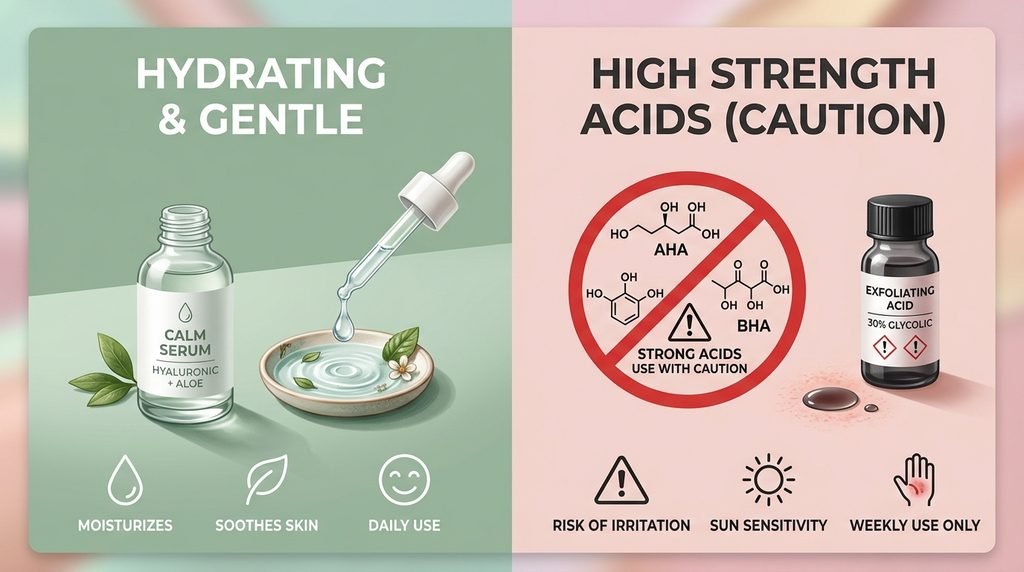
Having reactive skin doesn’t mean you are locked out of anti-aging or brightening ingredients permanently. It simply means you must choose derivative forms designed for gradual delivery rather than high-strength, acidic formulas.
Ingredients Sensitive Skin Tolerates Well
- Hyaluronic Acid & Polyglutamic Acid: Exceptional humectants that draw moisture into the skin without altering pH balance.
- Niacinamide (Low Dose, 2%–5%): Strengthens the lipid barrier, reduces transepidermal water loss, and calms redness. Avoid high 10% concentrations, which frequently trigger flushing in reactive types.
- Buffered Vitamin C (Sodium Ascorbyl Phosphate or THD Ascorbate): Unlike pure L-ascorbic acid, which requires a highly acidic pH (under 3.5) to penetrate, these derivative forms operate at a skin-neutral pH and cause far less irritation.
- Encapsulated Retinol: Encapsulation wraps the retinol molecule in a lipid shell, allowing slow release deep within the skin rather than releasing all at once on the surface.
High-Risk Combinations to Skip
Never stack high-percentage Alpha Hydroxy Acids (like glycolic acid) with retinoids in the same routine. Furthermore, avoid layering pure L-ascorbic acid with strong exfoliaters, as dropping the skin’s surface pH too low guarantees barrier damage. Keep your formulas strictly fragrance-free and essential-oil-free.
If your redness is concentrated across your cheeks and accompanied by visible capillaries, review our detailed breakdown on Rosacea and Serums to tailor your ingredient choices further.
How Many Actives Can Sensitive Skin Handle at Once?
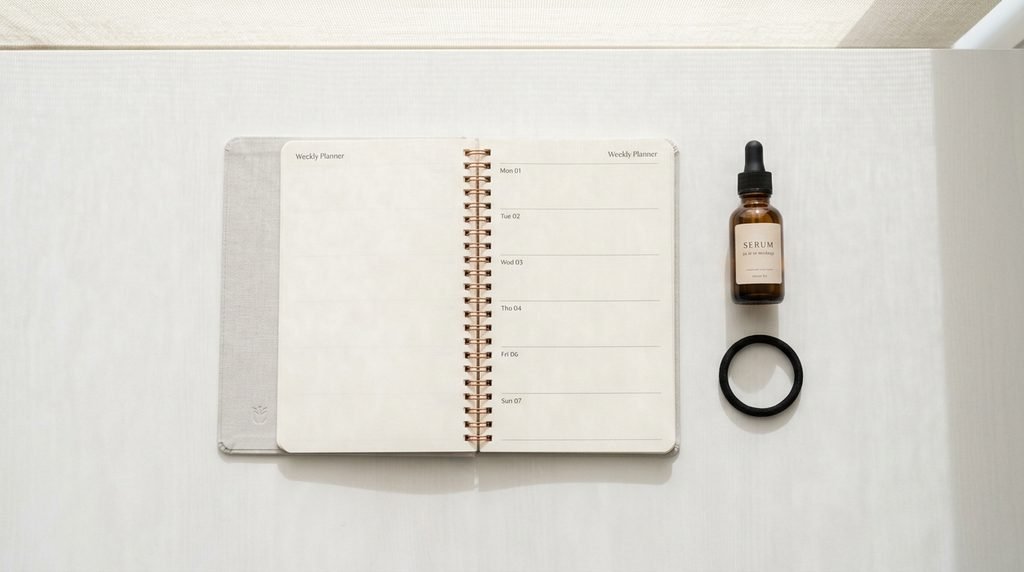
A common misconception in skincare culture is that more products yield faster results. For reactive skin, the safe threshold is strictly one active ingredient per routine, and usually no more than two active ingredients spread across your entire week.
If you use a mild vitamin C derivative in the morning, do not use a retinoid or exfoliating acid that same evening. Instead, rotate your actives on an alternating schedule:
- Monday Evening: Encapsulated Retinol (Buffered)
- Tuesday Evening: Rest & Recovery (Hydration & Ceramides Only)
- Wednesday Evening: Rest & Recovery (Hydration & Ceramides Only)
- Thursday Evening: Encapsulated Retinol (Buffered)
Spacing out active exposures ensures your skin spends more time in a state of barrier recovery than in a state of stimulation. For a full walkthrough on safely introducing new products, read our step-by-step guide on How to Introduce a New Serum.
To learn more about retinoid safety and tolerance building, refer to the ingredient safety guidelines published by the Cosmetic Ingredient Review (CIR) Safety Assessments.
Sensitive Skin vs. Rosacea: Knowing Your Skin’s Limits

It is essential to distinguish between general skin sensitivity and underlying chronic conditions like rosacea. Sensitive skin generally manifests as occasional dryness, mild tightness, or localized stinging in response to specific products or environmental changes. Rosacea, by contrast, is a chronic inflammatory vascular condition characterized by persistent central facial erythema, flushing triggers (heat, spicy food, alcohol), and sometimes papules.
If you suspect your sensitivity is linked to rosacea or a severely damaged barrier, eliminate all active serums immediately. Return to a basic three-step routine consisting of a gentle non-soap cleanser, a fragrance-free barrier repair cream, and a mineral sunscreen until your skin settles. Once baseline comfort is restored, you can reintroduce a gentle retinoid or hydrating serum using the principles outlined in our Retinol Basics Explained resource.
Conclusion
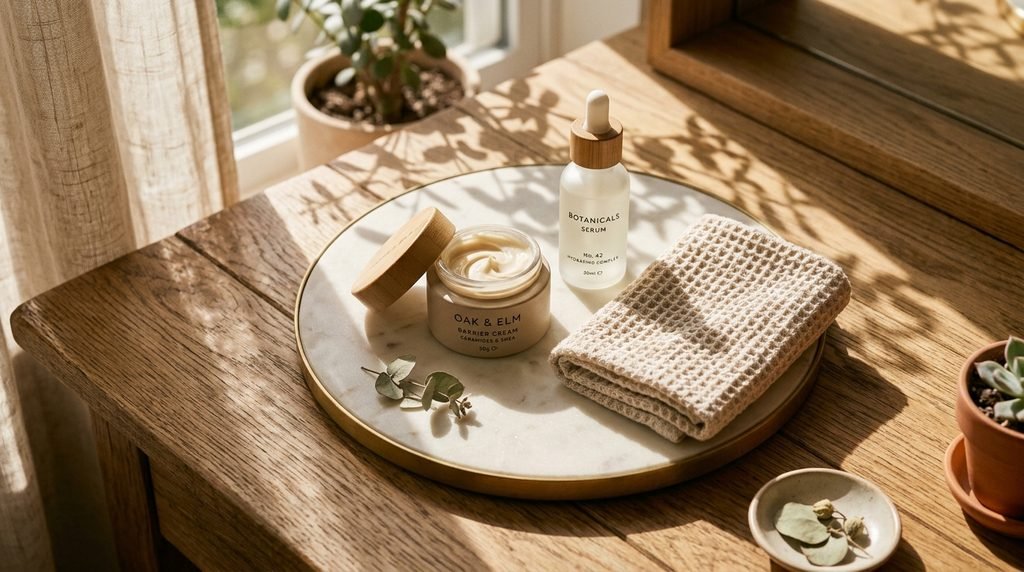
Mastering how to layer serums for sensitive skin comes down to patience, minimalist product selections, and a barrier-first strategy. By capping your active serum usage to one formula at a time, incorporating buffering techniques, and prioritizing hydrating ingredients like hyaluronic acid and panthenol, you can achieve your skin goals without compromising your skin barrier. Always listen to your skin’s immediate feedback: if tightness, burning, or redness occurs, pause your actives and focus on pure recovery. Ready to build your safest routine yet? Explore our full library of routine guides at SkinDepilex to find gentle, expert-backed strategies tailored to your exact skin concerns.
FAQ Section
Q: Can I layer hyaluronic acid and niacinamide together on sensitive skin?
A: Yes, hyaluronic acid and niacinamide pair exceptionally well for sensitive skin. Hyaluronic acid supplies hydration while niacinamide strengthens the moisture barrier and reduces redness. Choose a niacinamide concentration between 2% and 5% to avoid flushing, and apply hyaluronic acid first on slightly damp skin.
Q: What is the buffering technique for sensitive skin serums?
A: Buffering involves mixing a potent active serum with a simple, fragrance-free moisturizer or applying moisturizer right before your active serum. This slows the absorption rate of the active ingredient into the skin, significantly lowering the risk of irritation, stinging, and redness without eliminating the serum’s long-term benefits.
Q: How many active serums can sensitive skin tolerate at once?
A: Sensitive skin generally tolerates only one active serum per routine. Stacking multiple active ingredients simultaneously increases the likelihood of barrier disruption. It is best to use one active in the morning or alternate active serums on different evenings throughout the week to ensure adequate recovery time.
Q: Should sensitive skin avoid vitamin C serums entirely?
A: No, sensitive skin does not need to avoid vitamin C entirely. While high-strength L-ascorbic acid can trigger irritation due to its low pH, gentle derivative forms such as Sodium Ascorbyl Phosphate or THD Ascorbate are far better tolerated and provide strong antioxidant protection without causing stinging.
Q: What serum combinations should reactive skin always avoid?
A: Reactive skin should avoid combining high-percentage Alpha Hydroxy Acids (AHAs) like glycolic acid with retinoids in the same routine. Additionally, avoid layering pure vitamin C with strong exfoliating acids or combining multiple physical and chemical exfoliants, as these pairings rapidly strip the lipid barrier.
Q: How long should I wait between applying different serums?
A: Wait about 60 to 90 seconds between serum applications. This brief interval allows each layer to settle into the skin. When using active ingredients, ensure your hydrating base is completely absorbed before applying the active to prevent deeper, rapid penetration that can trigger stinging on sensitive skin.