Executive Summary

Learning how to apply face serum correctly comes down to five basic steps: cleanse your face, prep your skin to the right moisture level, dispense two to three drops, gently press the formula in, and seal it with moisturizer. Most people waste half their bottle by rubbing aggressively, applying potent actives onto soaking-wet skin, or layering in the wrong order.
This guide walks you through the exact application technique, breaks down when to apply serum on damp versus dry skin by ingredient type, and shares a practical do’s and don’ts table to fix common absorption issues. Whether you’re using a basic hydrating formula or a targeted antioxidant, these adjustments help your products sit better and work as intended.
You spent good money on a tiny glass bottle of face serum, only to watch half of it vanish onto your palms or pill up under your sunscreen. Sound familiar? Knowing how to apply face serum correctly makes the difference between a product that actually absorbs and one that just sits on the surface feeling sticky.
Most skincare guides tell you to “pat a few drops onto clean skin” and leave it at that. That advice misses the details that actually matter—like whether your face should be damp or bone-dry, and why rubbing creates unnecessary friction.
Below, you’ll get a clear, step-by-step method that works for everyday routines, plus ingredient-specific rules so you stop guessing every morning and night. (If you’re trying to figure out exact measurements or full multi-step routines, check out our guides on How Many Drops of Serum Should You Use? and How to Layer Skincare.)
The 5-Step Method for How to Apply Serum Correctly

To get the most out of your bottle without irritating your skin barrier, follow this standard sequence:
- Cleanse thoroughly: Wash your face with a gentle cleanser to remove oil, sunscreen, and debris that can block absorption.
- Prep your skin’s moisture level: Leave your face slightly damp for hydrating formulas, or pat it completely dry with a clean towel if you’re using potent actives.
- Dispense a small amount: Warm two to three drops between your fingertips—never touch the glass dropper directly to your skin.
- Press, don’t rub: Gently press and pat the serum across your cheeks, forehead, chin, and neck until it feels tacky rather than wet.
- Lock it in with moisturizer: Wait about 60 seconds, then apply a moisturizer over top to prevent water loss and seal the formula in.
Always check the label on your specific bottle first, as certain concentrated formulas have unique instructions from the manufacturer.
Should You Apply Serum on Damp or Dry Skin?

This is easily the biggest point of confusion in daily skincare. The short answer is that it depends entirely on what’s inside your bottle.
Hydrating Serums: Apply to Slightly Damp Skin

Humectant-based formulas—especially those built around hyaluronic acid, glycerin, or panthenol—act like tiny sponges that bind to water. If you apply them to completely dry skin in a dry room, they have less surface moisture to grab onto.
Misting your face or leaving a light sheen of water after cleansing gives humectants immediate hydration to pull toward the upper layers of your skin. For a deeper look at how these moisture-binding ingredients behave, read our breakdown on Understanding Hyaluronic Acid.
Potent Actives: Apply to Completely Dry Skin

Stronger targeted ingredients—such as retinoids, exfoliating acids (AHAs and BHAs), and high-strength L-ascorbic acid—behave differently when water is present. Damp skin is more permeable, which means water can speed up how quickly these ingredients enter the skin barrier.
Faster penetration often leads to stinging, redness, or flaking rather than better results. Give your skin five to ten minutes to air-dry after washing before applying potent actives, or explore our guide on What Is Vitamin C Serum? for specific morning prep tips.
Press vs. Rub: Why Your Application Technique Matters

Once the liquid is on your hands, resist the urge to massage it in like a heavy body lotion. Vigorous circular rubbing stretches delicate facial tissue and generates mild heat and friction.
Instead, spread the drops lightly across your fingertips, then press your palms and fingers flat against your face in gentle, lifting motions. Pressing distributes the thin liquid evenly across pores and fine lines without tugging at your skin.
Don’t stop at your jawline, either. Sweep whatever remains on your fingertips down onto your neck and chest, while keeping concentrated formulas away from the immediate lash line unless the label specifically says it’s eye-safe.
Serum Before or After Moisturizer? Timing and Layering Rules
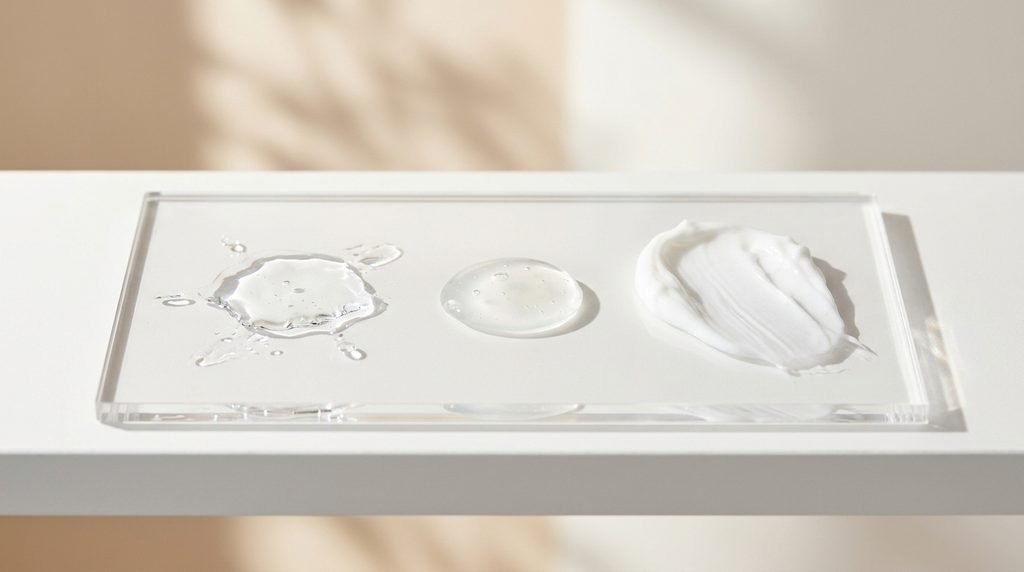
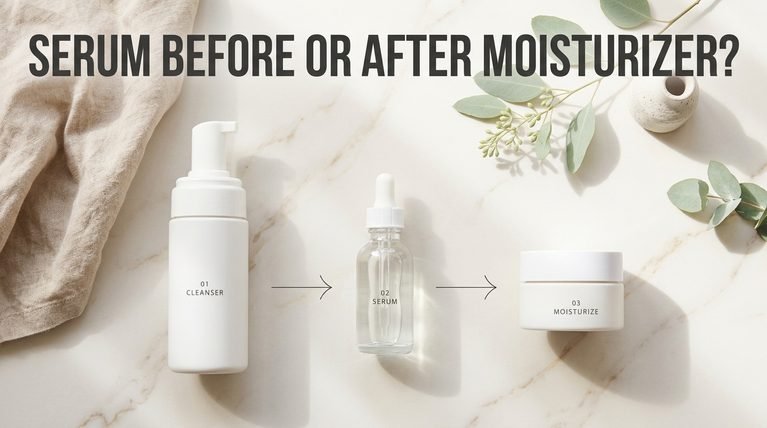
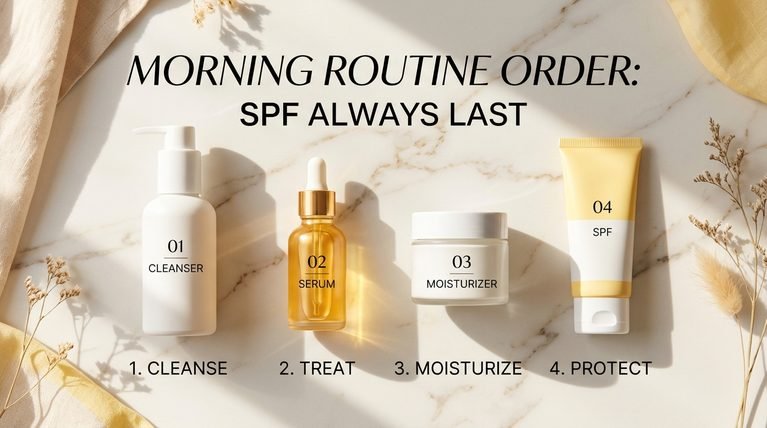
Think of your skincare routine in terms of molecular weight and texture: thinnest to thickest. Because serums are lightweight, water- or gel-based liquids packed with concentrated ingredients, they almost always go on before heavier creams or facial oils.
If you put a thick moisturizer on first, its occlusive ingredients create a seal on the surface. Applying serum afterward means those smaller molecules struggle to get past that barrier—a process we cover in detail in How Serums Penetrate Skin.
How long should you wait between layers? About 30 to 60 seconds is usually plenty. You want the serum to absorb until your skin feels softly hydrated rather than slippery, so your moisturizer glides smoothly instead of pilling into tiny balls. According to general skincare layering guidance from the American Academy of Dermatology, applying products in order of consistency helps each step perform effectively without interference.
Common Serum Application Mistakes (And How to Fix Them)
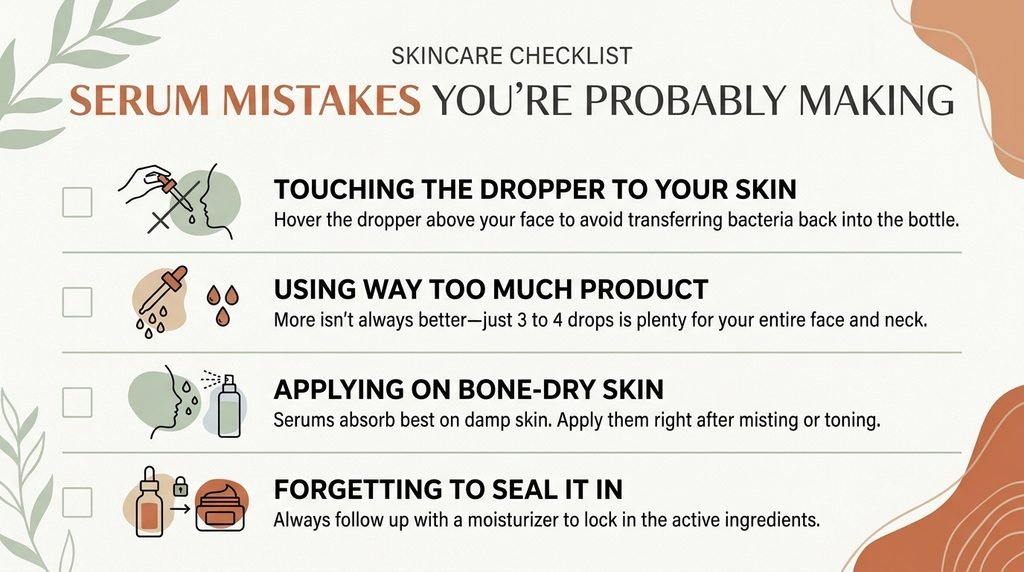
Even a great formula can underperform if small daily habits get in the way. Use this quick reference table to troubleshoot why your serum might be pilling, irritating your skin, or running out too fast.
| Mistake | Why It’s a Problem | What to Do Instead |
| Touching the dropper to your face | Transfers surface bacteria and oils back into the bottle, contaminating the formula. | Hover the dropper above your fingertips or palm and dispense drops without contact. |
| Using half a dropper full | Excess product sits on top of the skin, leading to sticky residue and pilling under makeup. | Stick to 2–3 pea-sized drops for your entire face and neck. |
| Applying retinoids to wet skin | Moisture increases permeability, raising the risk of dryness and surface irritation. | Pat dry and wait 5–10 minutes after cleansing before applying strong actives. |
| Skipping moisturizer afterward | Humectants can leave skin feeling tight if there is no cream to seal in hydration. | Follow every serum with a moisturizer suited to your skin type. |
| Layering conflicting actives | Mixing strong exfoliating acids with retinoids in one sitting can overwhelm your barrier. | Alternate potent actives between morning and night, or use them on different days. |
FAQ Section

Q: How do you apply face serum correctly?
A: Wash your face with a gentle cleanser, then leave skin slightly damp for hydrating serums or pat dry for potent actives. Dispense two to three drops onto clean fingertips, press the liquid gently onto your face and neck, wait about 60 seconds, and follow with moisturizer.
Q: Should you apply serum on damp or dry skin?
A: Apply hydrating serums containing humectants like hyaluronic acid or glycerin to slightly damp skin so they can bind to surface moisture. Apply potent actives such as retinoids, exfoliating acids, or high-strength vitamin C to completely dry skin to minimize the chance of irritation.
Q: Do you apply serum before or after moisturizer?
A: You should apply serum before moisturizer. Serums have a thinner, lightweight consistency designed to absorb quickly into the upper layers of skin, while thicker moisturizers contain occlusive ingredients that seal hydration in and prevent subsequent watery layers from penetrating properly.
Q: Should you rub or pat serum into skin?
A: Gently patting or pressing serum into your skin is commonly recommended over rubbing. Pressing uses light, flat-handed contact to distribute the formula evenly without creating unnecessary friction, stretching delicate facial skin, or causing product pilling.
Q: How long should you wait after applying serum before moisturizer?
A: Waiting roughly 30 to 60 seconds is typically enough time for a serum to absorb. Your skin should feel lightly hydrated and slightly tacky rather than wet or slippery before you smooth your moisturizer over the top.
Q: Why is my serum not absorbing and pilling on my skin?
A: Serum pilling usually happens when you apply too much product at once, layer incompatible silicone- and water-based formulas, or skip gentle exfoliation. Try cutting back to two or three drops, pressing the liquid in, and giving each layer a full minute to dry down.
Conclusion

Mastering how to apply face serum correctly doesn’t require an expensive twelve-step routine or complicated tools. It simply comes down to respecting your formula’s texture and your skin’s moisture level. Cleanse gently, match damp or dry skin to your active ingredients, press two to three drops into place, and always finish with a moisturizer to lock everything in.
Take a look at the serum sitting on your bathroom counter tonight. Check its primary ingredient, adjust whether you apply it on damp or dry skin, and notice how much better it absorbs over the next week. Want to make sure your entire routine is in the right order? Head over to our full guide on How to Layer Skincare next.