Executive Summary

How often you should use a face serum comes down to two things: what active ingredient is inside the bottle and how much your skin can comfortably tolerate. Gentle hydrating serums like hyaluronic acid or low-strength niacinamide are typically safe to apply once or twice daily, while stronger resurfacing or cell-turnover actives like retinol and exfoliating acids work best when introduced two to three nights a week. In this guide, you’ll find a practical ingredient-by-ingredient schedule, clear advice on morning versus evening application, and early warning signs that mean it’s time to scale back before irritating your skin barrier.
Standing in front of the bathroom mirror with a fresh dropper bottle always brings up the same question: should this go on every single day, or only a few times a week? The label rarely gives you the whole picture, and copying someone else’s ten-step routine can leave your face red, tight, or flaking within days.
Figuring out how often should you use a face serum isn’t about following a rigid universal rule. Instead, it’s about matching your application schedule to the specific ingredient in your hands and paying attention to how your skin responds over time. (While we’ll touch briefly on timing, this guide focuses specifically on weekly frequency rather than how many drops to dispense or step-by-step layering order.) Below, you’ll find realistic starting schedules for the most common serum ingredients, guidance on twice-daily use, and clear cues for adjusting your pace.
The Honest Answer: It Depends on the Active Ingredient
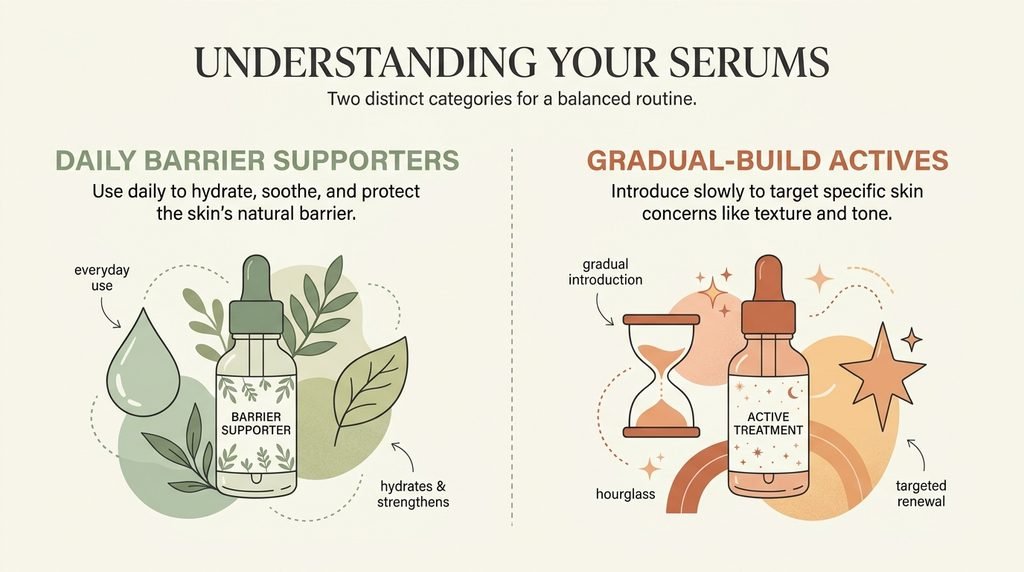
Not all serums behave the same way once they touch your skin. Treating a gentle moisture booster the exact same way you treat a potent resurfacing acid is one of the fastest ways to overwhelm your skin barrier.
Think of face serums in two broad categories: daily barrier supporters and gradual-build actives. Daily barrier supporters—such as hyaluronic acid, glycerin, panthenol, and mild niacinamide—replenish water and calm surface redness without speeding up skin cell shedding. Most people can use them every day right away without an adjustment period.
Gradual-build actives—like retinoids, alpha hydroxy acids (AHAs), beta hydroxy acids (BHAs), and high-strength pure vitamin C—change how quickly surface cells turn over or work at low pH levels. Starting these two or three times a week gives your skin time to adapt comfortably before you consider increasing frequency. Always treat suggested schedules as starting points and check the specific product directions on your bottle first.
Serum Frequency Cheat Sheet: Schedule by Ingredient
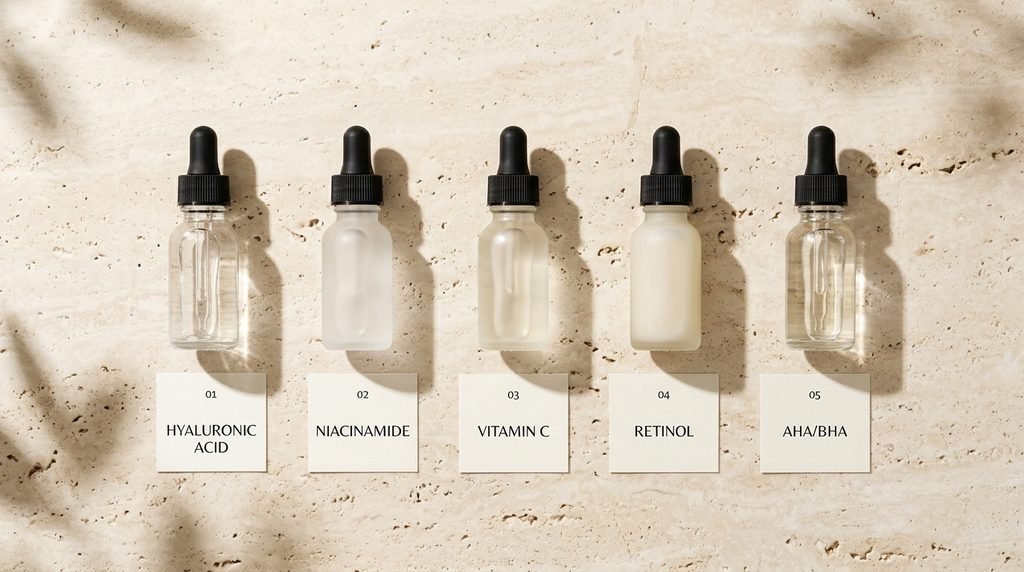
Use the breakdown below as a practical baseline when building your weekly routine. If your skin leans dry or reactive, stay on the conservative end of each range for at least three to four weeks before stepping up.
| Serum Ingredient | Typical Starting Frequency | When to Increase | Key Caution |
| Hyaluronic Acid / Glycerin | 1–2 times daily (AM and/or PM) | Can be used twice daily from day one | Apply to slightly damp skin and seal with moisturizer so it doesn’t feel tight |
| Niacinamide (2%–5%) | Once daily (AM or PM) | Increase to twice daily after 1–2 weeks if comfortable | High concentrations (10%+) can cause flushing or small bumps if overused |
| Vitamin C (L-Ascorbic Acid) | 3–4 mornings per week (or once daily if resilient) | Move to every morning after 2–3 weeks with zero stinging | Pair with daily broad-spectrum sunscreen; pause if oxidation turns it dark brown |
| Retinol / Retinaldehyde | 2 nights per week (non-consecutive) | Add one extra night every 2–3 weeks as tolerated | Avoid combining on the same night as exfoliating acids; expect slow progress |
| Exfoliating Acids (AHA / BHA) | 1–2 nights per week | Increase to 2–3 nights per week only if texture feels rough | Overuse quickly strips surface lipids and causes persistent redness |
For deeper guidance on pacing a brand-new bottle from week one, check out our step-by-step guide on How to Introduce a New Serum.
Can You Use a Face Serum Twice a Day (Morning and Night)?

Applying a face serum both morning and night works wonderfully—provided you pick ingredients designed for twice-daily comfort. Hydrating and barrier-supporting formulas actually shine when used twice a day because they continuously replenish moisture lost to indoor heating, air conditioning, and outdoor wind.
For example, pressing a hyaluronic acid or polyglutamic acid serum onto damp skin after your morning cleanse and again before bed keeps your skin looking plump and balanced all week. Similarly, a gentle 4% to 5% niacinamide serum fits easily into both ends of your routine without causing photosensitivity.
What shouldn’t you use twice a day? Strong exfoliating acids, retinoids, and high-dose pure ascorbic acid. Doubling up on aggressive actives morning and night rarely speeds up visible results; instead, it exhausts your moisture barrier and leads to dryness, peeling, and sensitivity. Split your actives strategically—keep antioxidants for daytime defense and save retinoids or exfoliants for evening recovery. You can compare timing strategies in our Morning vs. Night Serum Routines guide.
How to Pace Specific Popular Serums

Even with a cheat sheet in front of you, individual ingredients have quirks worth knowing before you lock in your calendar.
Vitamin C Serum
Most people get the best results using vitamin C once daily in the morning, right before moisturizer and sunscreen, so its antioxidant properties help defend against daytime environmental stress. If you are using a potent 15% to 20% L-ascorbic acid formula for the first time, start every other morning for two weeks. Learn more about concentrations and derivatives in What Is Vitamin C Serum?.
Retinol and Retinoid Serums

Retinol rewards patience far more than frequency. Applying it two nights a week—say, Tuesday and Friday—gives your skin cells time to adjust without triggering heavy flaking. Only step up to three or four nights a week once your skin feels completely calm on your off-nights. For more foundational tips, read Retinol Basics Explained.
Niacinamide and Hyaluronic Acid Serums

Both of these crowd-pleasers are flexible enough for daily use, either solo or layered together. If you already use a moisturizer containing niacinamide, applying a separate niacinamide serum once a day is usually plenty—you don’t need to layer multiple high-percentage formulas back to back.
Signs You Are Using Your Serum Too Often (and When to Scale Back)
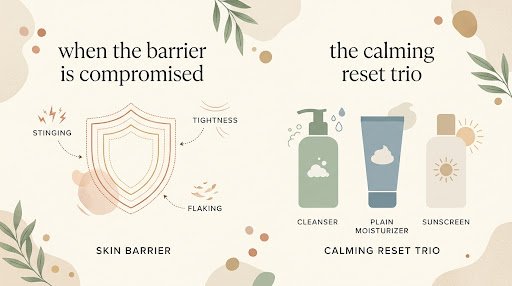
More frequent application doesn’t equal better skin. In fact, pushing past your skin’s natural tolerance threshold reverses your progress by weakening your outer moisture barrier.
Watch closely for these early signs that you’re overdoing your serum schedule:
- Persistent stinging or burning when you apply basic, bland products like plain moisturizer or gentle cleanser.
- Tight, shiny-looking skin that feels dry underneath even after you put on cream.
- Unexplained redness, flushing, or rough flaky patches around the nose, chin, or cheeks.
- Sudden clusters of tiny irritation bumps in areas where you don’t normally break out.
According to general skincare guidance from the American Academy of Dermatology, scaling back active products at the first sign of irritation helps prevent long-term barrier disruption. If you notice these warning signals, stop all strong actives immediately. Stick to a gentle cleanser, a simple ceramide moisturizer, and broad-spectrum sunscreen for one to two weeks until your skin feels calm again, then reintroduce your serum at half the previous frequency. Read more about recovery in What Causes a Damaged Skin Barrier.
Do You Need to Take Breaks From Using Face Serum?

You’ve probably heard the myth that your skin “gets used to” a serum and stops responding unless you take regular breaks. In reality, your skin doesn’t build up immunity to well-formulated skincare ingredients.
If a daily hydrating serum or morning antioxidant keeps your skin looking smooth, comfortable, and radiant, there’s no biological reason to stop using it every few months. Consistent, steady support is actually what maintains those results over time.
The only times a break makes sense are practical ones: when your skin shows signs of irritation, right before or after professional facial procedures, or when seasonal weather shifts change what your skin needs—such as pausing a stronger exfoliating serum during harsh, dry winter months.
FAQ Section

Q: Is it okay to use face serum every day?
A: Yes, it is completely fine to use gentle, hydrating face serums like hyaluronic acid, glycerin, or mild niacinamide every day. However, stronger active serums containing retinol or exfoliating acids should typically be started two to three times a week and increased gradually based on how your skin tolerates them.
Q: How many times a day should I use a face serum?
A: Most people use a face serum once or twice a day—once in the morning and once at night. Hydrating serums work well twice daily, while targeted actives like vitamin C are usually best once in the morning, and retinol or exfoliating acids should be limited to once at night.
Q: What happens if you use face serum too often?
A: Using potent active serums too frequently can overwhelm your skin’s outer moisture barrier. Common signs of overuse include persistent redness, stinging when applying plain moisturizer, tightness, dry flaking, and small irritation bumps. Scaling back to a gentle cleanser and moisturizer usually helps skin recover within one to two weeks.
Q: Should I use vitamin C serum every day or every other day?
A: If your skin tolerates vitamin C well, applying it once every morning offers consistent antioxidant support alongside your sunscreen. Beginners or anyone with sensitive skin should start every other morning for the first two weeks before moving up to daily use.
Q: Do I need both a face serum and a moisturizer?
A: Yes, in most routines they serve different roles. A serum delivers concentrated, lightweight active ingredients into the upper layers of skin, while a moisturizer provides emollients and occlusives that seal in hydration and protect your moisture barrier from drying out.
Q: Which two serums should not be used together in the same routine?
A: Avoid layering strong exfoliating acids (like glycolic or salicylic acid) directly with retinoids or high-strength pure L-ascorbic acid in the exact same application. Combining multiple potent actives at once increases dryness and stinging—use vitamin C in the morning and alternate acids and retinoids on separate nights instead.
Conclusion
Finding the right schedule for your face serum doesn’t require guesswork once you separate gentle daily hydrators from slow-build actives. Start conservatively—applying hydrating serums once or twice a day, antioxidants once each morning, and retinoids or exfoliating acids just two nights a week—then let your skin’s comfort guide any increases. Consistency always beats intensity when it comes to healthy, balanced skin.
Take a quick look at the serum bottles on your counter tonight, check the primary active ingredient on each label, and map out a simple weekly schedule your skin can actually enjoy.