Executive Summary
Finding what is the best sunscreen for oily skin comes down to matching formula features rather than chasing a single brand name. Look for a lightweight gel or water-fluid texture labeled non-comedogenic, oil-free, and broad-spectrum SPF 30 or higher with a natural or soft-matte finish. Even if your T-zone produces plenty of shine by noon, natural sebum does not block ultraviolet rays, making daily sun protection essential. In this criteria-based guide, you’ll learn why oily skin needs SPF, how mineral and chemical filters compare for shine control, which textures layer cleanly under makeup without clogging pores, and practical ways to apply and reapply without feeling greasy.
If you’ve ever skipped morning sunscreen because the last bottle turned your forehead into a mirror by ten o’clock, you’re not alone. Heavy, rich sunblocks often sit on top of oily skin like plastic wrap, feeling suffocating and triggering midday congestion.
When searching for what is the best sunscreen for oily skin, the real secret isn’t buying the priciest bottle on the shelf—it’s knowing how to read the texture and finish cues on the label. Once you pick a lightweight, non-comedogenic formula designed for excess sebum, daily sun protection feels comfortable instead of sticky. Below, we’ll bust the biggest oily-skin SPF myth, compare gel, fluid, mineral, and chemical options, and share practical layering habits that keep shine in check.
Why Oily Skin Still Needs Sunscreen Every Day

One of the most stubborn skincare myths is that oily skin has built-in sun protection because natural sebum keeps the surface lubricated. In reality, facial oil offers zero defense against ultraviolet radiation.
Skipping sunscreen leaves oily complexions just as vulnerable to UV-induced collagen breakdown, uneven dark spots, and long-term sun damage as dry skin. Even worse, unprotected UV exposure actually triggers low-grade surface inflammation that can prompt sebaceous glands to produce more oil over time.
If you use active ingredients to manage excess shine or post-blemish marks—like salicylic acid, niacinamide, or evening retinoids—daily sun protection becomes even more critical, since resurfacing actives leave fresh skin cells more sensitive to sunlight. According to sun-protection guidelines from the American Academy of Dermatology, everyone needs a broad-spectrum, water-resistant sunscreen with an SPF of 30 or higher every day, regardless of skin type.
What to Look For in a Sunscreen for Oily Skin (5 Key Criteria)
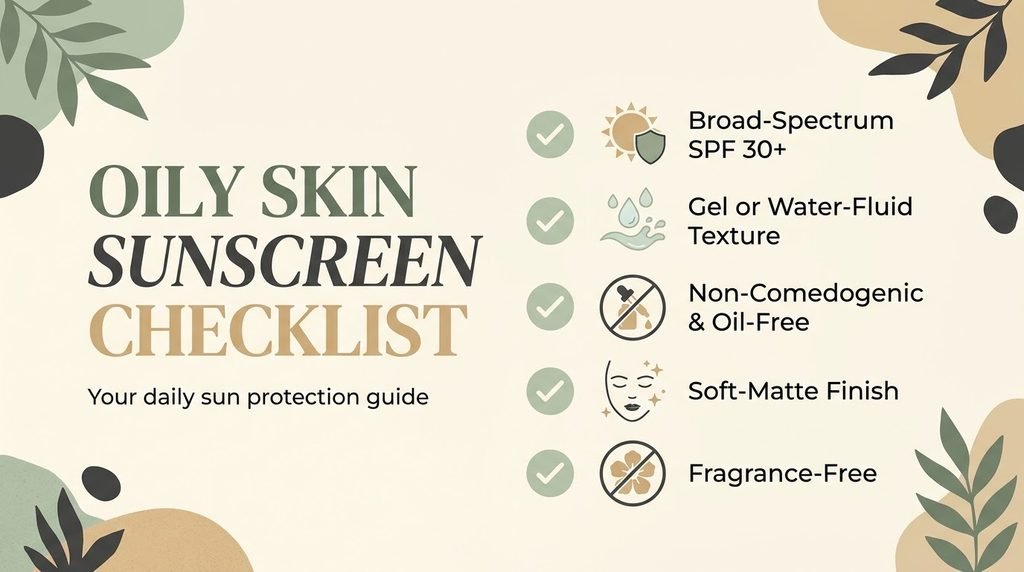
Instead of memorizing dozens of product names, scan the front and back of any sunscreen bottle for five straightforward traits.
- Broad-spectrum SPF 30 or higher: “Broad-spectrum” ensures the formula shields against both UVA rays (which drive premature aging and uneven tone) and UVB rays (which cause sunburn). SPF 30 blocks about 97% of UVB rays when applied generously.
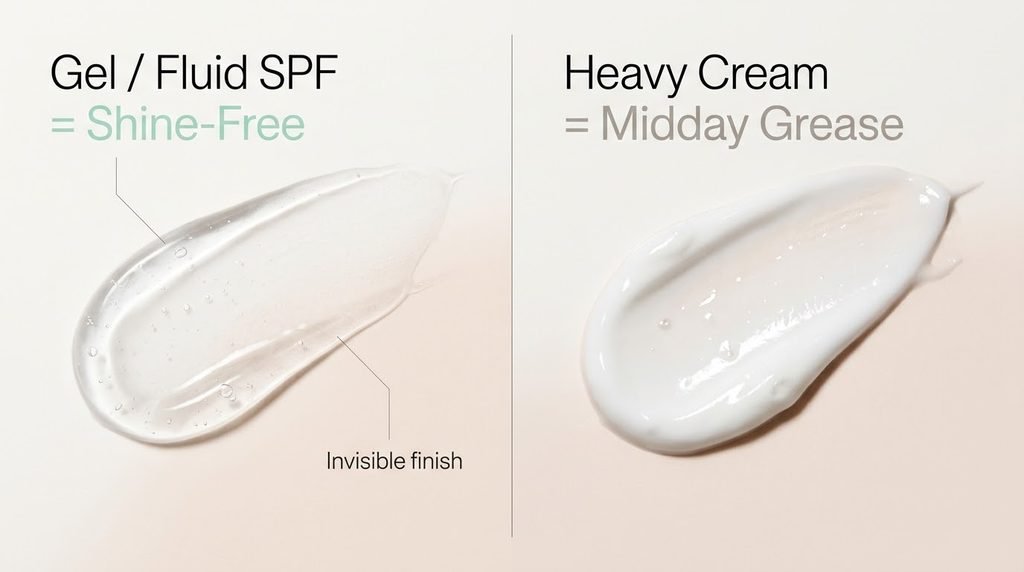
- Lightweight gel, water-fluid, or serum texture: Heavy creams rely on rich emollients and waxes that feel suffocating on oily skin. Water-based gels and thin fluids absorb quickly and leave minimal residue.
- Non-comedogenic and oil-free labeling: While no label guarantees zero breakouts for every individual, “non-comedogenic” indicates the formula avoids known pore-clogging heavy oils and butters.
- Soft-matte or natural skin finish: Look for supporting ingredients like silica, niacinamide, or starches that absorb excess midday shine without leaving skin chalky or tight.
- Fragrance-free formulation: Added perfumes can irritate blemish-prone or sensitized skin, especially when combined with heat and sweat.
Sunscreen Types Compared: Gel, Fluid, Mineral, and Chemical

Understanding the base texture and UV filter type makes shopping far less frustrating. Neither mineral nor chemical sunscreen is automatically “better” for oily skin—comfort depends on how the base is formulated.
| Sunscreen Type | Typical Texture | Surface Finish | Best For |
| Gel Sunscreen | Water-light, clear or translucent gel | Weightless, natural-to-matte | Very oily skin, hot humid weather, men or minimal routines |
| Fluid / Milk Sunscreen | Thin, runny liquid emulsion | Satin, breathable, zero heaviness | Combination-to-oily skin, wearing smoothly under makeup |
| Mineral (Zinc / Titanium) | Lotion or tinted fluid | Soft-matte (zinc naturally absorbs oil) | Sensitive, reactive, or redness-prone oily skin |
| Chemical (Organic Filters) | Invisible water-gel or serum-lotion | Transparent, no white cast | Deeper skin tones, oily skin wanting zero chalky residue |
Mineral vs. Chemical Sunscreen for Oily Skin
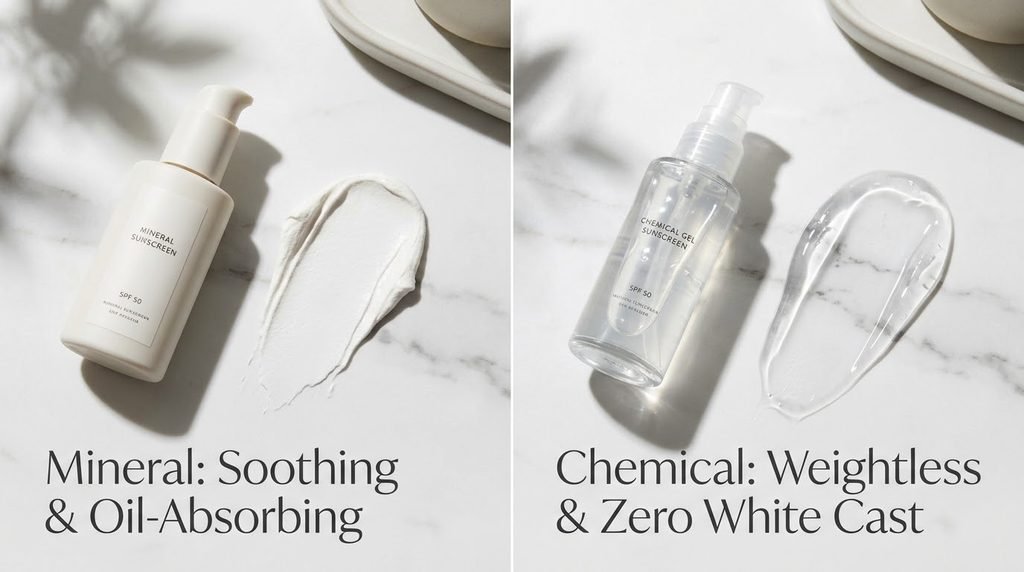
Mineral sunscreens use zinc oxide and titanium dioxide to sit on the skin’s surface. Zinc oxide naturally has mild oil-absorbing, soothing properties that many oily and blemish-prone skin types love, though thicker mineral creams can sometimes leave a white cast or feel heavy unless formulated as a lightweight tinted fluid.
Chemical sunscreens use carbon-based UV filters that absorb invisibly into the top layer of skin. Modern chemical gel and fluid sunscreens often feel completely weightless with zero white cast, making them a favorite for deeper skin tones and anyone layering makeup—provided your skin tolerates the filters without stinging.
Does Sunscreen Clog Pores? How to Prevent Breakouts

Sunscreen itself isn’t inherently pore-clogging, yet rich, occlusive formulas mixed with midday sweat and excess sebum can trap dead skin cells inside pores.
To keep congestion away, pair a lightweight non-comedogenic SPF with thorough evening cleansing. At night, use a gentle micellar water or lightweight cleansing oil first to dissolve water-resistant sunscreen filters cleanly, then follow with your regular foaming or gel face wash. For more everyday habits that keep pores clear, read How to Prevent Clogged Pores.
Also avoid using expired bottles. Old sunscreen separates and thickens, making it far more likely to feel greasy and sit unevenly on your skin.
How to Apply Sunscreen on Oily Skin Without Looking Greasy
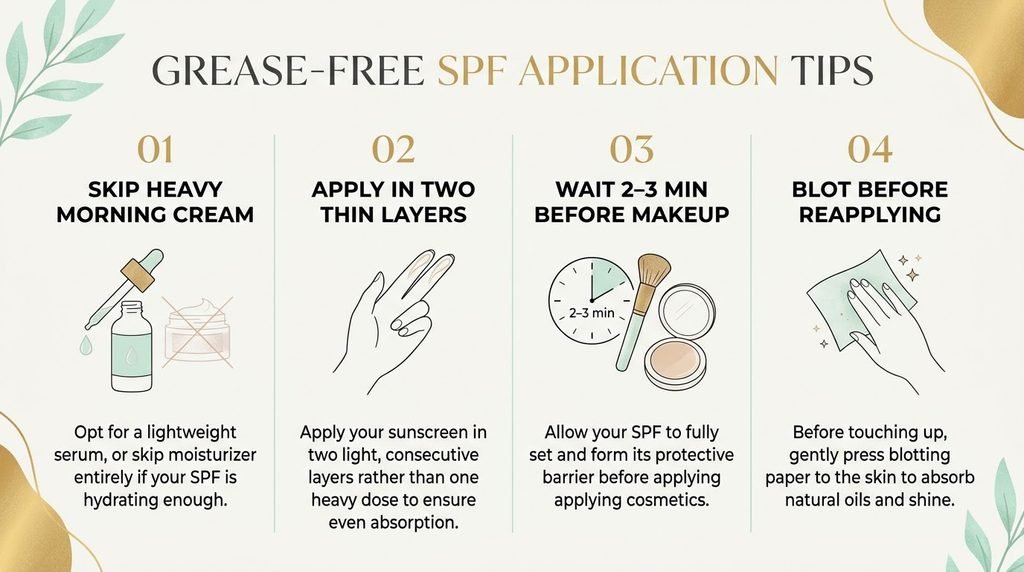
Even the best lightweight sunscreen can feel heavy if you pile too many rich layers underneath it. Small adjustments to your morning routine make a massive difference in how your skin looks by afternoon.
- Skip heavy morning moisturizer: If your sunscreen already contains hydrating ingredients like glycerin or hyaluronic acid, you don’t always need a separate cream underneath. Apply your lightweight serum (like niacinamide or vitamin C), wait one minute, and go straight to sunscreen.
- Apply in two thin layers: To reach the full two-finger amount needed for reliable SPF protection without overwhelming your skin, apply half first, let it set for thirty seconds, and smooth on the second half.
- Give SPF 2 to 3 minutes before makeup: Letting your sunscreen form an even, settled film prevents foundation or concealer from sliding around or pilling.
- Blot before reapplying midday: When touching up outdoors every two hours, press a plain blotting paper over shiny areas first so you aren’t layering fresh SPF over hours of built-up oil.
You can check full daytime sequencing in Serum Before or After Sunscreen?, Best Skincare Routine for Oily Skin, and How to Layer Skincare Products Correctly.
FAQ Section

A: The best sunscreen for oily skin is a lightweight, oil-free gel or water-fluid formula labeled non-comedogenic and broad-spectrum SPF 30 or higher. Look for breathable, soft-matte finishes with oil-absorbing ingredients like silica or niacinamide rather than heavy, butter-rich creams that sit on the surface and add midday shine.
A: Yes, oily skin needs daily broad-spectrum sunscreen just as much as dry skin. Natural facial oil does not block UVA or UVB rays, and skipping sun protection increases the risk of sunburn, premature fine lines, stubborn dark spots, and UV-triggered surface inflammation that can worsen excess oil production.
A: Both mineral and chemical sunscreens can work well for oily skin depending on the base formula. Mineral sunscreens containing zinc oxide offer natural oil-absorbing, soothing benefits ideal for sensitive skin, while modern chemical gel sunscreens absorb completely invisibly without leaving a white cast on deeper skin tones.
A: Choose a water-gel or fluid sunscreen with a natural or matte finish, skip separate heavy moisturizer underneath if your SPF feels hydrating enough, and apply your sunscreen in two thin layers. Letting your SPF set for two to three minutes before applying makeup also prevents midday sliding and shine.
A: Thick, oil-heavy sunscreens can contribute to clogged pores when mixed with sweat and sebum, but lightweight, non-comedogenic formulas are designed to sit comfortably without congesting skin. Washing your face thoroughly each evening with a gentle double cleanse ensures all sunscreen residue is removed before bed.
A: Yes, using daily sunscreen is especially important when applying acne or resurfacing ingredients like salicylic acid, benzoyl peroxide, or retinoids. These actives speed up surface cell turnover and can make skin more sensitive to sunlight, so wearing broad-spectrum SPF 30 or higher protects against irritation and dark marks.
Conclusion

Knowing what is the best sunscreen for oily skin comes down to choosing smart formulation traits over hype: a broad-spectrum SPF 30 or higher in a non-comedogenic gel or fluid texture that leaves a breathable, soft-matte finish. Remember that excess sebum offers zero UV protection, so daily sunscreen remains non-negotiable for keeping skin healthy, even-toned, and resilient.
Next time you shop for SPF, skip thick creams, check the label for oil-free gel or fluid textures, and streamline your morning layers so your skin stays comfortable and shine-free all day.