Executive Summary

Choosing between serums for morning vs. night comes down to matching each active ingredient to your skin’s daily rhythm. Daytime formulas focus on antioxidant defense against UV rays and pollution—making vitamin C an ideal morning pick—while nighttime formulas prioritize cell turnover and barrier recovery with retinoids and exfoliating acids. Meanwhile, gentle hydrators like hyaluronic acid, niacinamide, and peptides work comfortably at either end of the day. In this ingredient-lookup guide, you’ll find a clear AM/PM/Either reference chart, see why certain actives lose effectiveness or irritate skin in sunlight, and learn how to pair your bottles without overloading your routine.
Standing over the bathroom sink with three different dropper bottles in hand always raises the same practical question: which one goes on before coffee, and which one belongs before bed? Put the wrong ingredient in your morning slot, and sunlight can break it down before lunchtime—or leave your face red and sensitive outdoors.
Understanding serums for morning vs. night isn’t about buying twice as many products. Most ingredients naturally favor daytime protection, evening renewal, or flexible twice-daily hydration. (If you’re looking for step-by-step routine building rather than ingredient timing, check out our companion guide on Morning vs. Night Serum Routines.) Below, we’ll sort the most popular serum actives into a simple AM, PM, or Either cheat sheet so every bottle on your shelf performs at its best.
The AM / PM / Either Serum Ingredient Chart
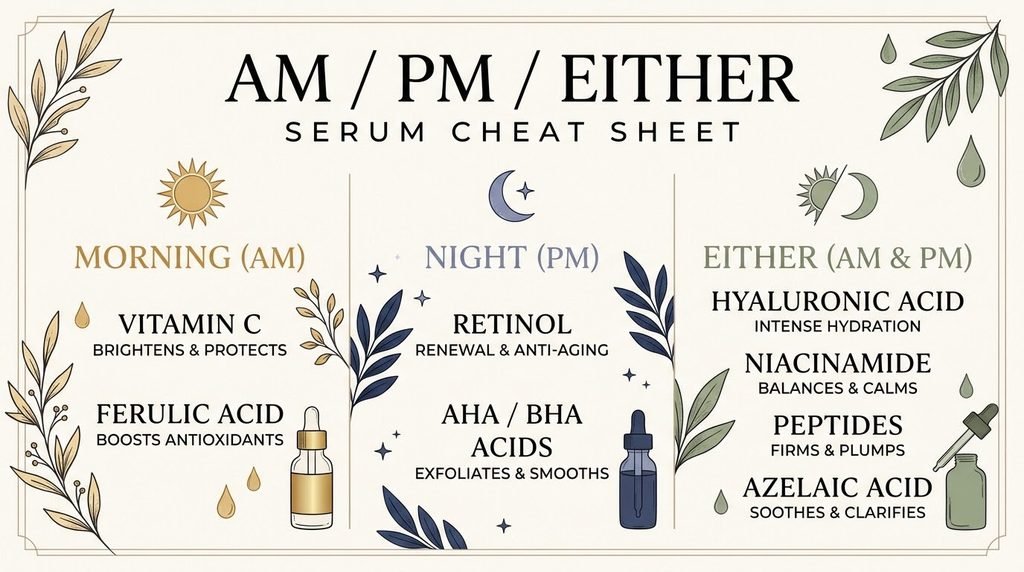
If you want a fast lookup while organizing your shelf, start with the breakdown below. It groups common skincare ingredients by when they typically deliver the safest, most consistent results.
| Serum Ingredient | Best Time to Use | Primary Role | Key Timing Note |
| Vitamin C (L-Ascorbic Acid) | Morning (AM) | Antioxidant defense & tone brightening | Pair underneath broad-spectrum SPF to help neutralize daytime free radicals |
| Ferulic Acid / Resveratrol | Morning (AM) | Environmental antioxidant support | Often combined with vitamin C to boost daytime stability |
| Retinol / Retinaldehyde | Night (PM) | Surface cell turnover & texture smoothing | Sunlight degrades traditional retinoids and increases UV sensitivity |
| Exfoliating Acids (AHA / BHA) | Night (PM) | Dead-skin resurfacing & pore clearing | Freshly exfoliated skin is more prone to sunburn during daytime hours |
| Hyaluronic Acid / Glycerin | Either (AM or PM) | Surface water binding & plumping | Safe twice daily; apply to damp skin and seal with moisturizer |
| Niacinamide (2%–5%) | Either (AM or PM) | Barrier lipid support & oil balance | Gentle enough for morning, night, or both depending on tolerance |
| Peptides | Either (AM or PM) | Hydration & elasticity support | Plays well morning or night alongside non-acidic moisturizers |
| Azelaic Acid | Either (AM or PM) | Calming redness & uneven tone | Flexible enough for daytime under SPF or evening recovery routines |
Best Serums to Use in the Morning (Daytime Defense)
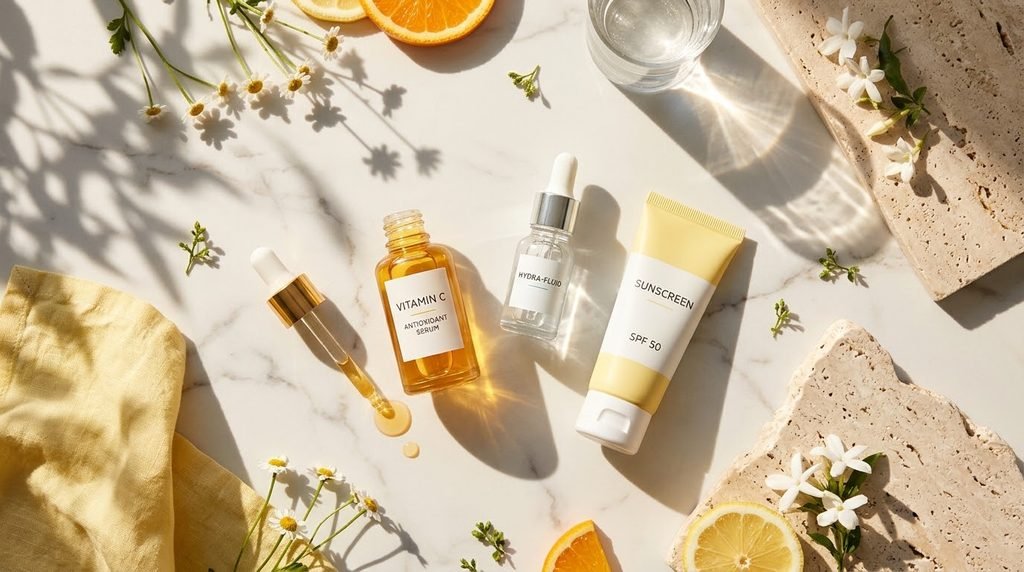
During daylight hours, your skin shifts into defense mode against ultraviolet radiation, airborne pollution, and temperature swings. Morning serums work best when they reinforce your sunscreen rather than thinning your outer skin layer.
Vitamin C and Antioxidant Serums

Vitamin C—especially pure L-ascorbic acid—is the classic morning powerhouse. Applied to clean skin before moisturizer and sunscreen, it helps neutralize free radicals triggered by UV exposure and urban smog. While some people use vitamin C at night, morning application lets you take advantage of its daytime protective synergy alongside SPF. Learn more about concentrations and derivatives in What Is Vitamin C Serum?.
Lightweight Barrier Hydrators
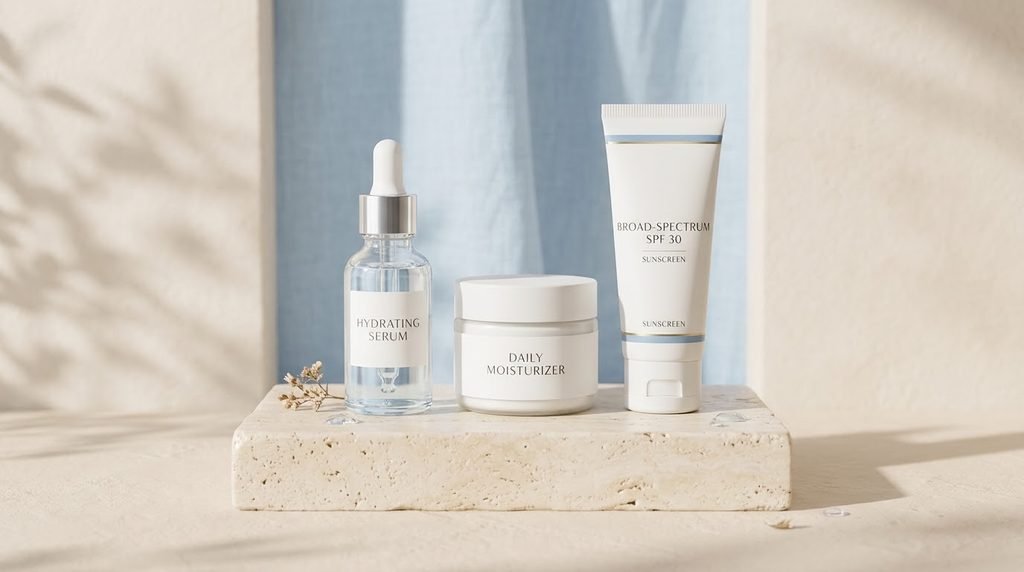
Adding a featherlight humectant serum under your daytime moisturizer keeps skin from feeling tight in dry office air conditioning or windy weather. Just remember that no antioxidant or hydrating serum replaces sunscreen—always finish your morning lineup with a dedicated broad-spectrum SPF 30 or higher.
Best Serums to Use at Night (Overnight Renewal)
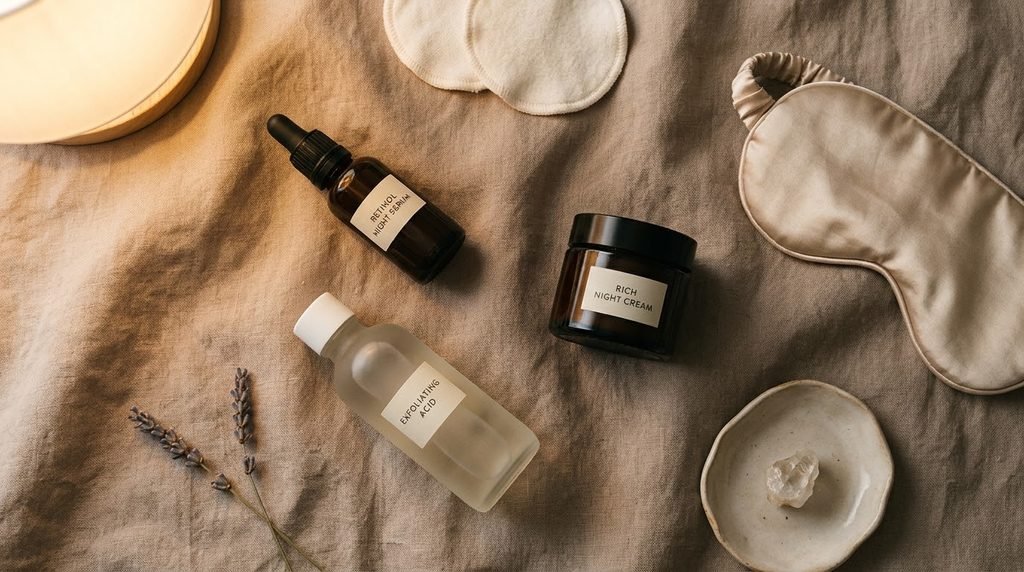
Once the sun goes down, your skin isn’t fighting UV rays—instead, blood flow increases and natural overnight repair picks up. Nighttime is the safest window for potent actives that either break down in light or make fresh skin cells temporarily more sun-sensitive.
Retinol and Retinoid Serums
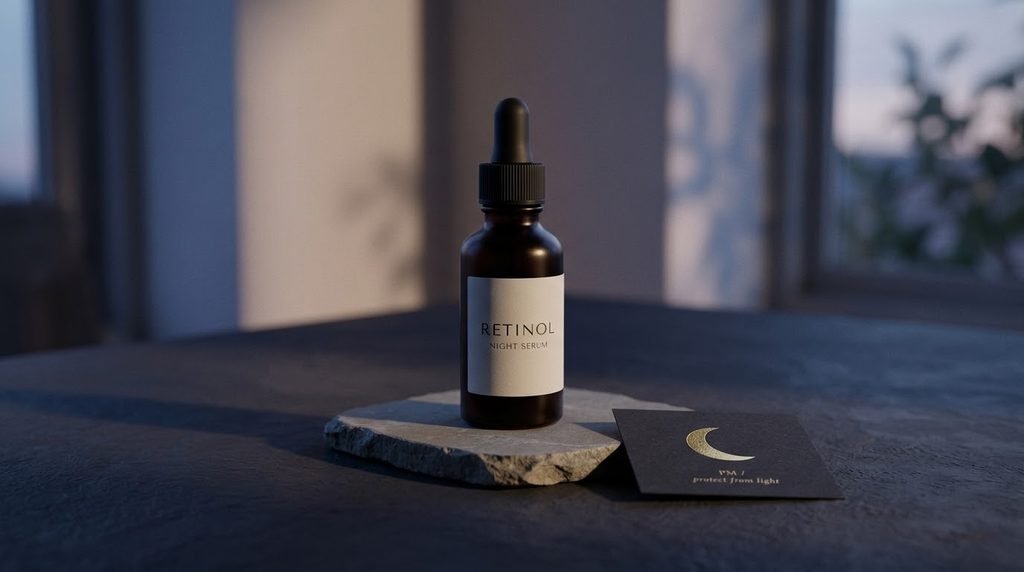
Retinoids are gold-standard evening ingredients for softening fine lines and smoothing uneven texture. Why shouldn’t you use retinol in the morning? Traditional retinol degrades rapidly when exposed to UV light, losing potency, while freshly turned-over surface cells burn more easily in the sun. Keep retinoids strictly in your PM routine and wear sunscreen every morning. Read more in Retinol Basics Explained.
Exfoliating Acid Serums (Glycolic, Lactic, and Salicylic Acid)

Leave-on alpha and beta hydroxy acids dissolve dead surface buildup so skin looks smoother and clearer. Because removing that outermost layer of dead cells leaves fresh skin exposed to UV rays, applying exfoliating acids at night minimizes daytime sun sensitivity.
Serums You Can Use Morning and Night (Flexible Staples)
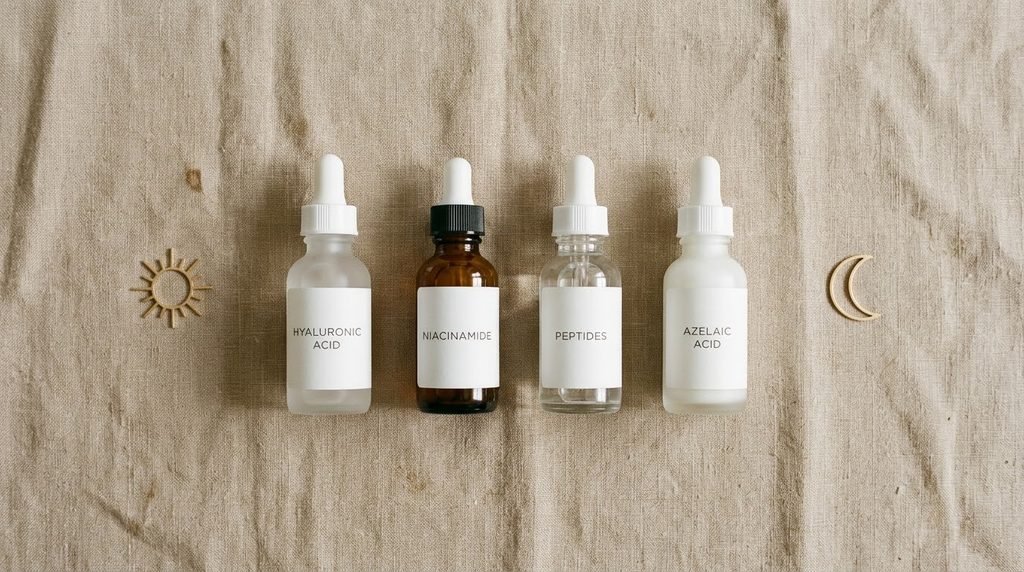
Not every bottle on your shelf has to pick a side. Several of the most dependable skincare ingredients are stable in daylight, gentle on your moisture barrier, and completely fine to use twice a day.
- Hyaluronic acid and polyglutamic acid: Pure humectants that pull water into the upper epidermis without exfoliating or photosensitizing skin. Using hyaluronic acid both morning and night keeps dehydrated skin consistently plump.
- Niacinamide: A calm, versatile form of vitamin B3 that supports barrier ceramides and balances surface shine. Using a 2% to 5% niacinamide serum in the morning, at night, or twice daily suits almost every skin type.
- Peptides and azelaic acid: Neither ingredient increases sun sensitivity, meaning you can slot them into whichever routine has room—such as using peptides under morning sunscreen and azelaic acid at night.
According to general skincare guidance from the American Academy of Dermatology, keeping daytime routines focused on protection and saving stronger resurfacing products for evening helps prevent unnecessary irritation while maintaining steady results.
How to Pair Morning and Night Serums Without Overloading Skin
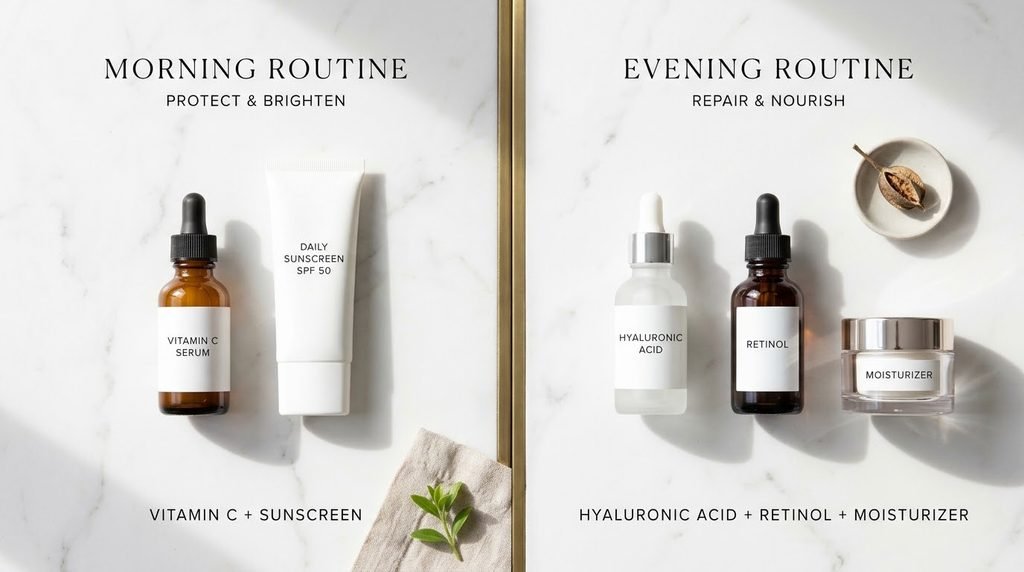
Knowing which time of day an ingredient prefers makes building a calm routine much easier—especially if you own three or four different bottles.
Instead of cramming every active into one sitting, split them naturally across your day. For example, pair a vitamin C serum + sunscreen in the morning, and use a hyaluronic acid serum + retinol + moisturizer at night. If you use both retinol and an exfoliating acid, alternate them on separate nights rather than layering them together.
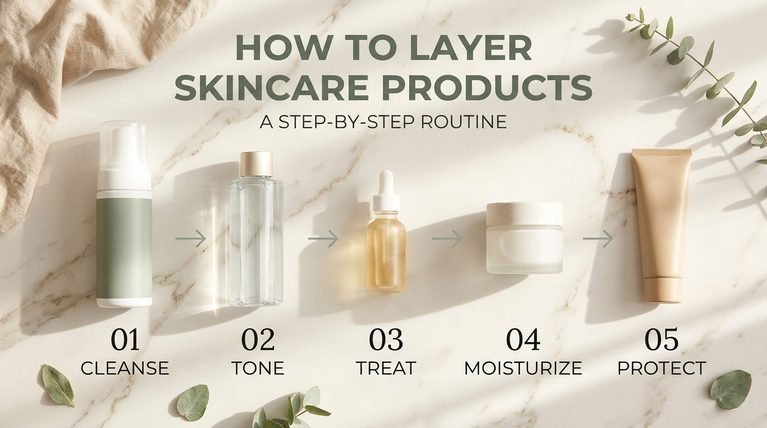
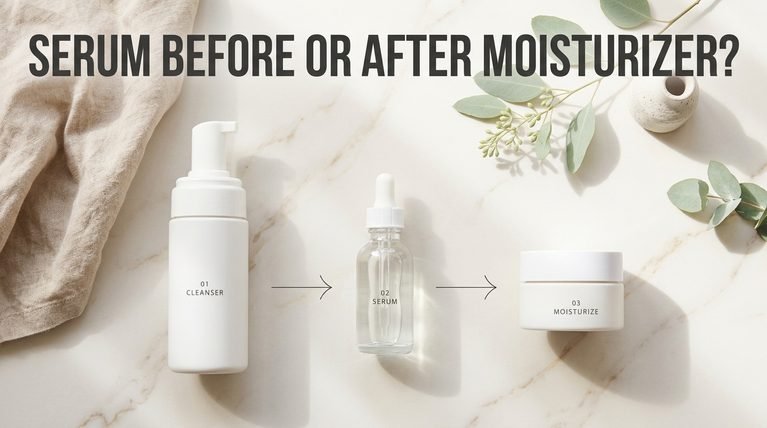
For full step-by-step sequencing from cleanser to final cream, check our complete guide on How to Layer Skincare Products Correctly.
FAQ Section
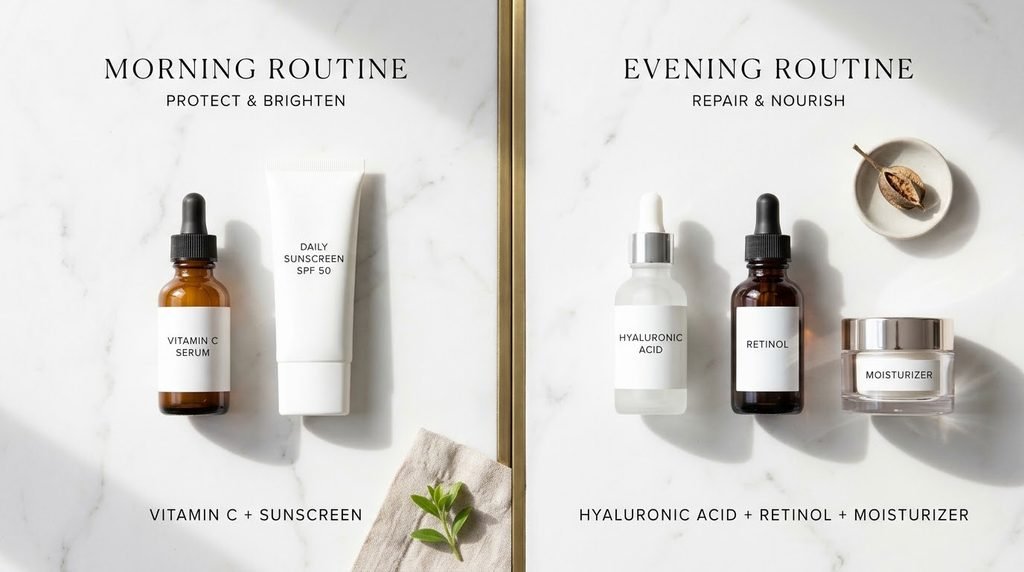
Q: Which serums should you use in the morning and which at night?
A: Use antioxidant serums like vitamin C in the morning underneath broad-spectrum sunscreen to help defend against daytime environmental stress. Save cell-turnover and resurfacing actives like retinol and exfoliating acids (AHA/BHA) for night, while gentle hydrators like hyaluronic acid and niacinamide can be used at either time.
Q: Can you use the same serum for morning and night?
A: Yes, you can use the same serum morning and night as long as it’s a gentle, non-photosensitizing formula like hyaluronic acid, niacinamide, peptides, or ceramides. Avoid using potent exfoliating acids or traditional retinol twice daily, as overuse can irritate your moisture barrier.
Q: Is it better to use vitamin C serum in the morning or at night?
A: Morning is generally the preferred time to use vitamin C serum because its antioxidant properties help neutralize free radicals caused by daytime UV exposure and pollution when paired under sunscreen. However, vitamin C still supports collagen and brightening if you prefer applying it at night.
Q: Why shouldn’t you use retinol in the morning?
A: Traditional retinol shouldn’t be used in the morning because sunlight degrades the active molecule, making it far less effective, while accelerating surface cell turnover leaves fresh skin more vulnerable to UV sensitivity and sunburn. Applying retinol at night protects its stability and keeps skin comfortable.
Q: Can you use niacinamide in the morning and at night?
A: Yes, niacinamide is stable in sunlight and gentle enough to use in the morning, at night, or twice daily. A mild 2% to 5% niacinamide serum layers easily under daytime sunscreen to help balance oil and pairs well with evening moisturizers or retinoids.
Q: Can you use hyaluronic acid at night?
A: Yes, hyaluronic acid works wonderfully at night as well as in the morning. Applying a hyaluronic acid serum to slightly damp skin before your evening moisturizer helps bind surface hydration and prevents overnight moisture loss while you sleep.
Conclusion

Sorting out serums for morning vs. night comes down to one simple rhythm: protect your skin by day, renew it by night, and hydrate whenever you need it. Keep antioxidants like vitamin C in your morning lineup under sunscreen, save retinoids and exfoliating acids for evening recovery, and lean on flexible staples like hyaluronic acid, niacinamide, and peptides at either end of the clock.
Tonight, group the serum bottles on your counter into three small spots—Morning, Night, and Either—so your daily routine feels effortless and your ingredients work right when your skin needs them most.